
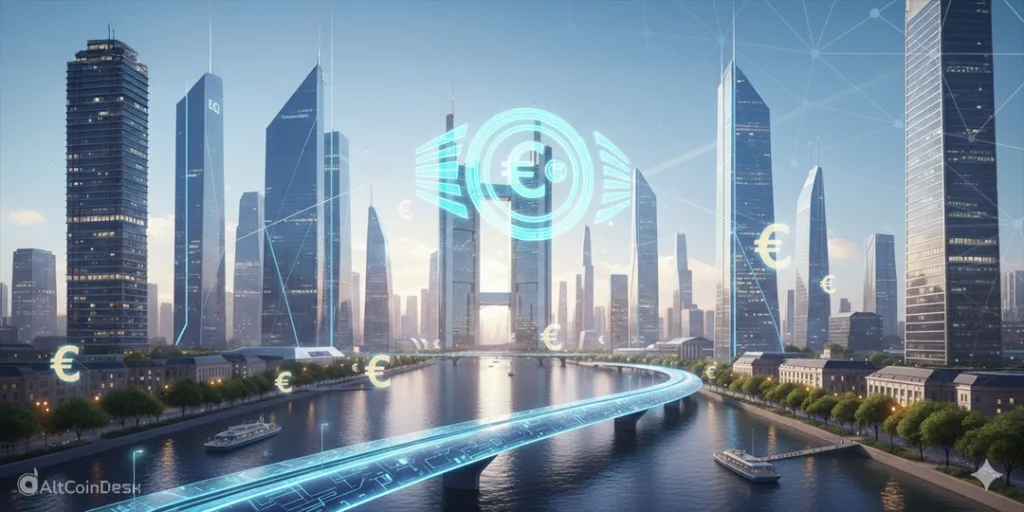

Last week was a precious moment for the European Union (EU). As several governments take long strides to enter the digital world with novel initiatives, the EU has decided not to miss the boat. The EU finance ministers agreed on a roadmap to launch a digital euro currency, an undertaking that is not very easy to execute.
Earlier this year, the EU government announced about launch of the digital euro in October despite opposition from citizens. As ministers agreed on a roadmap for the digital euro launch, there are some EU members who registered their concerns around the token’s privacy issues. In other words, they believe that governments can track people’s financial transactions, compromising personal privacy.
Is digital euro a strategic alternative to US-based payments?
The European Central Bank (ECB) president, Christie Lagarde, EU finance ministers, and European Commissioner Valdis Dombrovskis have come to a deal for the roadmap for further discussion on whether a digital currency is issued and how much digital euro a resident can hold, according to Reuters.
The EU has a key goal to reduce its dependence on other countries in areas like finance, energy, and defence. The core idea of bringing a digital euro is also to bring an alternative to US-based payment systems — Visa and Mastercard. That’s not all. The European Central Bank pushed for the digital token in response to U.S. President Donald Trump’s global drive for stablecoins pegged to the U.S. dollar.
How could a digital euro shield Europe?
Acquiring a native digital currency is a great achievement for many governments. For Europe, the digital euro could carry substantial meaning.
- Provide a digital alternative to commercial retail payment rails like Visa or Mastercard.
- ECB can directly monitor digital transactions, unlike stablecoins that depend on private issuers.
- Under the ECB’s control also means the digital euro can strengthen the region’s financial resilience.
- Digital euro can act as a strategic hedge, making it an independent payment backbone for Europe.
Despite its potential benefits, the digital euro cannot easily dethrone US payment systems. EU residents will have to rely on the existing payment giants until the digital token comes into complete existence. Reportedly, its issuance may take time. As mentioned, there are threats and concerns from some lawmakers in the country, like Spaniard Fernando Navarrete Rojas. He is skeptical about the project and has published a paper titled, ‘Do we really need a digital euro?’ In the 27-page paper, Fernando Navarrete explains “why the digital euro does not appear to be the solution.”