
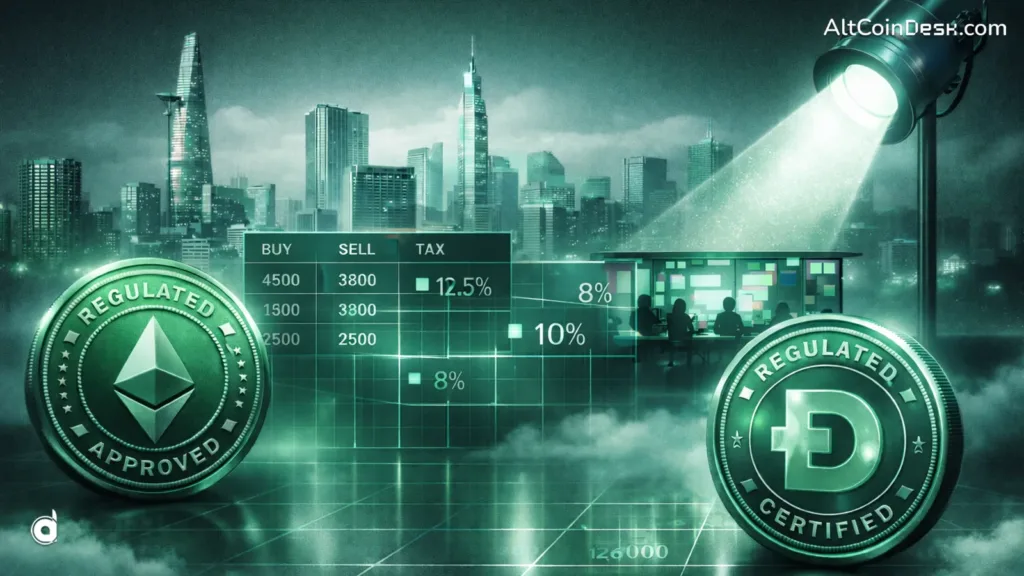

Vietnam is moving closer to formally regulating cryptocurrency trading, with draft policies for digital assets similar to traditional securities. The Ministry of Finance circulated the proposal for public feedback, discussing a transaction-based tax system while tightening oversight of crypto exchanges.
Changes in individual and corporate taxes
According to the proposal, crypto users transferring through licensed providers will pay a personal income tax of 0.1% of the transaction value. These policies already exist for stock trading, which effectively equates cryptocurrency deals to traditional financial ones.
It states that regardless of their residency, whether local or foreign, all investors will be subject to the levy whenever a crypto transfer is carried out within the regulated system.
However, the draft also states that crypto transactions would be exempted from value-added tax, proving that the government accepts digital assets as a financial instrument more than a consumer good. It separates individual investors from corporate players, with a corporate income tax of 20% on the profits made from trading or transacting in digital assets.
Defining asset classification
The proposal also defines what counts as crypto assets – a digital asset that uses cryptography or similar technologies for verification, issuance, and storage.
Companies planning to launch and operate an exchange catering to the cryptocurrencies must have a charter capital of 10 trillion Vietnamese dong, or about $408 million, with foreign ownership capped at a maximum of 49%.
The government is aiming for clarity, stability, and control, even if that means fewer but stronger crypto exchanges operating in the country.
The big move towards crypto
Vietnam began accepting applications for crypto exchanges in early 2026, signaling their entry into the fast-growing sector under regulatory terms.
However, the rules continue to evolve in Vietnam as it trials its five-year pilot program catering to the regulated crypto market launched in September 2025. But still, investors and organizations hesitate due to capital and compliance hurdles.