

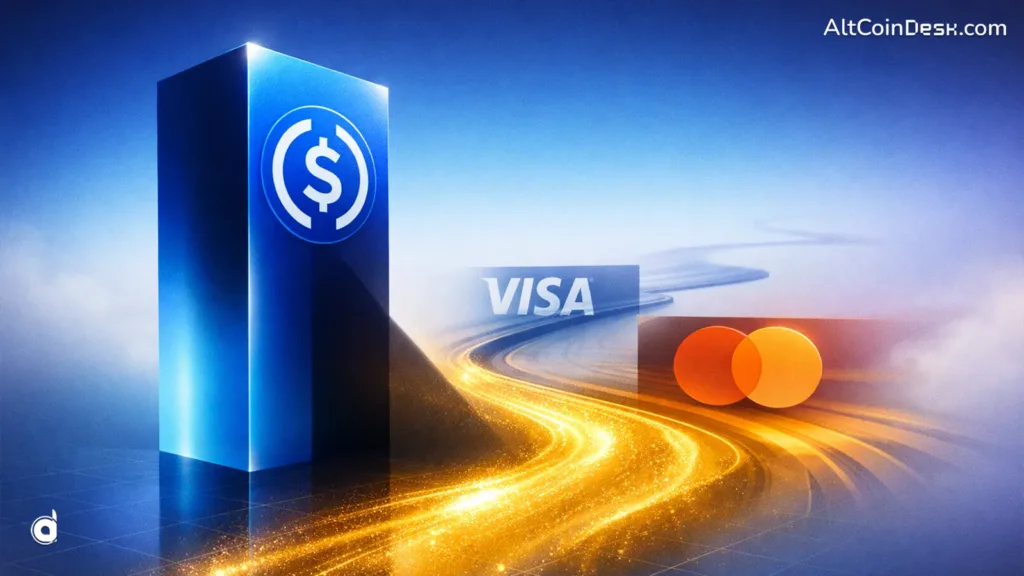

In January 2026, the digital currency market achieved a major milestone as stablecoin trading volume surpassed $10 trillion in a single month, with USDC dominating. Yet Circle’s stock keeps sliding.
Stablecoin volumes hit highs
USDC stands as the dominant stablecoin, processing more than $8.4 trillion in on-chain transactions, which is more than the combined monthly payment volumes of Visa and Mastercard. However, the stablecoin issuer of USDC, Circle, has been suffering a decline of 80% in market valuation.
Despite stablecoins reaching a total volume of $33 trillion in 2025, including $10 trillion in January alone, the Circle’s equity pricing points more towards a downfall rather than an anticipated growth. USDC’s growth has been attributed to the compliance-first approach of Circle, due to which its integration with traditional finance has been easy, despite the increasing scrutiny of the crypto market.
“USDC was $8T of that in one month,” equity fund executive Dan Tapier said, arguing that the total addressable market (TAM) for stablecoins could exceed $1,000 trillion over time.
Analysts have attributed the difference between USDC’s usage and Circle’s stock price to several factors, such as regulatory uncertainty or a crypto winter, and the company’s significant reliance on interest-driven revenue.
One of the views of the market observes that the market is still pricing Circle like a fintech, not like core financial infrastructure that changes everything.
USDC stablecoin payments in GCC
Nymcard, a leading payments infrastructure in MENA, is settling for the USDC stablecoin in MENA alongside Visa. According to reports, USDC offers issuers a cheaper, faster, and more capital-efficient way to move money due to the lower operational costs, reduced pre-funding requirements, and collateral needs.
NymCard starts offering stablecoin payments in GCC @NymCard @Visa #stablecoins #settlement #GCC #MENA #nymcard #visa #USDC #circle @circle @USDC #paymentshttps://t.co/IVQhrPplo6 pic.twitter.com/dQz3G5mR20
— Lara On The Block (@laraonzeblock) February 3, 2026
According to the CEO of NymCard, Omar Onsi, the company is the first issuer in the GCC region to offer stablecoin settlement, advancing the patent ecosystem for the future. While Godfrey Sullivan, Head of Product at Visa, reasserted the same about stablecoins, redefining how value moves globally.
PwC estimates show that stablecoin-based financial services in the GCC are set to grow by 32% annually. This also testifies to the growth of digital dollars and tokenized currencies.
Stablecoins play a prominent role in MENA’s crypto landscape, making up 52% of all cryptocurrency transactions in the year to June 2024. Artemis data shows stablecoin usage has expanded from roughly $1 trillion in early 2023 to current levels, with USDC widening its lead over USDT in several activity metrics.