
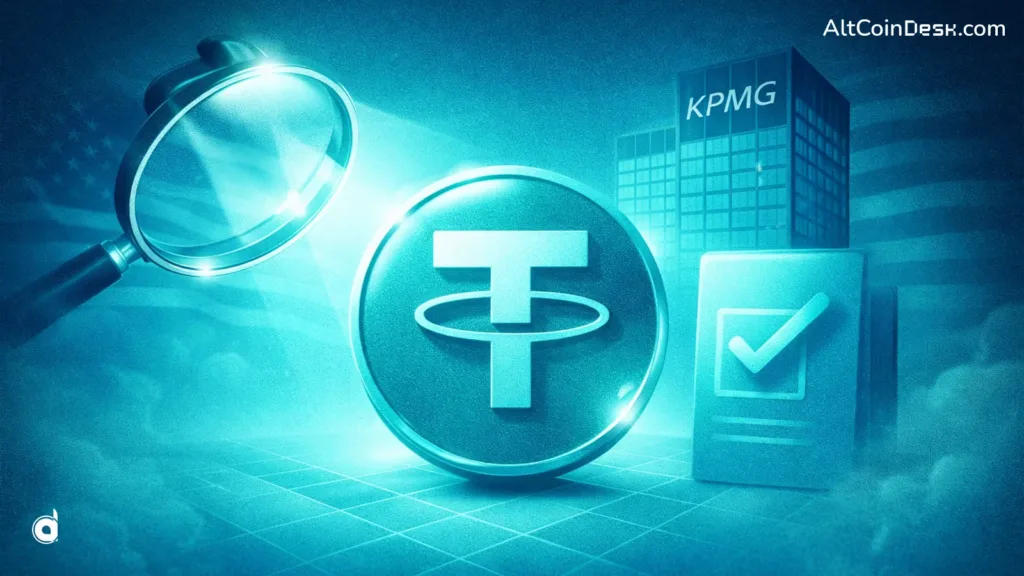

Tether, the world’s largest stablecoin issuer, picks KPMG to conduct its first-ever independent financial audit. This move comes after years of criticism over the company’s transparency, as the company takes the first step toward transparency, expanding into the U.S. market.
For a company that has operated for over a decade without a complete audit, this marks a great momentum for the legitimacy of digital dollars. Tether has also hired PwC to prepare and strengthen its internal controls, reporting systems, and operational readiness ahead of the review. While Tether has provided attestations for years via BDO Italia, those were merely snapshots of reserves.
This audit includes assets, liabilities, internal controls, governance, risk management, and compliance systems over time, providing reasonable assurance under generally accepted auditing standards
What changes with a full audit
Unlike the periodic reserve attestations provided by BDO Italia, which offer only point-in-time snapshots confirming that reserves match circulating tokens, the KPMG audit will deliver a thorough examination of Tether’s full financial statements.
USDT currently holds a market capitalization of approximately $184–185 billion, making it the top reserve currency and liquidity provider across global crypto markets.
Tether CEO Paolo Ardoino stated that the move represents “years of work to strengthen our systems” so the company can meet the scrutiny required for global institutional adoption.
What the KPMG Audit will check
The audit comes as Tether moves for its U.S. expansion under the GENIUS Act (Guiding and Establishing National Innovation for US Stablecoins).
Tether recently launched USAT, a U.S.-regulated stablecoin issued in partnership with the federally chartered Anchorage Digital Bank.
The move also supports Tether’s reported plans for fundraising. Reports indicated the company was trying to raise $15–20 billion at a valuation approaching $500 billion, though potential investors have expressed concerns over valuation and lingering regulatory risks. A clean audit opinion could help eliminate those concerns.
In 2021, the company paid $41 million to the CFTC and $18.5 million to the New York Attorney General to settle allegations that it misled investors about its reserves. Since then, the firm has shifted its holdings into U.S. Treasuries