

Last week was neither busy nor quiet for the crypto industry. Although the ongoing geopolitical war is impacting the landscape, Bitcoin did not dip significantly, and other coins followed the master crypto.
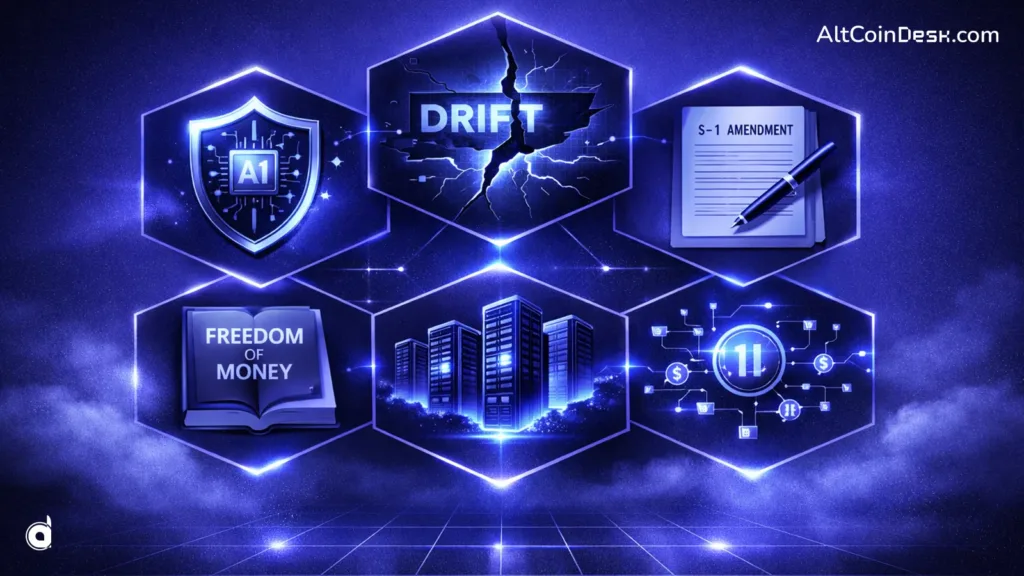
While looking at the news cycle, the Drift protocol hack was the hot topic of discussion. Alongside AI integration and related risk factor stories moulded last week’s crypto news industry. Here are the top crypto, blockchain, and AI stories that AltCoin finds relevant for the readers.
Vitalik Buterin warns of OpenClaw defects
AI chatbot and Ethereum Founder Vitalik Buterin shared concerns regarding risk factors in OpenClaw, an open-source AI agent framework. Security issues or vulnerabilities in the AI agent can automatically let it execute commands, share sensitive user data with external servers, and overall, help attackers gain more control over data.
Vitalik detailed the vulnerabilities in a detailed analysis published on his personal blog.
Drift protocol exploit causes Circle in trouble
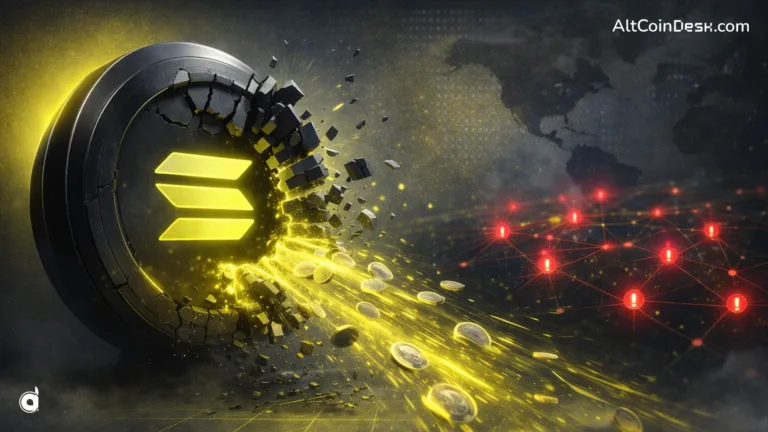
A recent $285 million exploit on the Drift protocol has put Circle in chaos, as the stablecoin issuer did not freeze its USDC during the hack. The attacker drained millions in digital funds. Moved them to their wallets and swapped the funds into USDC on the Solana blockchain. During this process, Circle did not block the USDC wallets controlled by the hacker. Which several blockchain analysts find this a serious issue.
Last month, the stablecoin issuers had frozen multiple USDC wallets claimed to be associated with illicit activities. That said, the firm could have blocked the wallets in the Drift exploit, said the investigators.
Meanwhile, the Drift protocol hack, the largest DeFi hack in 2026 on Solana, is suspected to have links with North Korean hackers. As media reports show, several such DeFi hacks are allegedly carried out by North Korea-sponsored hacker groups.
Grayscale files S-1 amendment for its Bittensor ($TAO) trust
Asset manager Grayscale filed for an S-1 amendment for Bittensor (TAO) Trust, amid the ongoing integration between traditional institutions and cryptocurrency. This move will allow both institutional and retail investors to access regulated exposure to the TAO token.
The S-1 amendment submitted to the Securities and Exchange Commission (SEC) indicates an update to the registration filing, showing that the product is going ahead in the approval process.
Binance founder CZ to launch his book “Freedom of Money”.
Binance founder Changpeng Zhao (CZ) will launch his book titled “Freedom of Money” this week. The book mainly highlights financial independence and innovative blockchain technology.
CZ has said that all the proceeds will move to charity, meaning the author will not make money from the sales.
The digital version of the book for pre-orders is available now in both English and Traditional Chinese. The physical edition in English is expected to be released next week, said CZ.
Microsoft to invest $10 billion into data centers across Japan
Tech giant Microsoft announced its plans to invest in Japan’s data centres by 2029. The tech firm will invest nearly $10 million (¥1.6 trillion) in the country’s AI infrastructure, cybersecurity, workforce, and data centres.
The announcement was made by Microsoft Vice Chair and President Brad Smith during a visit to Tokyo. Since 2024, Japan has showcased good performance in AI technology as big firms and professionals are largely diving into the sector.
“We are bringing the world’s best technology, building secure and reliable infrastructure on Japan’s terms, and helping equip its workforce to accelerate productivity and innovation across its economy”, said the Microsoft executive.
IMF identifies tokenization as the next shift in finance, but risks await
The International Monetary Fund, or IMF, released a note on tokenized finance, highlighting its potential to transform key areas such as capital markets, banking, and payments. The organization sees the benefits of tokenization, improving transparency, efficiency, and settlement speed in financial activities. Meanwhile, the IMF raises concerns over financial stability, structural risk factors, and regulation.
Tokenization is the digital representation of traditional assets like stocks, bonds, and cash on blockchain, which can be shared and bought.
X to introduce auto-lock and verify system
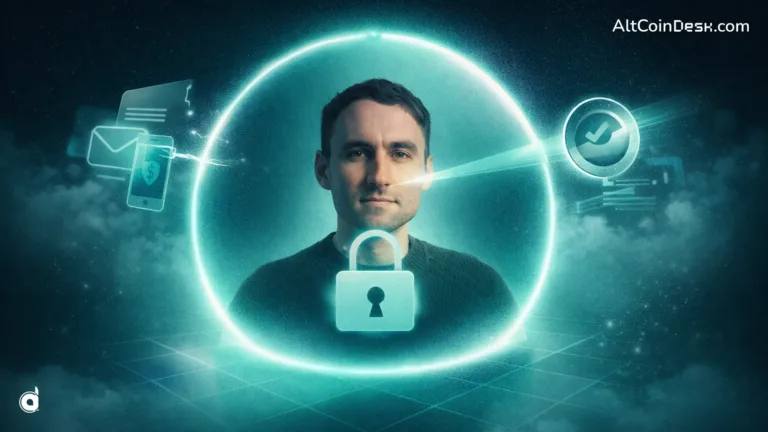
The social media platform owned by Elon Musk is building a new feature on its platform to prevent crypto scams. The new feature, known as ‘auto-lock and verify,’ is applicable for X accounts posting crypto content for the first time.
Nikita Bier, Head of Product at X, announced plans to apply new security measures. The new feature will automatically lock the first-time crypto-related post and request a complete user identity verification.
“We are in the process of implementing auto-locking + verification if a user posts about cryptocurrency for the first time in the history of their account”, said Nikita in an X post.
In short, last week felt like a reminder of how layered the crypto ecosystem has become. The market did not weaken, despite macroeconomic conditions continuing to loom. On the other hand, the Drift exploit and OpenClaw concerns showed that security risks in both DeFi and AI remain very real and are increasing.
Meanwhile, developments from institutions like Grayscale and the IMF, along with Microsoft’s massive AI push in Japan, denote that both traditional finance and big tech are rapidly leaning deeper into blockchain and AI. Even platforms like X are trying to adapt to the growing need for user protection in a scam-heavy environment.
While innovation continues to surge, the growth in crypto is no longer just about price action; it is equally about trust, security, and how responsibly this technology is being built and used.