



The involvement of cryptocurrency in human trafficking-related activities spiked by 85% year-over-year as the total volume of transactions crossed millions of dollars. An analyst stated that the 85% figure “should be read with analytical caution” as it is more than just growth. It’s about structural professionalism and standardized pricing.
Crypto-related crime spikes by 85% in Southeast Asia
According to Chainalysis’s crypto crime report, the usage of crypto involved in human trafficking deals spiked 85% in 2025. The report states that the human trafficking services is “not happening in isolation, but is closely aligned with the growth of Southeast Asia–based scam compounds, online casinos and gambling sites, and Chinese-language money laundering (CMLN) and guarantee networks operating largely via Telegram.”
The report segregates the human trafficking canopy term into four categories: international escort services, labor placement, prostitution networks, and child sexual abuse material (CSAM) vendors.
The alarming factor is the clever usage of asset types for each of the categories mentioned above. For matters related to child abuse material, Bitcoin has been the go-to asset, while for prostitution and Telegram-based escorts, stablecoins were used predominantly.
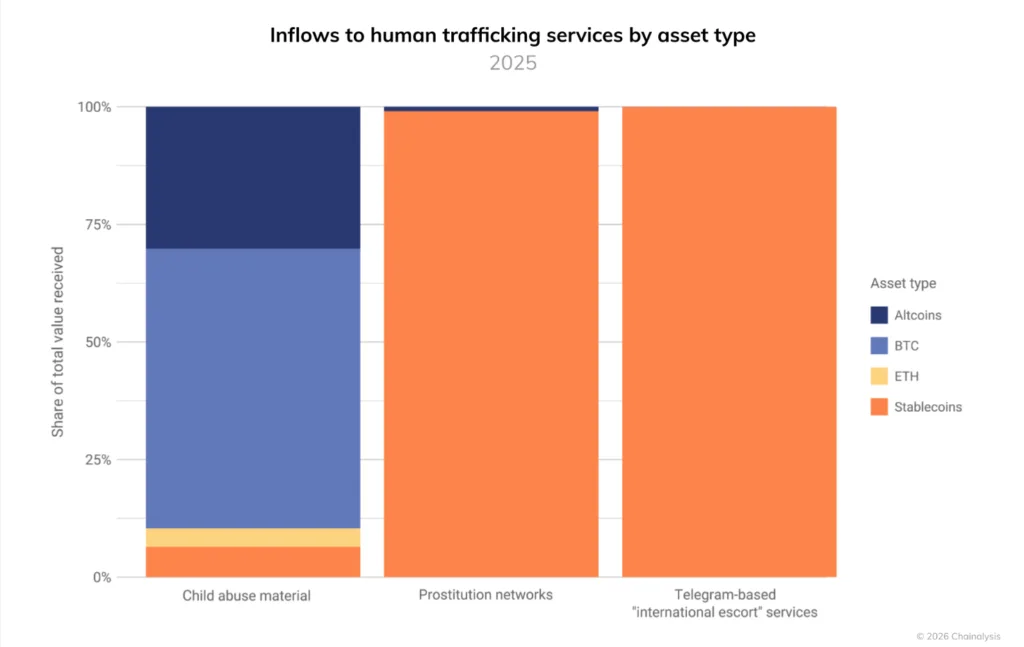
Analyst Lavneet Bansal stated that this report highlights deeply harmful and organized criminal activity, and that should not be understated.
“What stands out structurally is how professionalized these networks have become with standardized pricing, escrow-style guarantee services, and heavy reliance on stablecoins as operational settlement rails.”
85% spike is more than growth
He further mentioned that the year-over-year spikes in blockchain crime data often reflect improved clustering and attribution techniques, not just underlying growth, so the 85% figure should be read with analytical caution.
At the same time, the fact that these flows occur on-chain, creating a structured financial trail, gives law enforcement visibility that simply doesn’t exist in cash-based systems.
Meanwhile, Pelham Police reported that there has been a trend of senior adults being targeted for crypto. There were reported incidents of scammers impersonating police and demanding money from senior citizens for missing a jury date. In addition, there were threats that if they don’t pay, they would be imprisoned.