

Most people who buy their first altcoin make the same mistake. They buy it on an exchange, watch the price, and assume they’re done. Those coins are sitting on a server they don’t control, managed by a company that can freeze accounts, get hacked, or collapse overnight. FTX had over a million users who felt completely fine about this. You know how that ended.
The fix is a crypto wallet. If you’re holding altcoins, meaning any cryptocurrency that is not Bitcoin, the right altcoin wallet matters because different altcoins live on different blockchains, and not every wallet supports all of them.
What a crypto wallet actually is and how it works
A crypto wallet does not store your crypto. Your coins live on the blockchain. What the wallet stores is your private key, the digital proof that those coins belong to you, and your public key, the address you share when someone wants to send you funds.
Think of it like a letterbox: anyone can drop something in, only you can open it.
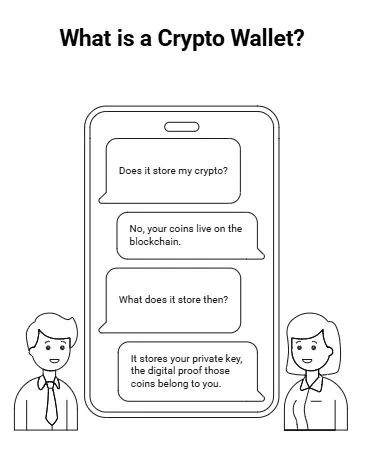
When you set up a new wallet, you get a seed phrase, twelve or twenty-four random words that back up everything. Write them on paper and never share them with anyone. Newer wallets use MPC, Multi-Party Computation, which removes the seed phrase entirely by splitting your key across multiple secure locations. ZenGo and Binance Wallet both use this.
There are also different wallet types worth knowing, hot wallets, cold wallets, custodial, and non-custodial, each with different security tradeoffs. Every wallet on this list is non-custodial, meaning you hold your own keys.
From Satoshi’s first wallet to where we are now
On January 3, 2009, Satoshi Nakamoto mined the first Bitcoin block and needed a wallet to receive the reward. That produced Bitcoin-Qt, the first ever crypto wallet. Nine days later, Satoshi sent 10 BTC to developer Hal Finney. Two people, two wallets. The whole industry started there.
The evolution went like this:
- Paper wallets arrived first, literally print your private key on paper and guard it with your life
- Electrum launched in 2011 as the first wallet that skipped the full blockchain download
- Mt. Gox collapsed in 2014 after 850,000 BTC was stolen, and security became everyone’s concern
- Trezor released the first hardware wallet that same year, Ledger followed
- MetaMask exploded alongside DeFi in 2020, Phantom launched for Solana in 2021
- By 2025, over 820 million unique active crypto wallets existed globally
Today, the best crypto wallets are full superapps. One interface, no middleman, and a wallet that doesn’t support your chain is just a very secure way to stare at a zero balance.
What the best altcoin wallets for beginners can actually do
Most guides stop at store and send. Here is the full picture:
- Store altcoins with full ownership, no exchange holding them on your behalf
- Send and receive funds to any wallet address instantly
- Swap one token for another directly inside the app
- Stake coins and earn passive rewards from the blockchain
- Connect to dApps and DeFi platforms using your wallet as your login and payment method
- Hold NFTs, vote in DAOs, access token launches, and bridge assets across chains
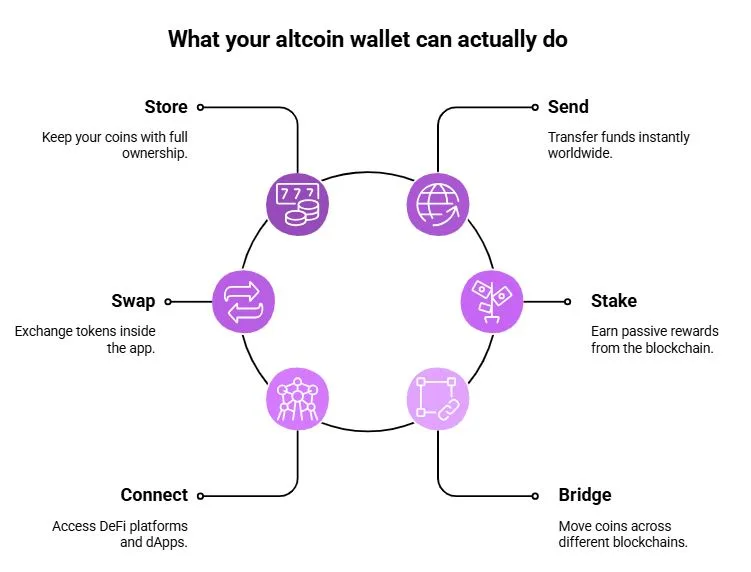
Quick explanations: DeFi is banking services like lending and borrowing that run on code instead of banks. dApps are apps that run on a blockchain instead of a company’s server. Bridging means moving coins from one blockchain to another. DAOs are organizations where token holders vote on decisions together.
In the decentralized web, your wallet is your bank account, brokerage, and passport all in one. The best altcoin wallets give you access to an entirely parallel financial system. The exchange gives you none of that.
The best altcoin wallets in 2026
Here is where each wallet wins and where it falls short.
MetaMask
If crypto had a default wallet, this would be it. Over 30 million people use MetaMask every month. Almost every DeFi platform and dApp on Ethereum assumes you have it installed.
EVM, Ethereum Virtual Machine, is the engine Ethereum runs on. BNB Chain, Polygon, Arbitrum, and Avalanche all run on the same engine, meaning one MetaMask wallet covers all of them without extra setup. Built-in swaps cost 0.875%. As one of the best crypto wallets for Ethereum users, the only real gap is no native Solana support.
Trust Wallet
Trust Wallet never says no. Over 100 blockchains, over 10 million tokens, staking, NFT support, a dApp browser, and in-app swaps, all in one mobile app.
For anyone holding altcoins across different chains, this is one of the most beginner-friendly wallets out there. No juggling multiple apps for multiple chains. The one honest downside is no live customer support. Community forums only if something goes wrong.
Phantom
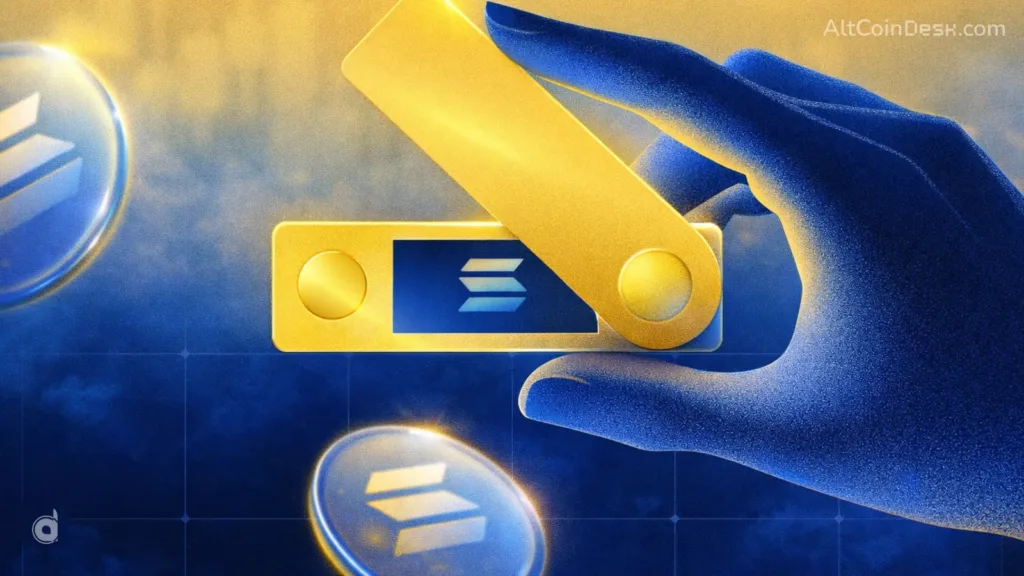
Built in 2021 because Solana genuinely had no decent wallet at the time, Phantom now has 15 million users. SOL staking earns around 6.88% annually inside the app.
Scam detection catches malicious transactions before you approve them, a feature that has quietly saved a lot of beginners from expensive mistakes they didn’t see coming. You can also sign in with Google or Apple instead of a seed phrase, which removes a lot of the early friction.
It now covers Ethereum, Base, Polygon, Sui, and Bitcoin too, but Solana is where it belongs. For anyone holding Solana-based altcoins, this is the best altcoin wallet on the market.
Binance Wallet
Lives inside the Binance app, non-custodial, MPC-based, no seed phrase. Covers nine blockchains with built-in swaps and bridging.
The standout feature is one-tap transfers between your Binance exchange balance and your self-custody wallet. No addresses to copy, no fees to move funds to yourself.
If you already use Binance as your entry point into crypto, this removes most of the friction that usually pushes beginners back to leaving everything on the exchange. Want nothing to do with Binance as a company? MetaMask or Trust Wallet will feel more independent.
Exodus
Built specifically for people who find crypto unnecessarily intimidating, which honestly is most people starting out. Clean interface, 250+ assets, and built-in swaps.
The thing that actually sets it apart is customer support via live chat and email. A real human being responding to your problem. In crypto, that is rare. For anyone looking for secure altcoin wallets with a friendly design, Exodus is the answer. Two tradeoffs: closed source code and no two-factor authentication.
The one mistake that ends most beginners before they start
Those seed phrase words are the only way to recover your wallet if your device is lost or broken. Write them on paper, not in a notes app or screenshot. Never type your seed phrase into any website that asks for it. No legitimate wallet will ever ask. If someone does, they are stealing from you.
Final thoughts
Buying crypto and owning crypto are not the same thing. Leaving your altcoins on an exchange means someone else holds the keys, and you have seen enough times how that story ends. The best altcoin wallets for beginners fix that in one step.
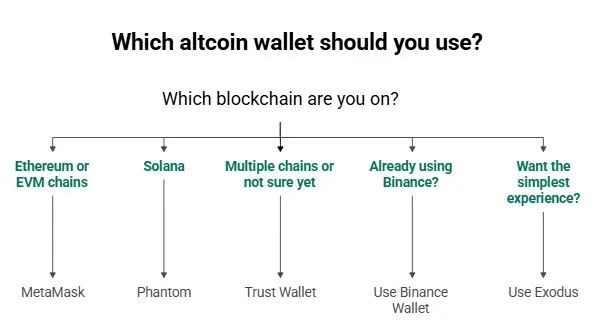
MetaMask for Ethereum and EVM chains. Phantom for Solana. Trust Wallet if you are spread across multiple chains. Binance Wallet if you already live inside the Binance ecosystem. Exodus if design and human support matter most. Pick the one that fits where your altcoins live, move your coins, and own them properly.