


The US Federal Reserve (Fed) determines the direction of the US economy by controlling interest rates. Since the Fed can either increase or reduce interest rates based on inflation levels, the agency’s ultimate decision usually has an impact on traditional markets as well as crypto.
For this reason, cryptocurrency traders and investors who comprehend the relationship between crypto prices, inflation, and interest rates can make more informed decisions and manage their risks better.
What are interest rates?
Interest rate is the cost of borrowing money or the reward for saving it. Usually, it is calculated as a percentage of the borrowed or saved money. Interest rates can either be low or high, based on the inflation rate in an economy.
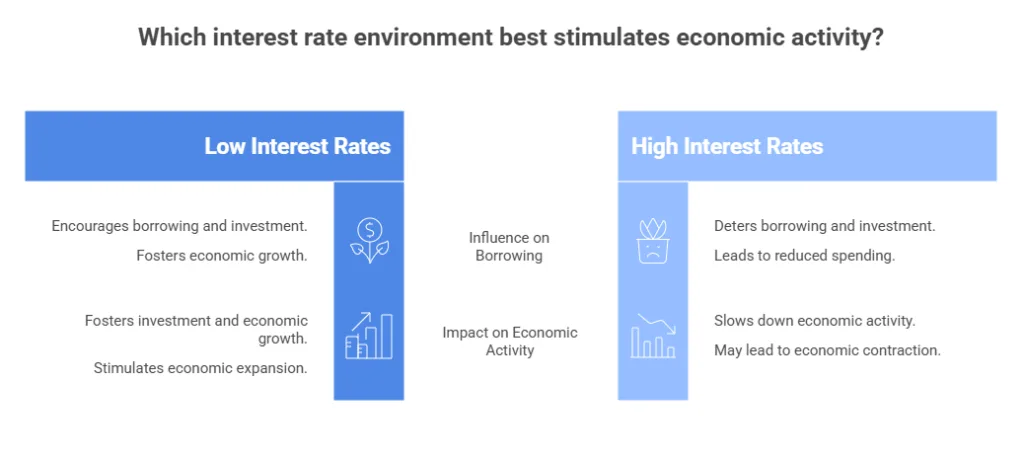
Low interest rates lower the cost of borrowing money, and thus increase spending and investment. The likelihood for companies to borrow funds for expansion increases, while consumers are more likely to finance large expenditures such as houses and vehicles. Low rates, however, mean that people receive low yields on their savings accounts or bonds.
Conversely, high interest rates make borrowing costly. This reduces expenditure and investment but increases the appeal to save since the conventional financial instruments have a high yield. The high rates are normally implemented to check the increase in inflation and ensure that the economy is not overheating.
High and low rates are very important as they determine the risk appetite and liquidity of both the traditional and crypto markets.
How the Fed decides whether to raise or lower interest rates
The Federal Reserve changes interest rates as per its dual mandate: to ensure price stability and maximum employment. The change, however, is subject to the Federal Open Market Committee (FOMC) decision.
Fed looks at a vast array of economic pointers prior to arriving at a decision: inflation, growth in the GDP, unemployment rates, wage trends, retail activity, and manufacturing performance. In case inflation is increasing at an unacceptable rate or the economy is growing at an undesirable pace, the Fed can increase the rates so as to reduce borrowing and expenditure.
On the other hand, when the economic activity is declining or when the unemployment rate is increasing, then it can reduce rates in an attempt to stimulate growth. The Fed also considers economic situations in the world and the stability of financial markets when making interest rate decisions.
Rate changes are mainly implemented through the federal funds rate, which determines the rates that banks charge one another for loans. This is then passed on to the consumer and business interest rates.
How interest rates impact crypto prices
The crypto market operates outside the conventional banking system. However, crypto prices are still influenced by macroeconomic factors. Changes in interest rates can affect cryptocurrencies in the following major ways:
- Liquidity and risk appetite: When the interest rates are low, it enhances liquidity and provokes more investors to take risks to attain more returns in riskier assets such as crypto. The interest rate increases illiquidity and may cause a shift of capital to less risky investments.
- Opportunity cost of holding: As interest rates go high, it becomes unappealing to hold non-yielding assets, such as Bitcoin or Ethereum. On the other hand, low rates will decrease the opportunity cost of crypto holding.
- Market sentiment: When the market rates increase, investors assume that the economy is tightening, which may decrease the risk appetite and cause short-term speculative assets sell-offs. Lower rates, however, can drive optimism and push prices upwards.
Traditionally, low rates and easy monetary policy, like post- COVID-19 pandemic, are associated with a significant surge in crypto prices. On the other hand, violent increases in rates, such as in 2022, triggered a dip across the crypto market due to tight liquidity.
Long-term impact of interest rates on crypto
The general trend across the crypto markets is also influenced by interest rates. Low interest rates are more likely to foster institutional adoption, since investors seek alternative assets that can facilitate growth. During these times, both retail and professional investors tend to pivot into crypto, creating bullish market trends.
On the other hand, high rates over extended periods of time may dampen speculative activity, decelerate institutional inflows, and promote capital hoarding. Under such conditions, there is a likelihood that investors will prefer stablecoins or yield-producing instruments over holding volatile crypto assets.
How to predict potential Fed interest rate changes
Even though the Fed cannot be perfectly predictable when it comes to its decisions, investors can anticipate possible outcomes by paying attention to economic indicators and policy cues. Key data to check include:
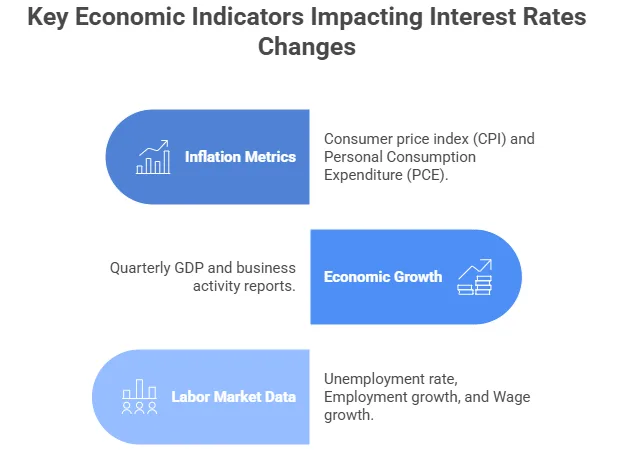
- Inflation metrics: Consumer price index (CPI) and Personal Consumption Expenditure (PCE).
- Economic growth: Quarterly GDP and business activity reports.
- Labor market data: Unemployment rate, Employment growth, and Wage growth.
Moreover, FOMC statements, meeting minutes, and projections provide first-hand information about the Fed’s potential interest rate decision. By monitoring these communications, as well as professional opinions by financial analysts, investors can develop a more informed opinion regarding the direction that interest rates will take.
How to shape your crypto strategy based on interest rates
Interest rates can have a big impact on your crypto portfolio, hence they must be taken into consideration. Here is how you can align your crypto strategy based on your interest rates:
- Define your investment strategy: When you are a long-term investor, the short-term changes in rates should not influence your decisions, as the basic things are more important in the long term. Short-term traders, however, must be keen since the changes in rates can easily change the prices and the mood within a short time.
- Anticipate volatility on changes of rate: You must protect capital or lock in profits, especially in times of uncertainty, by using risk controls such as stop-loss or take-profit levels.
- Portfolio diversification: When rates are high, lean towards stronger and established assets. Low rates, on the other hand, give more space to take calculated risks.
Conclusion
Interest rates are one of the effective instruments that can be used to not only impact the classical financial markets, but also the cryptocurrency as well. When interest rates are low, investment and growth are encouraged, whereas when they are high, speculation may be limited and liquidity will be reduced.
To crypto investors, the knowledge of the way the Fed determines rates, monitoring economic indicators, and keeping the eyes on the FOMC statements gives the advantage in overcoming market volatility.