

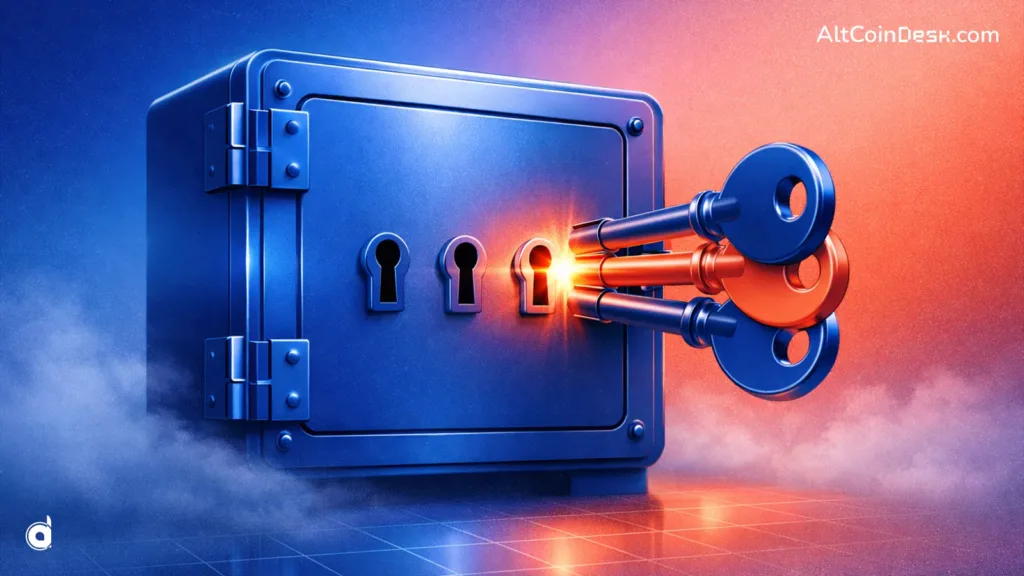

Not every crypto wallet hands control to a single person. A multisig wallet is one of the strongest security tools in the crypto space, and understanding how it works can protect someone from one of the most costly mistakes in the industry: losing everything through a single compromised key.
The idea behind it is straightforward. Instead of one key unlocking access to funds, multiple keys are required to sign off before any transaction goes through. Think of how a company requires two senior approvals before wiring a large sum. That added layer isn’t friction. It’s protection.
What the multisig wallet is actually doing
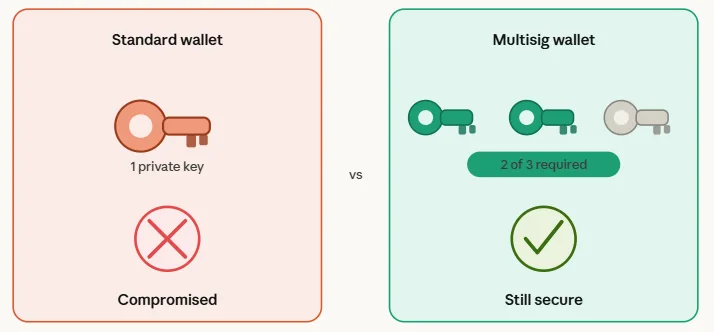
In a standard crypto wallet, there’s one private key. That key controls everything. If it’s lost, the funds are gone. If a hacker gets hold of it, the money disappears in seconds, with no way to reverse it and no customer service line to call.
A multisig wallet changes that by spreading control across multiple keys. No single key can approve or move funds on its own. Every transaction requires a minimum number of keys to agree before anything happens. This removes the single point of failure that sits at the root of most major crypto losses.
Hacks tied to weak or exposed private keys have drained hundreds of millions of dollars from exchanges and protocols, and in most cases, a single weak link in the signing process was all it took.
Multi signature wallet in crypto: The M-of-N formula
The way a multi signature wallet in crypto is configured comes down to a formula called M-of-N. N is the total number of keys created for the wallet, and M is the minimum number of those keys needed to approve a transaction.
Common setups include:
- 2-of-3: Three keys exist, and any two must approve
- 3-of-5: Five keys exist, and at least three are required
- 2-of-2: Both keyholders must sign every transaction
In a 2-of-3 multi signature wallet in crypto, a hacker who steals one key has nothing useful. They’re one approval short. To get through, they’d need to compromise multiple separate keys, which are typically stored on different devices in different locations. The coordination required stops most attacks entirely.
A practical example
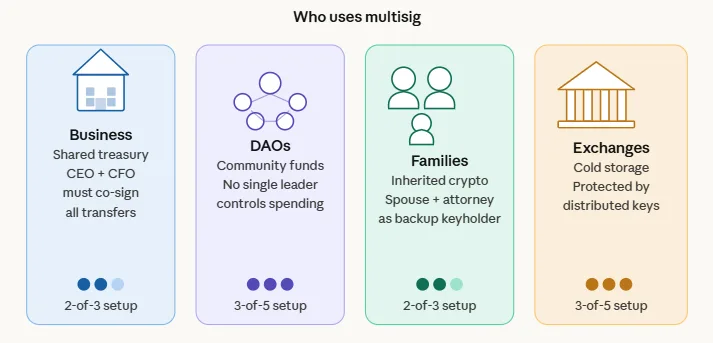
A small business stores its treasury in a 2-of-3 wallet. The CEO holds one key, the CFO holds the second, and the company attorney holds the third. No single person can move funds alone. If the CEO’s device is compromised, nothing happens. If the CFO leaves suddenly, the CEO and attorney can still access the wallet together.
Families use the same logic. A couple could each hold a key, with a trusted relative or attorney holding the third. If one spouse passes away, the other two can still access the funds between them. It’s the same principle as naming a beneficiary on a bank account, except the rules are built directly into the wallet itself.
Multisig wallet explained: Why the single-key model keeps failing
To get a multisig wallet explained properly, it helps to understand why the alternative keeps failing. Every major crypto theft tied to a single private key follows the same pattern. The key gets stolen through a phishing attack, a compromised device, or a social engineering scheme. Once it’s gone, the funds are gone with it.
With this type of wallet in place, that scenario becomes significantly harder to pull off. An attacker would need to steal multiple keys held by different people in separate locations. The multisig wallet explained through that lens is simply a system that requires consensus before anything moves, which is the same principle used in corporate banking, legal trusts, and nuclear launch protocols.
Who’s using multisig today?
The adoption numbers reflect how seriously the industry takes this. By 2024, Safe ((formerly Gnosis Safe), a leading multisig platform on Ethereum, was managing over $100 billion in assets with more than 1.6 million monthly active users. BitGo, a major institutional provider, reported processing over 8% of all global Bitcoin transactions by value in 2025, working with more than 1,500 institutional clients across more than 50 countries.
Businesses, crypto exchanges, decentralized organizations known as DAOs, and high-net-worth individuals have all adopted multisig as standard practice for managing shared funds.
On Bitcoin, the most widely used options are Electrum, Casa, and Specter. On Ethereum, Safe Wallet is the dominant choice, formerly known as Gnosis Safe. On Solana, Squads and Cashmere both support multisig setups.
How keys are actually managed
There are two ways to handle this. In a self-custodial setup, each keyholder manages their own key on their own device. Nobody else is involved. It’s the most private option, and it puts full responsibility on the individual. That’s not a problem if someone’s comfortable with it, but it does leave room for setup errors that can lock funds permanently.
The other approach is going through a service that holds one or more keys on a user’s behalf and helps coordinate approvals. Platforms like Casa are built for exactly this. They guide users through the process, hold a backup key in secure storage, and make the whole thing more accessible for someone who doesn’t want to manage every technical detail themselves.
For most people starting out, this is the more practical entry point. It’s still far more secure than a single-key wallet, and the risk of making a costly configuration mistake is much lower.
The trade-offs worth knowing
Setting up a multisig wallet takes more time than opening a standard one, and some blockchains charge slightly higher transaction fees because multisig transactions carry more data. Those are manageable trade-offs.
Lose enough keys and the funds are stuck there permanently. There’s no reset option, no support ticket to file. A 2-of-3 setup gives some breathing room because dropping one key still leaves two, which is enough to meet the threshold. A 2-of-2 setup isn’t that forgiving. Both keys gone means the wallet’s gone with them.
The other thing worth thinking through before setting one up is what happens when someone’s just unreachable. In a shared wallet, a transaction sits pending until enough signers check in and approve it. If a keyholder is traveling, sick, or simply not responding, nothing moves. For a business that needs to send funds on a deadline, that delay can be a real problem if there’s no plan in place for it.
Who should consider making the switch?
For someone just starting out with small crypto holdings, a well-secured standard wallet is a reasonable first step. But once holdings grow, or when shared access becomes necessary, moving to a multisig setup is the logical next move rather than a purely technical one.
The barrier to entry has come down considerably. Platforms like Safe and Casa have made the process accessible to everyday users without requiring deep technical knowledge. The tools exist for both beginners and large institutions. The main decision is whether to use them before something goes wrong, or after.