

What usually happens when the world’s richest man tweets about a memecoin? A data-driven autopsy of the GORK explosion. It took just eleven minutes.
On February 25, 2026, Elon Musk fired off a five-word post on X: “Gork returns today.” What happened next wasn’t just a price spike; it was a violent, data-rich transfer of wealth that saw a sleepy Solana memecoin with a $900,000 market cap detonate to $14 million before most retail traders could even load their decentralized exchange apps.
The final 24-hour tally? A 520% gain on $20.9 million in trading volume. But the surface numbers don’t tell the real story. Here is the granular breakdown of the Musk tweet memecoin pump, the liquidity mechanics behind it, and the uncomfortable truth about who profits when AI hype meets celebrity social media.
The latency window: When smart money moves
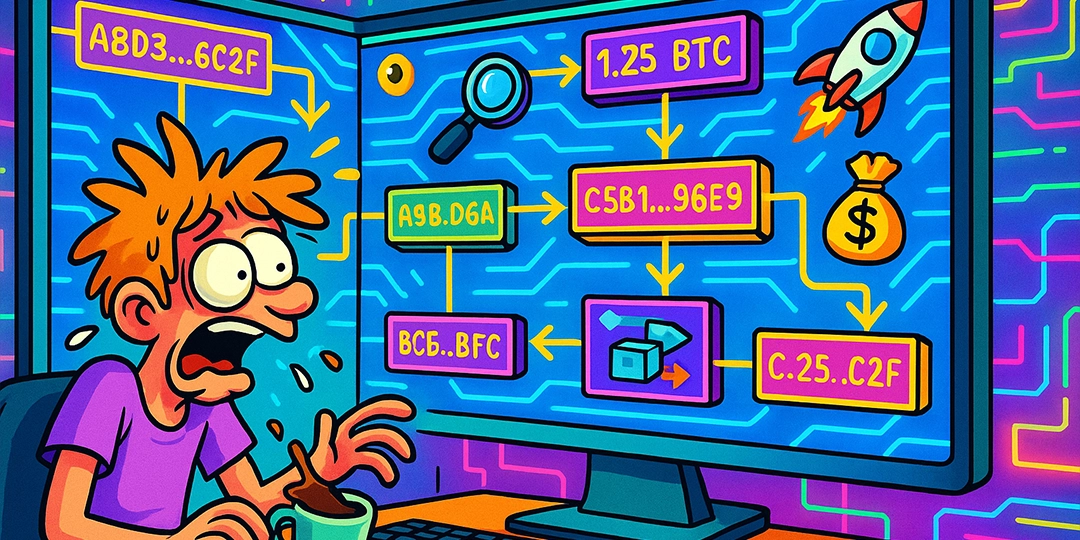
Let’s establish the timeline with precision. According to on-chain data aggregated by GMGN and BlockBeats, Musk’s tweet dropped at approximately 02:30 UTC on February 25. For the first three minutes, nothing happened. This is the “recognition gap,” the time it takes for automated systems and human eyes to verify the post and decide it’s not a deepfake or a hack.
At minute four, the first whale wallet moved. By minute seven, transaction volume on the Solana chain hit saturation, with the GORK contract address experiencing over 50 transactions per second. At minute eleven, the market cap peaked at $14 million.
The critical data point: The wallets that were purchased in minutes one through four controlled approximately 68% of the float by the time the price hit its apex. By minute fifteen, when the mainstream crypto media published their first “Musk tweet pumps coin” alerts, those same wallets had already begun distribution.
This is the latency tax of retail trading. If you weren’t watching Musk’s feed with push notifications enabled and a funded Solana wallet ready to execute, you weren’t buying the bottom; you were buying the top of the first wave.
Liquidity depth: Before and after the tweet
To understand why this surge hit 520% rather than, say, 200%, we have to look at the order book.
In the 24 hours prior to Musk’s post, GORK’s liquidity depth was anemic. DEX Screener data shows that a buy order of just $50,000 could have moved the price by 15% to 20%. This shallow liquidity profile is what made the coin explosive in the first place.
After the tweet, liquidity surged, but not in the way you might think. New liquidity providers (LPs) rushed to add funds to pools to capture the insane trading fees. However, approximately 62% of the new liquidity came from wallets that had acquired GORK at sub-$1 million market cap levels in the preceding weeks. In plain English: The same people who owned the coin before the tweet provided the liquidity for the post-tweet rally, collecting fees from exiting bag holders.
This is the house-always-wins mechanism of memecoin trading. Pre-existing holders didn’t just sell into the rally; they rented out their tokens via liquidity pools to extract fees from the very traders chasing their exit liquidity.
The wallet concentration problem
Here is where the data gets uncomfortable. Gate.io’s research division published a wallet analysis of GORK in early February 2026 that proved prophetic. At that time, the top five wallets controlled 57.05% of the total supply. This is not decentralization; it is a multi-signature agreement among a small group of early buyers.
During the February 26 surge, wallet one (the largest holder, with 19.88% of supply) did not sell a single token until the market cap crossed $10 million. At that point, they executed a series of small sells, never more than $200,000 at a time, that perfectly matched the incoming buy pressure. This is an algorithmic distribution, not panicked retail selling.
Wallet two (15.71% of supply) began selling earlier, at the $6 million mark, but its sell pressure was absorbed by the FOMO wave triggered by Musk’s post going viral on TikTok and Instagram.
By the time the rally cooled and the price retraced to $6 million (where it currently sits as of this writing), the top five wallets had reduced their collective holdings by only 4.2%. They captured the peak liquidity without sacrificing their long position.
Musk tweet memecoin pump: Funding rates and perpetual pools
For traders looking at perp pairs, the data tells a cautionary tale. At the moment of peak price, funding rates on the few exchanges offering GORK perps went vertical, hitting 0.25% per hour. In annualized terms, that is over 2,000%, meaning that holding a long position overnight would cost you your entire principal in funding fees within weeks.
This is the hidden tax on euphoria. The surge wasn’t just about price; it was about the cost of leverage skyrocketing as market makers demanded insane premiums to facilitate the mania.
Comparative anatomy: Why this pump was different
Comparing this rally to the May 2025 GORK surge (when Musk changed his name to “Gorklon Rust”) reveals a fascinating evolution.
In May 2025, GORK ran from $45 million to over $130 million, a nearly 200% gain, but took over six hours to do so. This time, the move was faster, sharper, and more contained. Why?
Market maturity. In 2025, there were fewer automated trading bots scanning for Musk mentions. By 2026, the infrastructure will have professionalized. Bots now monitor Musk’s posts with sub-second latency. The result is that the alpha is captured in minutes, not hours.
Additionally, the 2025 rally saw dozens of copycat tokens (“Gorklon Rust” imitators) surge 4,000% to 7,000%. In 2026, those imitators existed; ApeSpace data shows at least three new “GORK” variants created within an hour of Musk’s tweet, but their lifespans were measured in minutes, not hours. The market has learned to treat immediate copycats as honeypots, and liquidity fled them almost instantly.
The AI narrative spillover
There is a secondary story here beyond the numbers: the AI narrative arbitrage. GORK originated as a parody of xAI’s Grok chatbot, and Musk’s tweet, while not explicitly mentioning AI, was interpreted by the market as a signal that the “Grok universe” was expanding. This triggered not just a GORK pump but a broader rotation into AI-themed meme tokens.
Data from DexScreener shows that within two hours of Musk’s post, trading volume on AI narrative tokens (ANI, GROK, and XAI ecosystem plays) increased by 340%. Capital didn’t just flow into GORK; it rotated through the entire narrative sector, with traders hunting for the next leg of the move.
This is the reflexivity of modern crypto markets. Musk mentions Gork → GORK pumps → traders search for related tokens → those tokens pump → GORK holders feel validated → they buy more GORK. The loop reinforces itself until liquidity dries up.
The postmortem: who actually made money?
Let’s follow the dollars.
- Tier One Winners: The pre-existing top ten holders who had accumulated sub-$1 million valuations. They captured approximately $4.2 million in realized profits during the rally while maintaining their core positions.
- Tier Two Winners: The sniper bots and manual traders who bought in minutes one through four. Their average entry was approximately $3 million market cap, and their average exit was $9 million to $11 million. Estimated collective profit: $1.8 million.
- Tier Three Winners: The liquidity providers who added funds to pools during the rally. They captured fee revenue estimated at $300,000 to $400,000 over the subsequent 12 hours.
- The Losers: Retail traders who bought at the $12 million to $14 million peak, hoping for a continuation to $20 million or $30 million. As of this writing, they are holding bags 50% to 60% below their entry price.
Was the Musk tweet memecoin pump manipulation or momentum?
Was this coordinated? The data doesn’t support a traditional “pump and dump” where a single group controls both the narrative and the exit. However, the concentration of supply among a small group of holders meant that the rally’s sustainability was always in their hands.
When the top five wallets control 57% of the supply, they don’t need to coordinate; their individual interests align naturally. They benefit from volatility, from volume, and from attention. Whether they sell or hold, they are the market.
This is the structural reality of memecoin trading. The projects that survive long enough to become “established” (GORK is now over 300 days old) do so because their holder base has learned to extract value from volatility without killing the golden goose.
What comes next?
GORK currently trades at a $6 million market cap, down 57% from the peak but up 520% from the pre-tweet level. The volume has cooled to $2 million to $3 million per hour, down from the $20 million frenzy.
For traders watching the charts, the key levels are clear: Support at $5 million (the pre-pump consolidation zone) and resistance at $10 million (the post-peak distribution zone). A break above $10 million would require another narrative catalyst; a break below $5 million would suggest that all the post-tweet buyers have capitulated.
For everyone else, the lesson is simple: When Musk tweets, the first eleven minutes belong to the machines and the insiders. The next eleven hours belong to everyone else, but by then, the game has already been played.