


Bitwise introduced a new exchange-traded fund (ETF) to help investors hedge against the debasement of the dollar. The Bitwise Proficio Currency Debasement ETF, which goes by the ticker symbol BPRO on the New York Stock Exchange, benefits the investors from the eroding value of fiat currencies by giving exposure to precious metals, gold, metal, Bitcoin, and other mining equities.
Explaining what prompted them to launch this ETF, Bitwise wrote, “Why BPRO?” Because we’re not alone in thinking that fiat money has some big problems. Consider:
– The U.S. dollar has lost 40% of its purchasing power since 2006
– U.S. debt has roughly quintupled in the past 20 years to nearly $40T
– Interest payments on debt are >$1T, more than national defense spending in fiscal year 2026”.
Bitwise’s debasement ETF is an interesting signal because it shows how institutions are framing inflation risk today, as something to manage, not panic over. But when you look at the actual holdings, a meaningful portion sits in Treasuries, which only makes sense if they’re meant as short-term dry powder.
Analyst Lavneet Bansal
He further added that the fund is currently holding 1–3 year Treasuries, and at that point, it’s no longer a neutral hedge. It becomes an active rate bet, and that distinction matters for investors.
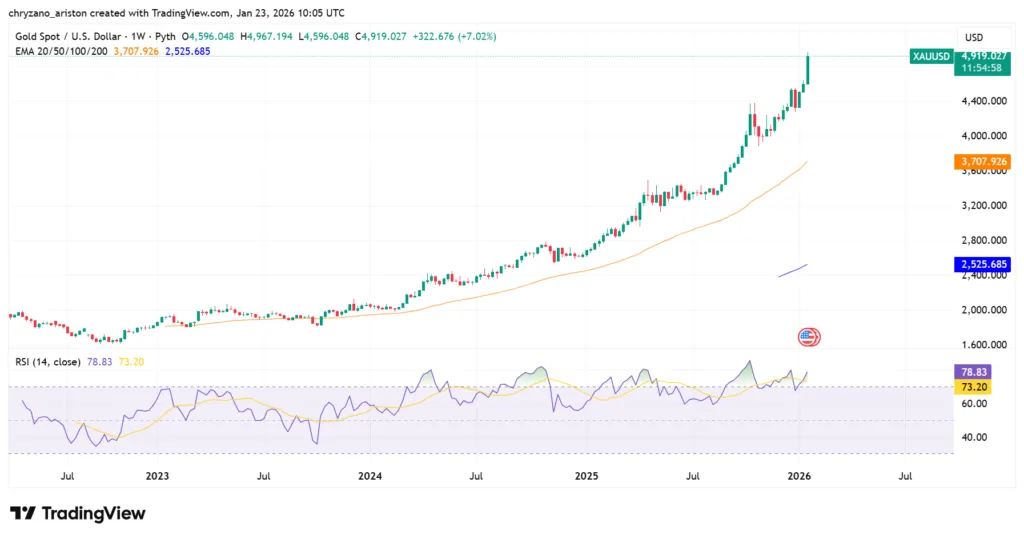
Gold rises above $4,000 in two years
As shown in the chart below, the gold/US dollar pair has been appreciating exponentially. From $2,000, gold’s price has risen to above $4,000 within just a couple of years. The political unrest and tension in the market made investors look for safer havens that are less volatile.
According to Morgan Stanley’s report published last year on the depreciation of the dollar:
“The U.S. dollar ended the first half of 2025 with its biggest loss since 1973. The dollar index, which measures the greenback against a basket of currencies of the U.S.’s major trading partners, fell about 11% from January through the end of June.
That decline also marked the end of a structural bull cycle for the dollar, which started in 2010 and ended in 2024 with an accumulated gain of about 40%.”
Further, it stated that although the currency had strengthened 3.2% in July, recovering some of this year’s depreciation, Morgan Stanley Research expects the decline to continue, possibly adding another 10% in losses by the end of next year (2026).
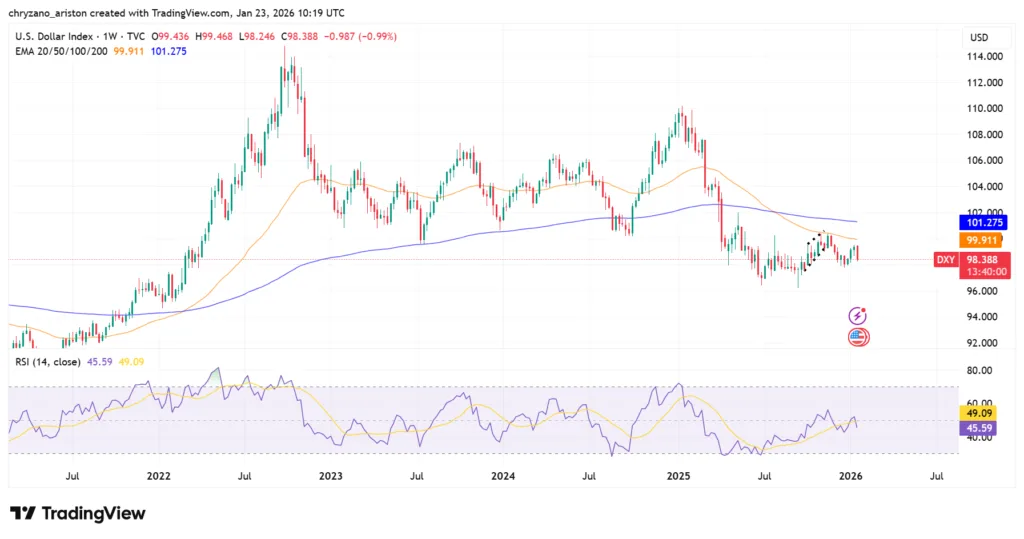
The US dollar index, which measures the price of the dollar against 6 currencies, crashed below the 50-day moving average, which paints a bearish picture in the short term.