



The latest exchange flow data is sending a mixed – and somewhat uneasy – signal across the crypto market, with Bitcoin and Ethereum telling two very different stories about investor intent and near-term positioning.
Rising supply pressure in Bitcoin
Start with Bitcoin. Netflows have turned decisively positive, while the reserve ratio is also climbing. In practical terms, that means a significant volume of BTC is moving onto Binance – and not just in absolute terms, but relative to the exchange’s existing reserves.
This isn’t idle movement. It points to a meaningful increase in liquid supply, the kind that typically precedes distribution rather than accumulation.
What makes this more striking is the context. The inflows have picked up alongside a price increase following news of an Iran–U.S. ceasefire.
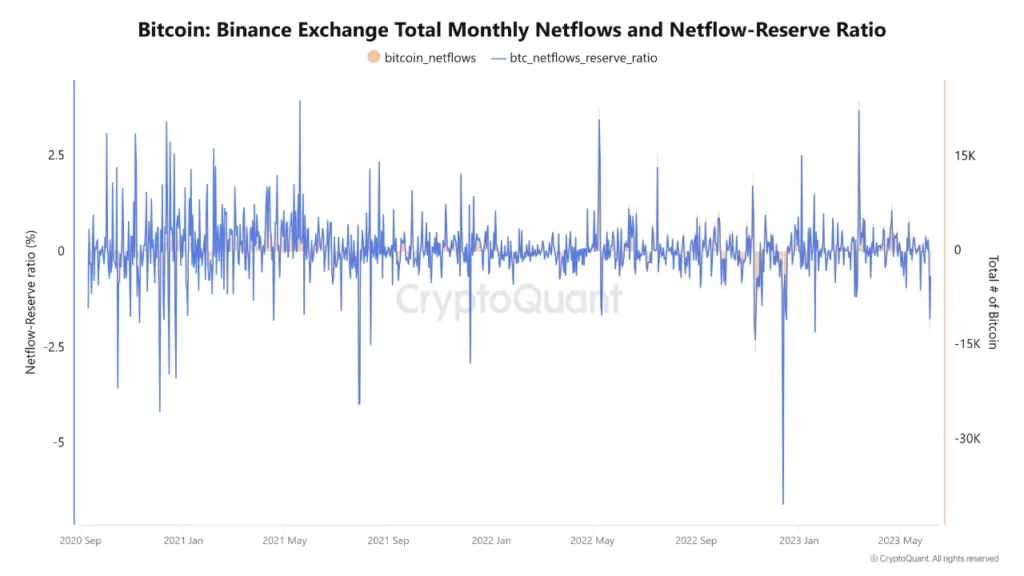
Under healthier market conditions, a rally like this would usually be supported by coins leaving exchanges as investors look to hold for further upside. Instead, we’re seeing the opposite: price strength paired with growing exchange supply.
That combination tells a simple story – some investors are using strength to prepare for exits. It doesn’t mean that a sell-off is close, but it does suggest conviction is still lacking.
When market participants are sending coins to exchanges while prices rise, it signals that they’re waiting for a better opportunity to sell rather than committing to long-term holding.
In that sense, Bitcoin is sitting under a heavier supply overhang than it might appear at first glance. The market may look stable on the surface, but beneath it, there’s a clear readiness to distribute any further upside.
Ethereum holds a more balanced position.
Ethereum is painting a different picture altogether
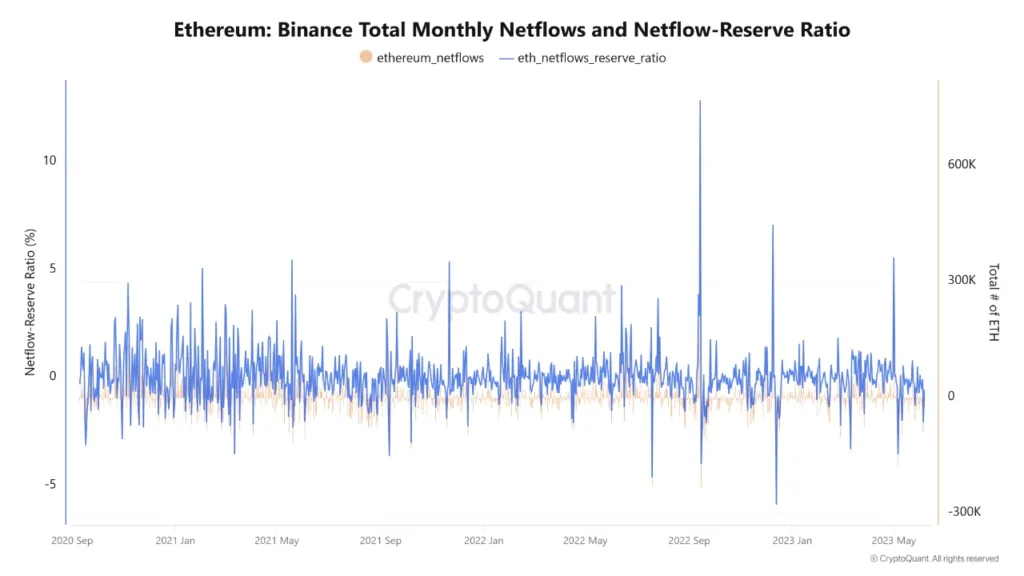
Netflows are slightly negative, and the reserve ratio is still around neutral. While there’s no meaningful surge of ETH flowing onto exchanges, there’s also no aggressive outflow suggesting strong accumulation. In other words, supply and demand are roughly balanced.
It basically means that there is no clear pressure building on either side—no wave of sellers preparing to sell, but also no clear marker that buyers are stepping in with a strong belief.
The result is a crypto market that feels more like it’s in waiting mode instead of moving, where neither side is in control.
Compared to Bitcoin, this makes Ethereum look more stable in the current environment. There’s simply less evidence of participants positioning themselves to sell, which naturally reduces downside pressure in the short term.
A market that’s no longer in sync
Looking across both the digital assets, the divergence becomes very difficult to ignore. BTC is seeing an increase in exchange supply, with stronger reserve ratio movements hinting toward rising selling readiness.
On the contrary, ETH remains relatively neutral with softer signals and less directional pressure.
This is important since it suggests the market is no longer behaving as a single, unified system. Instead, capital is starting to rotate and behave more selectively.
Bitcoin appears to be carrying a larger share of the near-term supply pressure, while Ethereum and much of the altcoin market are holding steady without the same urgency to sell.
For now, that leaves Bitcoin more exposed to short-term downside if selling accelerates, particularly into any further price strength. Ethereum may continue to move in a more range-bound fashion, at least until clearer demand emerges.
In a market this fragmented, the differences matter. What looks like broad strength at first glance can quickly give way to divergence beneath the surface – and right now, that divergence is hard to miss.