

On July 30, 2015, a single technical act, mining the Ethereum genesis block, quietly changed what was possible with blockchain technology. Unlike Bitcoin, which was conceived as digital gold, the launch of Ethereum came with a different promise: A blockchain that could run code in public. This was Frontier, Ethereum’s first mainnet release, an airport with functional runways but half-built shops, intentionally imperfect but unequivocally alive.
That first year saw 7.9 million transactions, 111,569 deployed contracts, and an average of just 3,842 daily active addresses. The network began with a pre-distributed 72 million ETH, funded by an internet-native crowdsale of approximately 31,000 BTC. It was raw, experimental, and proved one radical concept: smart contracts could exist as public utilities.
The arc of evolution: 2015 was birth, 2025 adulthood, & 2026?
- 2015 asked: “Can blockchains run code at all?”
- 2025 asks: “Can millions of people and apps use Ethereum cheaply and safely?”
- 2026 will ask: “Can Ethereum disappear into the background while doing this?”
This is the trajectory, from proving a concept to building global, stable infrastructure.
2015 was birth, proving smart contracts could exist

When Ethereum launched Frontier in July 2015, the goal was simple and bold: prove that smart contracts could exist on a public blockchain. Frontier did not aim to be friendly or polished. It focused on possibility. This was Ethereum’s first public mainnet, deliberately unfinished, like switching on a power grid before anyone owns appliances.
The foundation had to come first. After the launch of Ethereum, activity was intentionally slowed. Early gas limits were extremely low, then gradually increased as the network stabilized. One detail says it all. On July 31, 2015, active addresses were zero. The network was alive, just not busy yet. That was not a failure. It was careful engineering.
2025: The year of Pectra—building a usable foundation
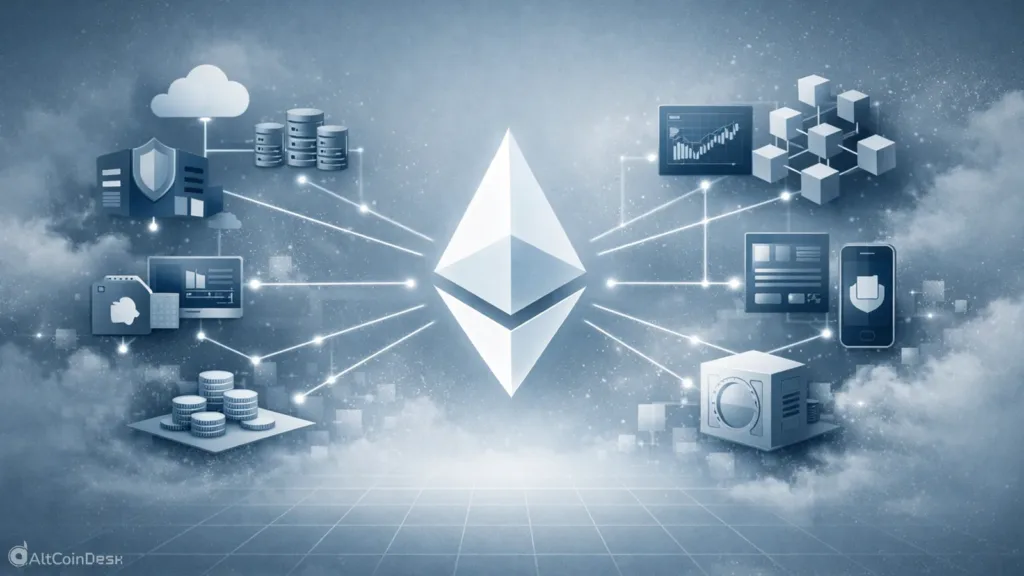
By 2025, Ethereum is no longer proving that smart contracts work. It is proving that they can support real economies, real users, and real institutions. The defining upgrade of 2025 is Pectra, a combination of Prague on the execution layer and Electra on the consensus layer. Pectra is not a flashy moment like Frontier. It is a quality-of-life and scalability release.
Pectra focuses on three things:
- First, accounts become smarter by default. Wallets behave more like apps. Recovery improves. Seed phrase anxiety reduces. Transactions become more flexible. This makes Ethereum safer for everyday users in the US and globally.
- Second, staking becomes simpler and more flexible. Validator operations improve. Exits and rewards become cleaner. Infrastructure works better for both institutions and solo stakers. This matters because Ethereum’s security now depends on millions of ETH being staked responsibly.
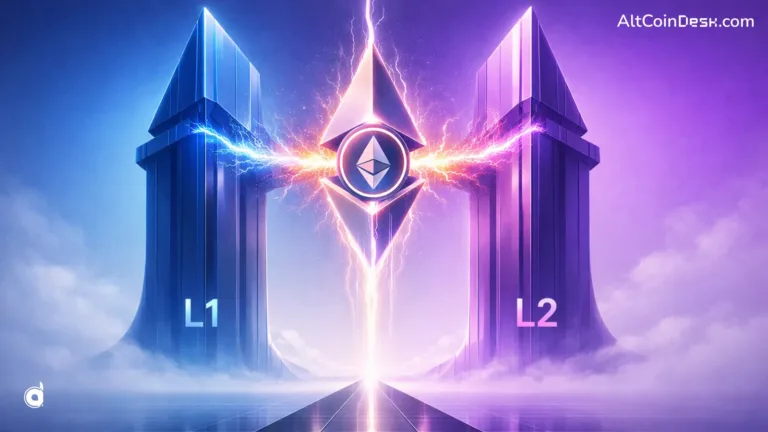
- Third, Ethereum keeps scaling without breaking itself. Instead of forcing everything onto mainnet, Ethereum continues to act as the secure settlement layer for an entire ecosystem of rollups and layer-2 networks.
2025 is not about reinventing Ethereum. It is about making Ethereum predictable, stable, and boring in the best way.
The road to invisible infrastructure in 2026

If Ethereum is nice and predictable in 2025, the goal for 2026 is to make it invisible, an infrastructure that works so well that we don’t even notice it but still keeps decentralization.
Ethereum’s long-term roadmap, often described by Vitalik Buterin, breaks the future into themes:
- The Verge focuses on making Ethereum run more lightly. Technologies like Verkle trees reduce storage requirements. More people can independently verify the chain. This protects decentralization as usage grows.
- The Purge removes old technical debt. Unnecessary historical data is cleared. Complexity is reduced. Ethereum becomes easier to maintain long-term.
- The Splurge covers everything else. Security hardening. Performance tuning. UX improvements that make Ethereum feel less like crypto tech and more like normal infrastructure.
By 2026, Ethereum will not be trying to impress users. It is trying to stay out of your way.
The data-driven evolution: From 2015’s first year to 2025’s scale
Then (2015-2016):
- Peak daily transactions: 70,148
- Contracts deployed in first year: 111,569
- Average ETH price: $5.61
Now (Projecting to 2025-2026):
- Daily transactions (across L2s): 10-100 million
- Contract deployments: Automated and standardized
- User experience: Wallet recovery without seed phrases
- Cost: Transactions under $0.01 on layer-2 networks
Final takeaway: The infrastructure lifecycle
The launch of Ethereum with this programmable core did not immediately create DeFi or NFTs. Instead, it provided the primitive building blocks that developers could combine like digital Legos.
- Ethereum’s first steps were awkward but groundbreaking in Frontier (2015).
- Pectra (2025) is Ethereum learning how to serve the world in a way that is safe, reliable, and scalable.
- The Verge/Purge (2026+) is Ethereum learning to stay out of the way, efficient, lightweight, and sustainable for decades.
This isn’t a rebranding or pivot. This is what serious infrastructure looks like when it grows up: first you prove it works, then you make it work for everyone, and finally you make it so reliable we forget it’s there, until, like the internet itself, we can’t imagine a world without it.