

Stabelcoins are an integral sector of the crypto industry, as they highlight the growing real-world use cases and stable price value that typically remain unaffected, unlike other cryptocurrencies. In 2025, major firms have launched new stablecoins and announced the upcoming stablecoin launches planned for 2026.
This article will show you the top four stablecoins that will hit the industry this year, as the stablecoin market runs toward exponential growth. It is important to note that this article does not encourage you to invest in any of these stablecoins. It simply informs you about some new stablecoins that are set to launch.
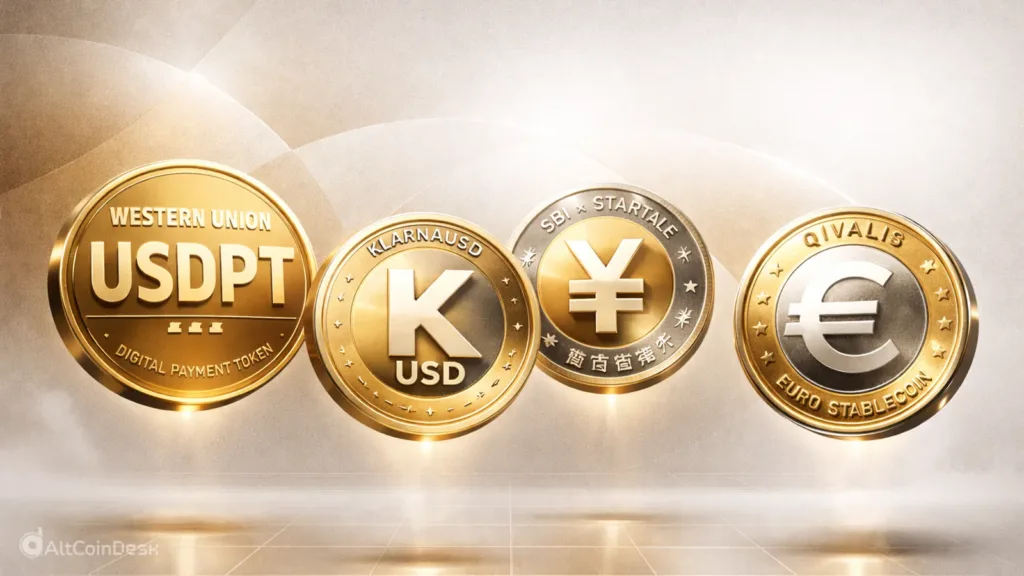
KlarnaUSD
KlarnaUSD (KUSD) is a US dollar-pegged stablecoin by Klarna, a Swedish fintech company. The firm announced the stablecoin in November 2025, and the complete rollout is expected to happen this year.
At the moment, KlarnaUSD is running on the Tempo testnet, becoming the first bank to launch on the Tempo, the payments blockchain by Stripe and Paradigm. With the new stablecoin, Klarna is exploring payment stablecoins to reduce cross-border transactions and speed up the settlement process.
Western Union’s USDPT
Western Union, one of the leading global financial service companies, first mentioned its dollar-pegged USDPT stablecoin in October 2025. Along with the stablecoin ventures, the company announced an innovative Digital Asset Network to “bridge the digital and fiat worlds”.
Issued by Anchorage Digital Bank and built on the Solana network, USDPT marks its presence in the wide array of stablecoin lists. Western Union helps move money for agents, partners, and customers and intends to support the company’s treasury with the launch of USDPT.
SBI Holdings x Startale yen stablecoin
SBI Holdings, a Japanese financial service firm and Singapore-headquartered Web3 firm, is launching a fully regulated Japanese yen-backed stablecoin in 2026. Like other common stablecoins, the yen-denominated tablecoin will support international settlement, cross-border payments, institutional adoption and tokenized assets.
For Japan, SBI Holdings and Startale’s yen-pegged stablecoin marks another achievement in its stablecoin race as its crypto sector is evolving with other global competitors. JPYC, MUFG, and GYEN are other key stablecoin players in Japan.
Qivalis Euro stablecoin
Qivalis is a joint venture based in Amsterdam that promotes a euro-pegged stablecoin. The venture is formed and headed by a consortium of 10 major European banks, such as UniCredit, BNP Paribas, ING, DekaBank, KBC, Danske Bank, CaixaBank, and more.
It is important to note that Qivalis is not a stablecoin, but a bank-backed consortium project designed to launch a MiCA-compliant and European Union-native payments rail that includes the euro-denominated stablecoin.
The core intention of the consortium-based venture is to launch a euro-pegged stablecoin that can defeat the USD stablecoin dominance.
Stablecoin market explodes in 2025
Last year, we saw a notable number of stablecoin launches, adoptions, and integrations, making it one of the leading sectors of the crypto ecosystem. The key reason for the exponential rise is very clear: the arrival of the GENIUS Act for payment stablecoins.
According to the CEX.IO research platform, stablecoin supply reached approximately $45 billion in Q3 2025, and over 83% os the supply stemmed from USDT, USDC, and USDe stablecoins. Moreover, the research platform emphasized that the stablecoin trading volume hit a staggering $10.3 trillion in the same quarter.
If 2025 showcased us the best performances of the stablecoin market, this year would welcome more supply and trading volume for the stablecoin market, driven by more adoptions and integrations.