
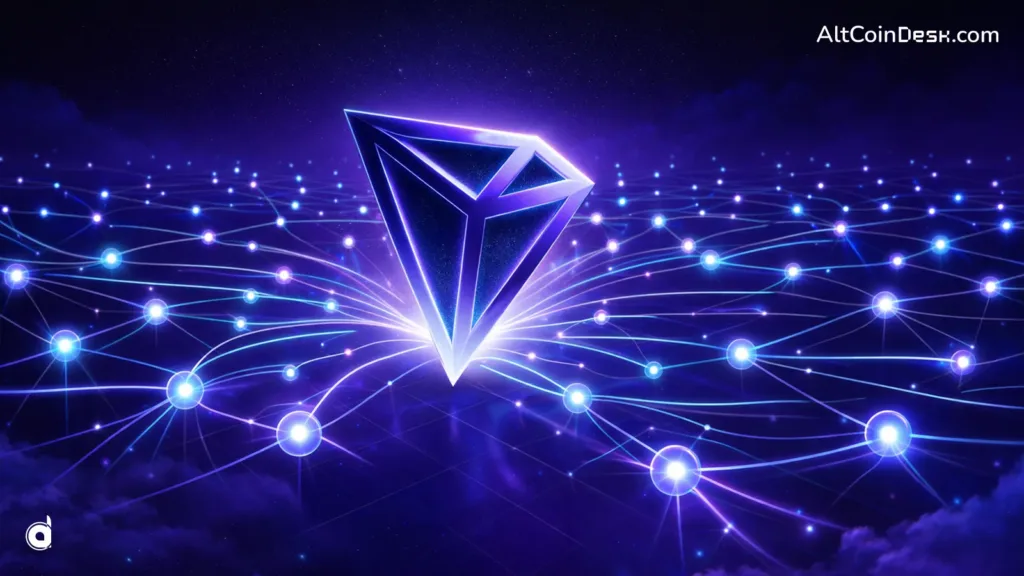

In a critical move reshaping the blockchain industry, TRON DAO has announced its integration with a permissionless interoperability protocol called Hyperlane. This significant integration is opening doors to more than 150 blockchain networks, meaning users and developers can now interact with multiple ecosystems seamlessly.
TRON’s integration with Hyperlane is a shift toward full-scale cross-chain communication. This goes far beyond simple token transfers to enabling smart contracts, data, and cross-chain functionalities to move freely across different blockchains.
A major step beyond traditional cross-chain bridges
You may be very familiar with cross-chain bridges, where you can move tokens from one blockchain, for example, Solana, to another chain, pay a fee, and wait. This is the standard model followed by almost all blockchains.
Bridges usually handle digital asset transfers only; however, in the case of TRON-Hyperlane integration, developers can now execute cross-chain smart contracts, transfer data, instructions, and other information, and enable complete composable decentralized applications (dApps) across chains.
Hyperlane is a permissionless interoperable layer, where developers do not require permission/approval to link their applications across multiple blockchains. This open interoperable stack of Hyperlane allows TRON to easily share its system with other chains.
Stablecoin expansion is a major outcome of TRON-Hyperlane integration
Through the collaborative process, Hyperlane allows TRON to communicate across other blockchains, as mentioned. Besides these fundamental upgrades, stablecoins on TRON can now be moved freely across over 150 blockchains.
TRON, unlike other blockchains, has recently been showcasing a high volume of stablecoin transactions/settlement layers with one of the largest USDT networks. When reading the latest integration of TRON’s stablecoin growth, one can say that the blockchain platform has become a ‘stablecoin hub expansion’.
Therefore, with Hyperlane, stablecoins on the blockchain can move across other chains, different blockchains can reach out to TRON’s liquidity, and hence, cross-chain payments and DeFi flow become much easier.
In simple terms, hyperlane integration is similar to building highways between cities, while stablecoin expansion is like more trade happening on the highways.
Jumping from isolated chains to fully connected ecosystem
Yes, within a single integration, TRON has become a fully integrated system. TRON has strong liquidity and high user activity; however, most of the user activities happen within the ecosystem itself.
After the integration, TRON’s liquidity can now move across other chains, and developers can tap into the ecosystem, as explained.
Now, coming to the smart contract part, it might look a bit technical. But here is the catch: developers can send instructions to execute the smart contract function on another blockchain, exchange data including user activity and governance signals, and even trigger events across ecosystems.
These functionalities make blockchain a truly interconnected Web3 environment, because a DAO (decentralized autonomous organization) vote on TRON can stimulate action on other chains, a DeFi protocol on a blockchain can interact with TRON’s liquidity, and NFT ecosystems can operate on different chains.
While looking at TRON’s recent venture, the blockchain platform has been actively exploring AI-driven blockchain finance, providing AI projects with funds, accelerating from a previous $100 million to $1 billion. The AI funds will focus on four major segments: agent identity systems, stablecoin-based payment rails, tokenized real-world assets, and developer tooling for autonomous financial systems.
Cross-chain interoperability is a boost for TRON’s growth
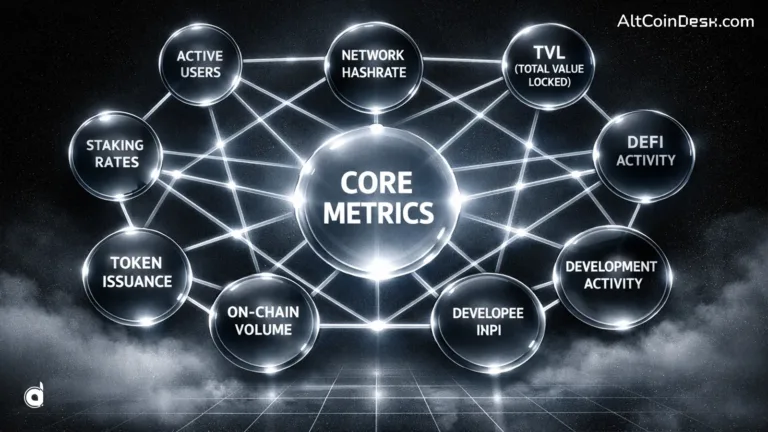
TRON is already strong enough in terms of total value locked/TVL, massive transaction volume, and greater adoption in markets. Now, with expanded operations, analysts expect an increasing demand for TRON’s TRX native coin alongside expanded use cases for TRON-based applications.
More importantly, the integration cements TRON’s position against other competitors like Solana and Ethereum.
Now zoom out a bit. TRON-Hyperlane integration cannot be considered the only interoperable function because the blockchain industry is entering a space where interoperability is greater than individual chain dominance.
In simpler terms, several blockchains are implementing cross-chain features. Cosmos is probably the well-known interoperable blockchain ecosystem. The ecosystem uses Inter-Blockchain Communication/IBC protocol, allowing to send data, instructions, and tokens across other chains.
One thing to note is that Cosmos is unique because interoperability is built into its architecture, and not added later.
At first glance, the integration might look like just an announcement, but in reality, it’s not. The TRON-Hyperlane collaboration is about shifting from token bridges to full ecosystem interoperability by turning TRON into a cross-chain liquidity engine. This multi-operational integration would open ways for other blockchains to behave like a single unified system.
If this vision becomes more alive, the future of blockchain and crypto might belong to the networks that connect them all, rather than belonging to a single chain.
How does the cross-chain interoperability work?
In essence, cross-chain interoperability through TRON-Hyperlane integration is not a hard-to-understand process. When a user initiates an action on TRON, Hyperlane validators pass the message to another chain. The destination chain accepts the message and executes the instructions.
Let’s look at another example.
- Imagine you have your wallet on Ethereum, and you approach a DeFi lending app on Ethereum to borrow $1,000. And, your liquidity comes from TRON.
- As TRON + Hyperlane integration is live now, the DeFi lending app pulls liquidity from TRON, meaning your loan is funded by TRON, although you are using Ethereum.
- In the next step, your loan is executed; you receive $1,000 on Ethereum.
- Meanwhile, a cross-chain confirmation message is sent to TRON, saying that funds are used, and a smart contract on TRON adds the record of fund transfers.
- Now, you repay the loan ($1,000) on Ethereum, and this action sends a message across chains.
- This results in triggering a smart contract on TRON. Smart contracts then record the loan as paid and issue liquidity back into the liquidity pool.
But, some limitations protrude
For every technology, there are pros and cons, and the same is applicable to the TRON-Hyperlane integrations and the related interoperability. There are a few questions that need to be underpinned: will developers actively adopt the infrastructure, or how well can cross-chain systems enhance security?
Interoperability has both advantages and disadvantages. The positive side is more connectivity and more growth opportunities. However, more cross-chain connectivity can also lead to potential attacks/exploits. We see every week, DeFi protocols being hacked and drained, despite being highly protected.
To put it in other words, the vision for interoperability is compelling; however, the execution part is the key.