
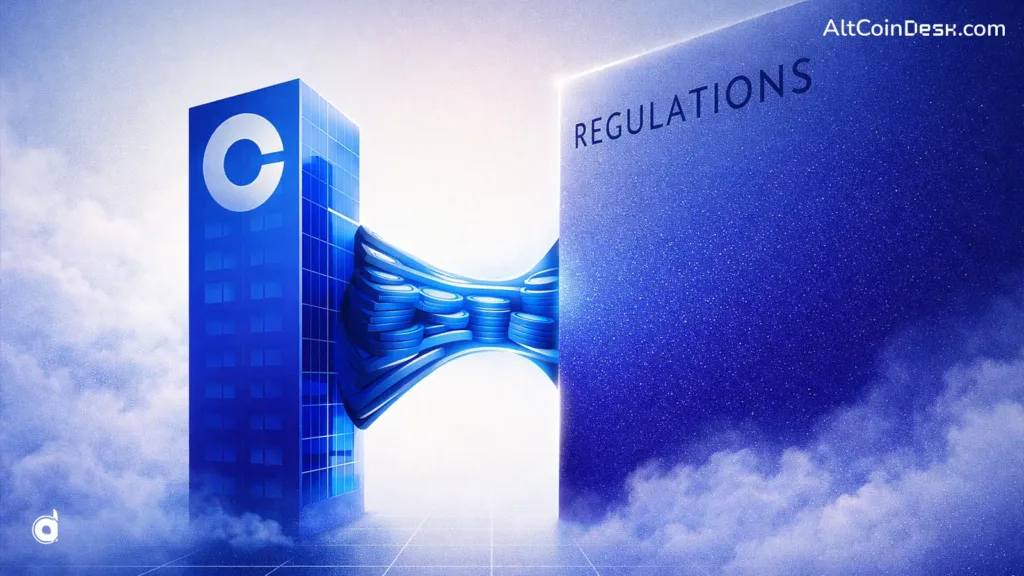

Coinbase has once again withheld its support for the latest revised draft of the Clarity Act, the Senate’s major legislation on crypto market structure. The main setback remains the bill’s approach to stablecoin yields, which prohibit platforms from paying users rewards or interest on passive stablecoin holdings.
Tension rise in latest Senate meeting
During a crucial meeting with Senate offices on Monday, March 23, 2026, representatives from Coinbase signaled that they cannot back the current compromised bipartisan draft language.
This is the second time Coinbase has blocked the bill’s momentum, following an open rejection in January, when the CEO, Brian Armstrong, stated that the company would rather have no bill than a bad bill.
What the bipartisan compromise aims to do
The bipartisan compromise, led by Senators Thom Tillis and Angela Alsobrooks, is aiming to resolve a long-running feud between crypto firms and traditional banks.
From the very beginning of the Clarity Act’s drafting process, traditional banks raised concerns about yield-bearing stablecoins competing with deposit-based systems. The main argument was that yield-bearing stablecoins could draw deposits away from traditional savings accounts. Reducing banks’ lending capacity.
The draft would ban exchanges from paying users yield, rewards, or interest on stablecoin holdings, particularly those passive balances that look and act like bank deposits. To make things even tighter, the rules would restrict access to the trading data used to calculate these rewards and direct regulators such as the SEC, CFTC, and Treasury to roll out detailed rules within a year. The goal is to stop stablecoins from draining money away from traditional community banks.
What’s at stake for Coinbase
In 2025, Coinbase pulled in $1.35 billion from its stablecoin ventures, most of it, from its collaboration with Circle on USDC.
If the government bans these rewards, that high-margin revenue stream could evaporate. Just after the latest draft surfaced, Coinbase stock (COIN) recently closed at $181.10, struggling to stay above the $200 mark since the initial draft was released. Circle’s stock has also taken a hit.
As for now, the situation remains highly fluid with no clear end in sight. Senator Cynthia Lummis stressed the need for bipartisan compromise, stating that more delays could harm America’s financial competitiveness and warning that crypto legislation cannot be deferred until 2030. She added that work continues around the clock to protect stablecoin rewards while preventing deposit flight from community banks.
Coinbase has not issued a public statement on the latest draft, and Brian Armstrong has remained silent so far, in contrast to his more direct reaction in January. The exchange also serves as an important funder of the Fairshake super PAC, adding political weight to its position in Washington.