


$1.93 billion in cryptocurrency was stolen through wallet drainers and phishing scams among the cases reported within the first half of 2025. Fighting against them, the Ethereum Foundation is now sponsoring the Crypto Security Non-profit Security Alliance, or SEAL. The goal is to monitor, track, and ultimately neutralize social engineering attackers and crypto drainers who are targeting Ethereum users.
Wallet drainers used fake startups
According to Darktrace, crypto investors are targeted by threat actors with fake startup companies in an elaborate social engineering scheme by getting their targets to download software that drains their crypto wallets.
To trick as many victims as possible, these actors make the companies look as legitimate as possible, using platforms like X to contact their targets using compromised accounts with impressive lists of followers and following.
The increasing sophistication of their tactics is what calls for the development of enhanced detection and prevention mechanisms. According to reports by Scamsniffer, the wallet drainers are seen as a type of malware that is deployed on phishing websites to steal crypto assets by persuading users to sign malicious transactions.
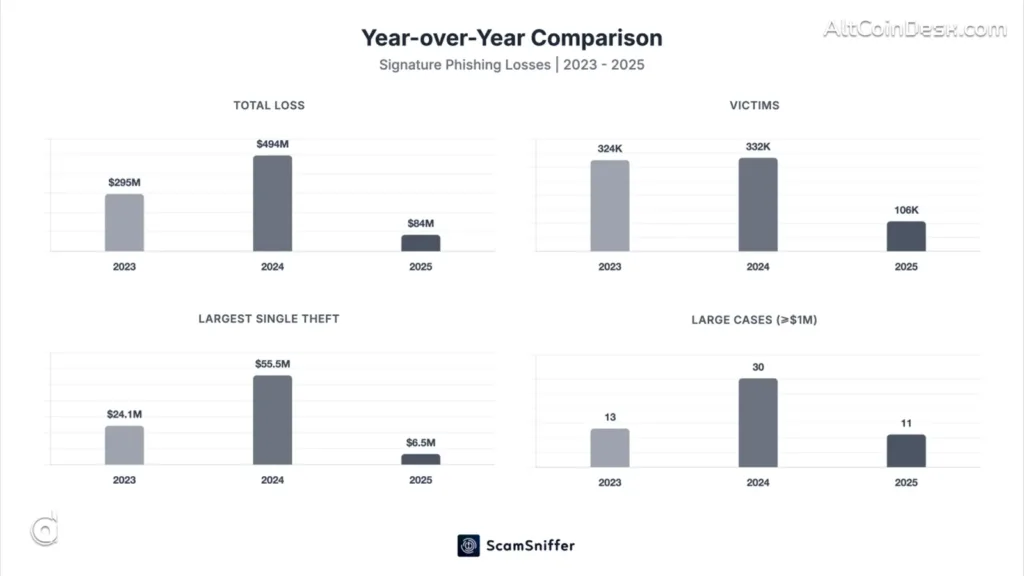
“In 2024, such attacks caused approximately $494 million in losses, a 67% increase year-over-year. The number of victims only increased by 3.7% (reaching 332,000 addresses), and the loss per attack increased significantly, with the largest single theft amounting to $55.48M USD,” they reported.
The Trillion Dollar Security Initiative
SEAL’s overarching objective is to protect the crypto ecosystem and its participants with collaborative tools.
“The Security Alliance has done important work to combat attacks, and the ecosystem has benefited tremendously,” the Ethereum Foundation posted to X.
SEAL stated they reached out to the Ethereum Foundation last year about funding security engineers to track the wallet drainers and to protect against the wide-scale attacks. They announced the launch of the “Trillion Dollar Security” on Monday, which is a combined initiative of SEAL and the EF.
The EF has also allocated a security engineer with the “sole mission” of working on the SEAL’s intelligence team to combat drainers targeting Ethereum users. The Trillion dollar Security dashboard will track Ethereum security across six dimensions.
Ethereum Foundation’s recent initiatives
In the recent headlines, Vitalik Buterin announced on X about the foundation’s initiative to allocate a substantial 16,384 ETH, valued at tens of millions of dollars, to boost the open-source hardware and software ecosystem.
Buterin said the funding is directly aimed at Ethereum’s technical roadmap, focusing on scaling the network, strengthening its resilience, and ensuring long-term sustainability. Rather than a broad funding program, the allocated funds represent a focused effort to strengthen the essential infrastructure required for a decentralized internet.