

The geopolitical tension appears to be intensifying, although several affected countries have declared safety measures to protect their civilians. In between, crypto, the risky asset, is not largely impacted; however, some exchanges in Iran have reportedly blacked out, which could be due to internet outages.
Wars and resulting outages affect Nobitex, Ramzinex: Chainalysis
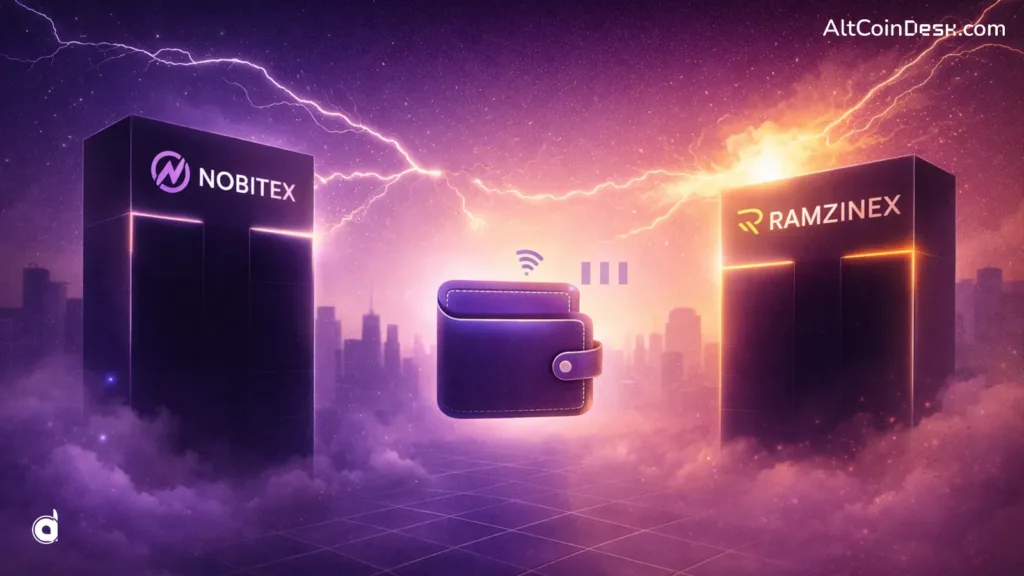
Chainalysis, a blockchain analysis firm, has brought to light the news that several Iranian exchanges have gone to offline mode. Specifically, Nobitex and Ramzinex, two of the region’s leading crypto exchanges, read ‘website server temporarily unavailable.’
Moreover, in times of several previous protests and tensions, there has been a substantial increase in the number of withdrawals from exchanges to unattributed personal Bitcoin (BTC) wallets. Looking through one angle, crypto’s censorship-resistant and self-custodial nature allows individuals to withdraw their investments at any time, especially in times of financial instability.
Crypto as a safe haven in Iran
Iran’s crypto leap is exceptional, as it has amassed over $7.78 billion in growth in its ecosystem in 2025. As the report suggests, Iran’s state institution is highly engaged in crypto activities, as wallets linked to the organization’s network showed over 50% of total crypto value received in the region in Q4 2025.
As such, Chainalysis executives pointed out one major point: “As sanctions pressure and international opprobrium intensify, and Iran’s economic volatility persists, cryptocurrency will likely remain a crucial tool for Iranians seeking financial sovereignty.”
Moving on, the report firmly underscored the importance of cryptocurrencies like Bitcoin during a crisis. For many people, especially in Iran, crypto has become a tool of resistance, providing liquidity unlike traditional assets, which are highly illiquid.
The Russia-Ukraine war denotes crypto as a financial survival tool
This is another example of where Bitcoin was represented as a serious financial tool to survive during wars. In 2022, when Russia invaded Ukraine, the Ukrainian citizens used Bitcoin and other digital assets like stablecoins to move their savings to other countries.
Even the government played an important role by raising nearly $100 million in crypto donations. This teaches us a simple lesson: crypto is highly risky and volatile, but in times of financial crisis and inflation, this digital asset can act as a financial escape hatch.
Nobitex faces security incident in 2025
Nobitex might not be a new name for seasoned crypto participants. In June 2025, Iran’s largest crypto exchange faced a cyberattack, where hackers drained nearly $100 million worth of assets, such as Bitcoin, Ethereum, USDT, TRX, and more. The hack happened during another period of geopolitical tensions in the Middle East in the same month.
Following the incident, Iran’s central bank limited crypto trading to prevent further hacks and monitor suspicious activities. On the good side, Nobitex initiatedstep-by-step recovery process to bring services back safely.