
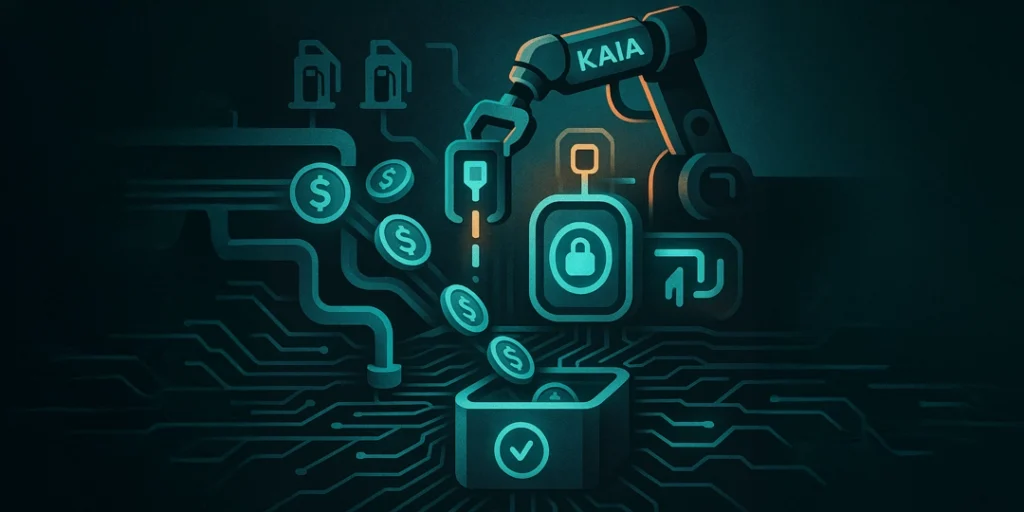

Layer 1 blockchain network Kaia rolled out its new feature, Gas Abstraction (GA), which allows users to pay their gas fee using stablecoins. This feature comes in quite handy as it solves the problem of users needing to have the native token of the blockchain to pay their gas fee. For instance, if someone was doing a transaction on the Ethereum network, they would need Ethereum coins to pay the gas fee. However, if, by any means, they had stablecoins, then they might need to convert that to Ethereum before executing the transaction. With Kaia’s GA, this problem could be solved. However, before we get into more details, let’s lay the fundamentals.
So, what is a gas fee, and why is it called that?
A gas fee is a payment made to the validators or miners to perform a transaction or execute an action on a blockchain—especially networks like Ethereum. It is called ‘gas fee’ because just like a car runs on gas, the blockchain network needs validators and miners to maintain the chain. While mining for blocks, the miners incur a cost for computational power, and the gas fee helps them compensate for this expense. Hence, the term gas fee.
How’s Kaia different from other projects?
Unlike other projects that make use of third parties to handle fees on behalf of the users, Kaia’s solution is based on KIP-247: Gasless Transaction and KIP-245: Transaction Bundle. “Kaia’s GA empowers the block proposer (the Consensus Node building the block) to temporarily cover the KAIA fee for the user and be reimbursed with the user’s token within the very same block. The entire process is handled at the network level without any trusted intermediary, increasing reliability, mitigating risk, and allowing users to interact with the blockchain as if gas fees don’t exist.”