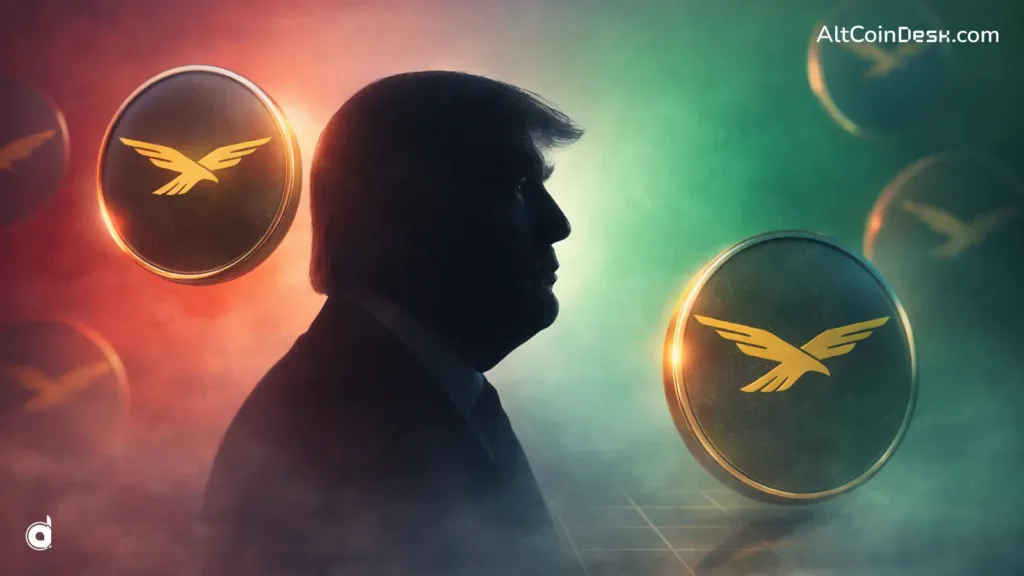

When the news broke about Pakistan partnering with WLFI on a USD-pegged stablecoin, the headlines rushed to the politics. The Trump-linked angle was irresistible. But focusing on personalities misses the more important signal. Pakistan partnering with WLFI is not a political stunt. It is a practical response to a problem many governments quietly share. Central bank digital currency projects move slowly, while real-world payment needs do not wait.
At its core, Pakistan partnering with WLFI reflects a growing impatience with timelines that stretch into years. It also reveals something larger. The U.S. dollar is finding new distribution channels through private technology, even as Washington debates how to regulate them.
This is not about choosing sides. It is about choosing speed.
Why governments test private rails before sovereign ones
Central banks everywhere talk about digital currency pilots, frameworks, and consultations. Progress is careful by design. A Pakistan central bank digital currency remains part of the long term plan, but it is not ready to carry everyday commerce, remittances, or cross-border settlement at scale.
Private stablecoins step into that space because they already exist, already move value, and already plug into global liquidity. By choosing to explore a partnership around the USD1 stablecoin, Pakistan is not abandoning its sovereign ambitions. It is buying time, data, and experience.
An MOU is a low-risk way to learn. It allows officials to observe how dollar-backed tokens behave in payments without committing the state to full issuance or custody. That is why Pakistan partnering with WLFI should be read as experimentation, not endorsement.
The quiet advantage of stablecoins in emerging markets
Emerging economies face daily friction that developed markets often forget. Cross-border payments are slow. Remittances are expensive. Dollar access is uneven. Stablecoins are a way around this.
The USD1 stablecoin mirrors the dollar, offering users price stability and giving governments a bridge to global liquidity without rebuilding their monetary systems.
This is why Pakistan partnering with WLFI fits a broader pattern. Stablecoins are not competing with central banks. They are filling gaps that central banks have not yet closed.
This is not just Pakistan; it is the dollar moving
Zoom out and the picture gets clearer. Pakistan partnering with WLFI is less a domestic crypto story and more a sign of how the dollar travels in the digital age.
For decades, the dollar spread through banks, correspondent networks, and trade agreements. Today, it also spreads through code. Stablecoins like USD1 act as private extensions of dollar infrastructure. They move at internet speed, settle without borders, and operate around the clock.
That matters at a moment when U.S. lawmakers are still debating market structure and stablecoin rules. While Washington argues over frameworks, the dollar is already finding offshore rails.
The Trump-linked nature of World Liberty Financial will draw scrutiny. That scrutiny is fair. Transparency and governance matter, especially when money and politics intersect. But reducing the story to optics misses the mechanics. Pakistan to partner with WLFI because WLFI offers a ready-made stablecoin product, custody structure, and dollar linkage. Governments choose tools that work, not narratives that sound comfortable.
In payments, functionality wins.
What this means for Pakistan’s digital currency plans
A Pakistan central bank digital currency is still on the roadmap. But roadmaps do not solve today’s problems. Stablecoins allow Pakistan to test interoperability, compliance, and user behavior now.
The lessons learned from USD1 integration can inform future sovereign design. In that sense, private stablecoins act as rehearsal stages for central bank systems. They expose bottlenecks early, before political capital is spent on full launches. Pakistan partnering with WLFI is a shortcut to experience.
There are risks. Dependence on private issuers raises questions about oversight. Dollar pegs tie domestic flows to U.S. monetary policy. These concerns are real and should be debated openly.
But the reward is knowledge. And in fast-moving financial systems, knowledge compounds.