

Dubai’s digital asset industry has been experiencing a surge, driven by stable regulations and initiatives from regulatory authorities. However, a few players have crossed the regulatory circle, and Dubai’s crypto regulator VARA has taken stringent action against them. And the aim? To protect the virtual asset market in the region.
“VARA or Virtual Asset Regulatory Authority is responsible for regulating and overseeing the provision, use, and exchange of virtual assets in and from the emirate of Dubai,” reads a clear statement from the administrative body.
19 unlicensed operators exposed
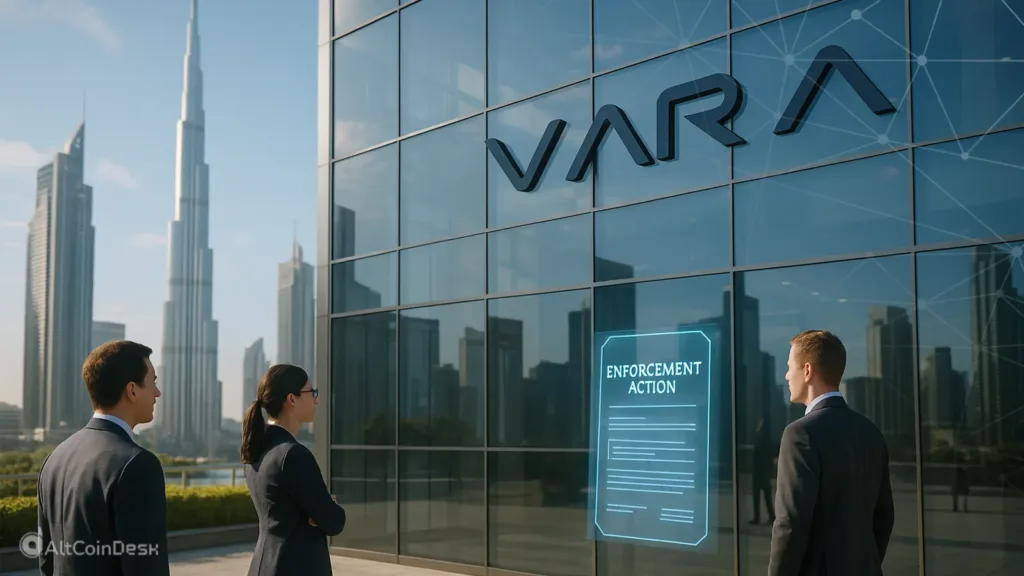
VARA has cracked down on 19 unlicensed crypto operators for engaging in unlicensed virtual asset activities and non-compliance with VARA’s marketing regulations.
Following the regulatory move, the authority has directed unlicensed crypto operators to immediately halt operations and refrain from offering further unlicensed virtual asset services in or from Dubai.
VARA crypto fines start from AED100,000
The digital asset regulator has imposed fines starting from AED 100,000 to AED 600,000, depending on the severity of the violations. Executives from the crypto regulator emphasized the seriousness of the rules, stating: “Enforcement is a critical component of maintaining trust and stability in Dubai’s Virtual Asset ecosystem.”
This bold regulatory move also insinuates a core point — VARA grants a license only to firms that meet the “highest standards of compliance and governance.”
Clear rules mean confidence in operations
Innovation does not come at the cost of breaking rules — a concept that the authority has highlighted since its launch in 2022. The executive authority brings in innovation, but along with it comes stable regulations that foster trust, long-term confidence, and accountability in Dubai’s digital asset space.
In other words, rules for crypto are stable and mature in Dubai, enticing more companies to establish their services in the region. As a result, VARA has issued nearly 36 full licences to digital asset firms in the region, according to its CEO, Matthew White.