

Hong Kong granted its first two stablecoin issuer licenses, making a first step in the city’s push towards digital finance.
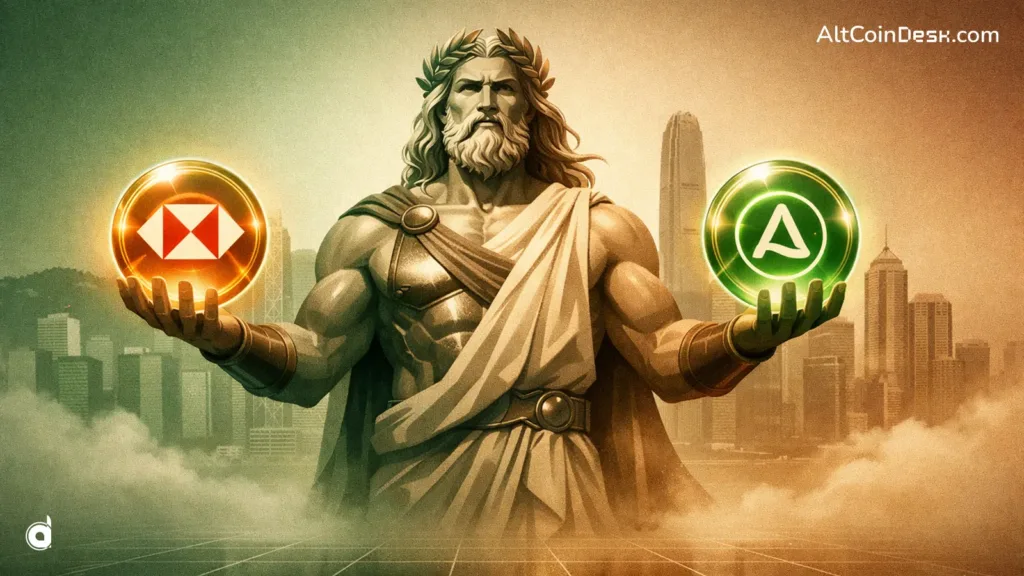
The Hong Kong Monetary Authority (HKMA) announced on Friday, April 10, 2026, that it has approved The Hongkong and Shanghai Banking Corporation Limited (HSBC) and Anchorpoint Financial Limited, a joint venture led by Standard Chartered Bank, with partners Animoca Brands and Hong Kong Telecommunications (HKT).
HSBC and Anchorpoint get the green light
Both licenses took effect immediately. The issuers now have the green light to prepare and launch Hong Kong dollar-backed stablecoins in the coming months, likely in the second half of 2026.
The HKMA received 36 applications but chose only these two for the first batch. That selective approach fits the regulator’s open but cautious stand. Deputy Chief Executive Daryl Ho noted that any future licenses will remain very limited.
Why these banks were chosen
HSBC and Standard Chartered are two of Hong Kong’s three note-issuing banks, institutions with a history stretching back to 1846, when private banks first issued currency backed by silver. Today, they still print physical HKD notes under a system tied to the U.S. dollar via the Linked Exchange Rate.
Eddie Yue, the HKMA’s Chief Executive, presented the decision in a way that felt, well, expected.
In a recent statement, he compared early banknotes to private money and described today’s stablecoins as their blockchain-era equivalent. Giving the digital version to the same trusted banks sends a clear signal: Hong Kong wants innovation, but on rails it already knows and controls.
Yue called the approvals an important milestone for the development of digital assets in Hong Kong. He added that the regime aims to create an orderly environment where issuers can innovate while delivering robust user protection and effective risk management.
Under the Stablecoins framework, which came into force in August 2025, licensed issuers must maintain full 1:1 reserves in high-quality liquid assets, offer anytime redemption, and meet tough governance and anti-money laundering standards.
One of the strictest elements is the KYC requirement: these stablecoins can only move between identity-verified wallets, with travel-rule checks for larger transfers. In practice, that means on-chain whitelisting, a far approach from the freely transferable USDT or USDC that dominate global markets.
The framework also gives the HKMA strong enforcement powers, including fines, suspensions, or license revocation.
HKMA keeps tight control
Neither bank plans an immediate launch. Both say they need time for testing, staffing, and final preparations.
HSBC intends to make its stablecoin available through its existing apps, including PayMe and HSBC HK Mobile Banking. The bank sees opportunities in peer-to-peer payments, merchant transactions, and tokenized investments, offering retail and business users more flexible, secure options.
Anchorpoint Financial intends to collaborate with chosen distributor partners, aiming to expand its stablecoin’s reach.
The two issuers are likely to concentrate their early work on applications relevant to their immediate and regional areas.
Everyday transactions and the settling of trades are areas where a regulated HKD stablecoin could offer solutions to existing challenges.
Focus on payments and trade settlement
This move comes after Hong Kong quietly deprioritized a retail central bank digital currency following a pilot that showed limited demand. The city, however, is placing its chips on bank-backed stablecoins, believing they’re the most viable option.
The global stablecoin market now exceeds $310 billion, almost entirely dominated by dollar-pegged tokens.
Hong Kong is testing whether tightly regulated, bank-issued HKD versions can carve out a meaningful niche in Asian trade and digital finance. Standard Chartered CEO Bill Winters has previously suggested that stablecoins and tokenized deposits could help lay the groundwork for a new era of digital trade settlement.
Whether the market responds will depend on adoption, network effects, and how well these new tokens integrate into real economic activity. For now, the HKMA has drawn a clear line: only a handful of well-capitalized, low-risk players will get to issue stablecoins in the opening phase.