

The global debate over prediction market regulation has arrived in Brazil, and it is quickly turning into a fight between two powerful industries.
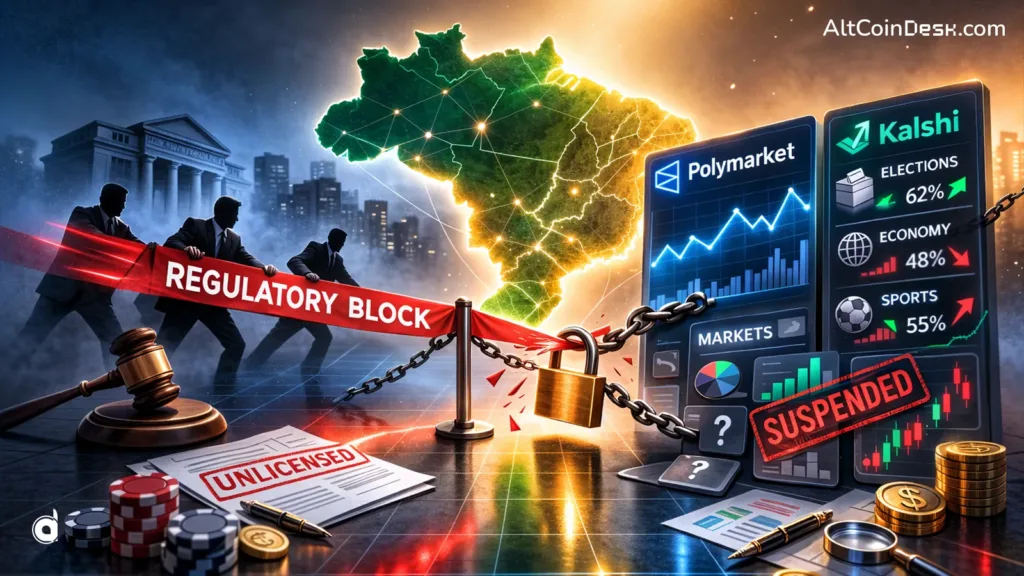
Brazil’s fast-growing betting sector is asking regulators to pause or block platforms such as Polymarket and Kalshi. Their argument is simple. These platforms allow people to place money on future events, so they look a lot like betting websites. The difference is that they are not licensed under Brazilian betting regulation. For local operators that already paid heavy licensing fees, that feels unfair.
Brazil recently introduced rules that allow online betting companies to operate legally. To enter the market, operators reportedly paid about R$30 million in licensing costs and compliance requirements. Now they are watching platforms linked to crypto and financial trading enter the market without the same obligations. That tension has placed prediction market regulation at the center of a new policy debate. At stake is not only the Brazilian market but also the future of prediction platforms worldwide.
| Betting companies say | Prediction markets say |
| These are illegal bets | These are financial derivatives |
| Platforms avoid licensing | They operate under financial rules |
| They compete unfairly | They are in a different industry |
The prediction markets surge
Prediction markets allow people to trade contracts tied to future events. Instead of betting on football matches, users can speculate on almost anything. Common examples include elections, inflation data, technology launches, geopolitical events, or even weather outcomes.
On Polymarket, a user might buy shares in a contract asking whether inflation will exceed a certain level this year or whether a political leader will remain in office. The price of those shares reflects what the market collectively believes is likely to happen. Supporters say this system gathers information from thousands of traders and often produces forecasts that are surprisingly accurate.
Critics see something different. To them, these contracts are just bets wrapped in financial language. This disagreement is exactly why prediction market regulation has become such a complicated issue.
Why Brazil’s betting industry is alarmed
Brazil has quickly become one of the largest online betting markets in the world. Estimates suggest that about 17.7 million Brazilians already use licensed betting platforms. Companies that entered the market paid large fees and agreed to strict oversight under Brazil’s betting regulation.
Prediction markets threaten that model. Platforms such as Polymarket run on blockchain systems and allow users to trade event contracts using cryptocurrency. Kalshi, which is regulated in the United States by the Commodity Futures Trading Commission, offers similar contracts but positions itself as a financial exchange.
To Brazil’s betting companies, the difference does not matter. They argue that if someone is risking money on whether an event happens, it should be regulated as betting. That argument is driving lobbying efforts to stop Kalshi Brazil’s expansion and restrict Polymarket regulation in the country.

Finance or gambling
There is a deeper question behind the political fight. Are prediction markets a type of gambling or a type of finance? If regulators decide that they are financial products, they could be subject to derivatives rules and be overseen by financial authorities. If regulators think they are betting, they would be treated like sportsbooks and have to follow gambling laws.
This distinction is the heart of the prediction market regulation debate. Kalshi argues that its contracts help companies hedge risk and understand economic trends. Supporters say prediction markets can improve forecasting in politics, business, and public policy. Critics counter that the experience feels identical to betting. The line between trading and gambling can be very thin.
Brazil as the global test case
Brazil may now become one of the most important arenas for this debate. The country has a large population, high digital adoption, and a growing appetite for both crypto trading and sports betting.
Brazil’s Ministry of Finance has already begun studying prediction market regulation. At the same time, Brazil’s securities regulator recently approved prediction-style derivatives that will trade on the B3 stock exchange.
Initially, those products will only be available to wealthy professional investors with more than R$10 million in assets. That decision suggests regulators are considering both possibilities. Prediction markets could be treated as financial instruments or as gambling platforms. Whatever Brazil decides will likely influence crypto betting regulation across Latin America.
The ethical questions no one wants to ignore
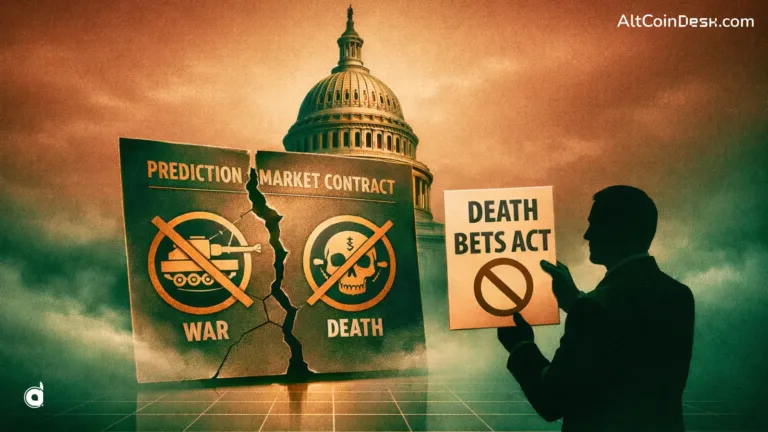
The debate also raises uncomfortable ethical questions. Prediction markets sometimes allow people to speculate on wars, political crises, or even deaths. Some policymakers in the United States have already proposed banning contracts linked to war or assassination scenarios.
There are also concerns about insider trading. Someone with privileged information about an upcoming political or economic event could theoretically profit from it. These controversies are adding pressure on regulators who are already trying to figure out the best path for prediction market regulation.
A fight that is just beginning
The current clash between betting companies and prediction platforms is really a struggle over a new financial category. Prediction markets combine finance, crypto, betting, and data analysis into one system. Some investors believe these markets could eventually rival traditional financial forecasting tools.
Brazil now finds itself at the center of that experiment. If regulators block platforms like Polymarket and halt Kalshi Brazil’s expansion, prediction markets may struggle to expand in Latin America.
If Brazil allows them under new rules, the industry could grow rapidly across the region. Either way, the conversation about prediction market regulation is only getting started. And the outcome in Brazil may shape how the world decides whether these platforms are a new kind of financial market or simply the next evolution of online betting.