
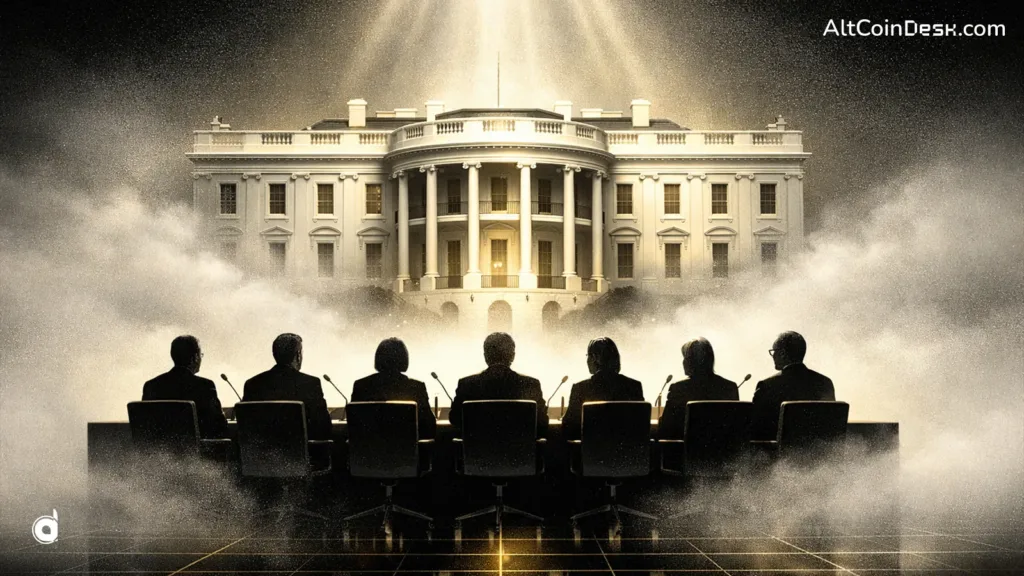

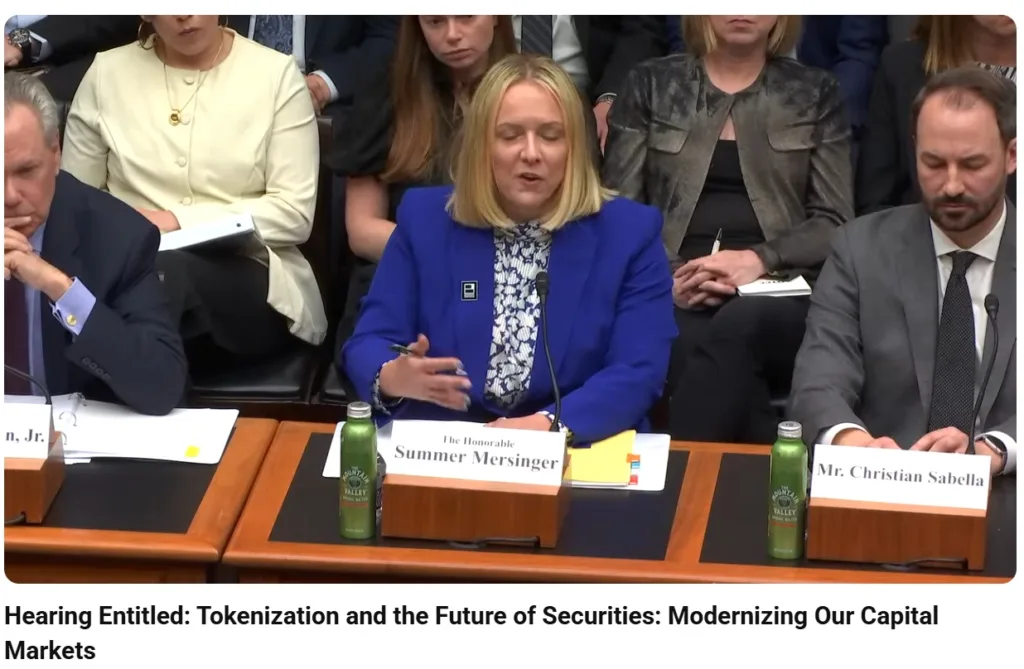
Something unusual happened in Washington. It was not loud. It was not dramatic. There were no breaking headlines flashing across every screen. But if you listened closely, you could hear the system shifting. Capital market tokenization just walked into Congress and changed the mood!
The March 25 hearing was supposed to be about rules and frameworks. What it revealed instead was something deeper. Capital market tokenization is no longer sitting on the edge of finance. It is now being discussed at the center of power, in plain language, by people who shape how money moves.
And once an idea reaches that room, it rarely goes back.
This was never about crypto, and everyone knows it now
At first, you might think this is another crypto debate. It is not. The room made that clear early. The focus was not on coins or speculation. It was on infrastructure. The pipes behind the system. The parts most people never see.
Capital market tokenization was framed as a way to rewrite how markets function beneath the surface. Not what people trade, but how trades happen. One line kept echoing through the discussion. A tokenized share is still a share.
That single idea quietly removes the biggest fear. This is not about replacing markets. It is about upgrading them.

The system everyone uses is slower than you think
Here is something most people do not realize. When you buy a stock, it does not fully settle immediately. It can take up to two days.
Now imagine selling something on Friday and waiting until Tuesday for everything to clear. That delay is normal today. It is built into the system. But during the hearing, speakers kept returning to one promise. With capital market tokenization, settlement could happen almost instantly.
Not faster by a little. Faster by design. And once you hear that, it becomes hard to unhear it.
The quiet disappearance of middlemen
There was a moment in the hearing that felt almost casual, but it was not. The conversation turned to decentralized finance. DeFi, as they call it. Not as a buzzword, but as infrastructure.
DeFi can act as infrastructure for moving and settling assets more efficiently.
Ms. Mercinger – Chief Executive Officer of the Blockchain Association
The idea is simple. Instead of layers of intermediaries, blockchain systems can move assets directly, settle them, and record ownership in one flow. That is what people mean when they talk about market plumbing.
If this continues, capital market tokenization does not just speed things up. It slowly reduces the number of hands a transaction has to pass through. No one said it out loud, but the implication was clear. Some roles may shrink.
Faster does not always mean safer
This is where the tone changed. Not everyone in the room was comfortable. Some lawmakers raised concerns that felt very real. If markets move faster, can oversight keep up? If transactions happen instantly, can bad activity be stopped in time?
There were direct warnings about gaps in identity tracking, risks around illicit finance, and the possibility of insider trading in less visible systems. In simple terms, speed can be a gift, but it can also remove friction that once acted as protection. That is the tension at the heart of capital market tokenization.
The world is watching, and it will not wait
One of the most honest moments came when the conversation shifted beyond the United States. What happens if the U.S. moves too slowly? The answer was uncomfortable. Innovation moves elsewhere.
Speakers warned that investors could end up trading synthetic versions of stocks in foreign markets. These versions may look real but lack true ownership, voting rights, or dividends. This is not just a technology race. It is a trust race. And capital market tokenization is now part of that global competition.
Technology does not remove human mistakes
There is a quiet myth around blockchain. That it fixes everything. The hearing pushed back on that idea. Yes, blockchain can improve transparency. Yes, it can automate certain rules. But people are still involved. Systems can still fail. Code can still break.
Technology can go wrong from time to time.
Mr. Benson – President and CEO of the Securities Industry and Financial Markets Association (SIFMA)
So while capital market tokenization reduces some risks, it introduces others. That balance matters more than the hype.
This could change who gets to participate
Then came one of the more hopeful parts of the discussion. What if investing became more accessible? Tokenization could allow people to invest small amounts into projects that were once out of reach. Imagine putting a small sum into a local infrastructure project or community development fund.
Some even suggested models where community contributions could be rewarded directly through tokenized assets. This is where capital market tokenization moves beyond Wall Street and into everyday life.
The system is not being replaced; it is being rewritten
If you step back and look at the entire hearing, one thing becomes clear. No one is trying to tear down the system. Banks are still there. Exchanges are still there. Regulators are still very much involved.
What is changing is how everything connects. Capital market tokenization is not an outside force anymore. It is being built into the system itself. Quietly. Carefully. Step by step.
Key takeaway from the March 25 Congressional hearing
There was no dramatic announcement at the end of the hearing. No final decision that changes everything overnight. But something more important happened. The conversation moved forward.
Capital market tokenization is no longer a general idea or a niche topic. It is now part of how policymakers, institutions, and market leaders think about the future. And that future will not arrive all at once. It will arrive in layers. In upgrades. In small shifts that slowly become impossible to ignore.
The system will still look familiar on the surface. But underneath, it is already beginning to change. The next stock market will not arrive with a bang. It will arrive quietly, one upgrade at a time.