

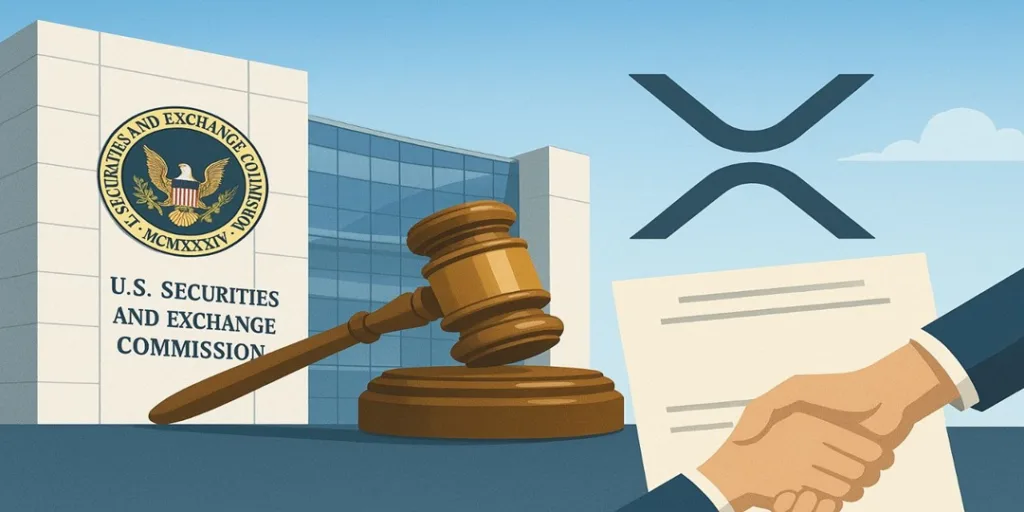

A new development unfolded in the U.S. Securities and Exchange Commission (SEC) vs. Ripple case as the commission filed a status report with the Court of Appeals. Disclosed in the status report filed on August 15, the SEC has highlighted that both parties have officially filed a joint stipulation with the U.S. Court of Appeals for the Second Circuit to suspend the case. Now, the joint stipulation of dismissal remains pending, waiting for court’s approval.
An X post by a retired securities lawyer read: “For the sake of clarity (since crypto twitter keeps misstating this): the only thing remaining is administrative closing of the case by the clerk. No judge approval is required. So it’s essentially over already.”
Earlier this month, both the SEC and Ripple filed joint dismissal eagerly pressing the need for ending the case. In December 2020, the agency sued Ripple for selling XRP as unregistered securities and amassing $1.3 billion through the token, violating the securities law.
SEC’s crypto-friendly shift overturn multiple cases
With crypto innovation progressing in the US following the Crypto Task Force, Strategic Bitcoin Reserve, the GENIUS Act, and the recent Project Crypto, the SEC under the leadership of Paul S. Atkins, has been pulling cases against several crypto and blockchain platforms. The agency has dropped enforcement actions against Kraken, Coinbase, OpenSea, Cumberland, and ConsenSys, the company behind MetaMask wallet.
Since the case began winding down, Ripple’s XRP has experienced price surges along with market hikes. However, at press time, the coin was down 5.18% over the past seven days, trading at $3.11.