

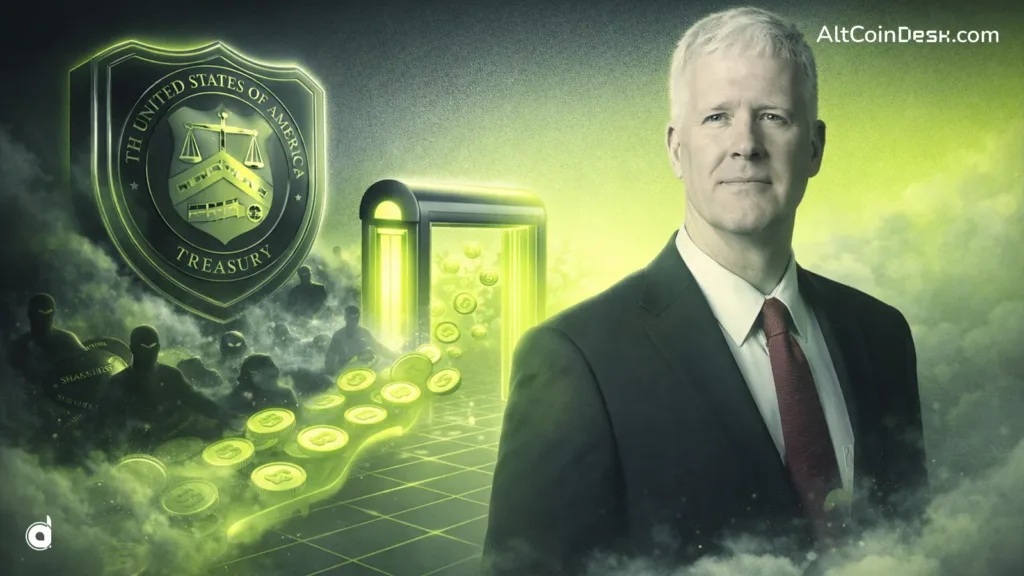

The U.S. Securities and Exchange Commission (SEC) announced the appointment of David Woodcock, as a seasoned securities litigator and partner at Gibson, Dunn & Crutcher LLP, as the new director of its Division of Enforcement.
Woodcock to take the office
Woodcock’s appointment is set to be effective by May 4, 2026. However, the announcement comes at an important moment for the agency while dealing with internal leadership changes and intense scrutiny from lawmakers over its approach to cryptocurrency enforcement.
“I am incredibly pleased to have David rejoin the SEC at this critical time, as we continue to focus on the types of misconduct that inflict the greatest harm to investors,” said SEC Chair Paul Atkins in a statement.
The SEC officially announced Woodcock’s selection on April 8, 2026, thanks to his years of experience in securities law and prior government service. Sam Waldon, who took the role of acting director following the departure of former head Margaret “Meg” Ryan, has been asked to continue in that interim role until Woodcock assumes leadership.
“I am honored to join the exceptionally talented team in the Enforcement Division and look forward to advancing our vital mission of investor protection,” said Mr. Woodcock in the official statement.
“My commitment is to lead the division with the highest level of professionalism and rigor as we execute the Chairman’s vision and ensure the integrity of our financial markets,” he added.
They call him a Veteran with deep enforcement roots
Woodcock returns to the SEC after an honorable career in private practice and prior government work. He currently chairs the Securities Enforcement Practice Group at Gibson, Dunn & Crutcher, where he focused on high‑stakes regulatory investigations and enforcement matters.
Before joining private practice, Woodcock worked as the director of the SEC’s Fort Worth Regional Office from 2011 to 2015, overseeing enforcement, examination lawyers, accountants, and investigations across areas of securities law.
SEC Chairman Paul S. Atkins praised the appointment, saying Woodcock’s return strengthens the agency’s mission “to focus on the types of misconduct that inflict the greatest harm to investors” and to prioritize cases that deepen market integrity rather than pursue headline‑grabbing numbers. Atkins framed Woodcock’s return as part of a “significant course correction” within the enforcement division.
Woodcock himself signaled his commitment to the SEC’s broader enforcement strategy, stating that he is “honored to join the exceptionally talented team” and is ready to execute the chairman’s vision of rigorous, focused enforcement.
Woodcock joins when SEC faces scrutiny
Woodcock’s appointment follows the abrupt resignation of former Enforcement Division Director Margaret Ryan, who left the agency after a short six‑month tenure. Lawmakers have publicly questioned whether internal disagreements over enforcement strategy, especially in high‑profile crypto cases, contributed to her departure.
In late March, two U.S. senators sent letters seeking explanations from the SEC about Ryan’s exit, particularly in connection with enforcement decisions involving figures and entities linked to cryptocurrency ventures and politically sensitive ties.
One controversial case involving the SEC’s resolution surrounding Justin Sun, founder of TRON, linked to the World Liberty Financial Project was dismissed. This contributed to broader scrutiny from lawmakers concerned about whether regulatory choices were influenced by politics, an allegation the SEC later denied publicly.
The SEC’s 2025 enforcement results leads to shift in focus
The leadership transition is occurring against the backdrop of the SEC’s enforcement results for fiscal year (FY) 2025. An official press release by the SEC, stated that the agency reported 456 enforcement actions filed during FY 2025, a notable decline compared to previous years under prior leadership.
The SEC’s report emphasized that the enforcement program is now working on addressing misconduct that directly harms investors including fraud, market manipulation, and fiduciary breaches, rather than maximizing case numbers without clear investor benefit.
The report also acknowledged that earlier crypto‑related enforcement efforts, including actions based on registration issues and broker‑dealer definitions, “identified no direct investor harm” and sometimes reflected misinterpretations of federal securities laws. The SEC cited seven crypto firm registration cases and six broker‑dealer definition cases as examples where investor benefit was limited or nonexistent.
The SEC has also launched the ‘Cyber and Emerging Technologies Unit’ in February 2025, which works alongside the existing Crypto Task Force to investigate emerging risks involving blockchain technologies, cybersecurity, and digital assets.
Crypto Enforcement under a new enforcement director
Woodcock’s appointment raises fresh questions about the SEC’s future posture toward cryptocurrency regulation and enforcement. Unlike some of his predecessors and senior officials at the agency with direct experience in digital asset matters, Woodcock does not have an established background in crypto issues, according to market reports, a factor that could influence how the agency navigates digital asset enforcement going forward.
This has led to speculation in both regulatory and industry circles that the SEC may continue its strategic adjustment away from an aggressive crypto‑centric enforcement style toward a more calibrated, rules‑based approach that emphasizes investor harm and legal clarity.