



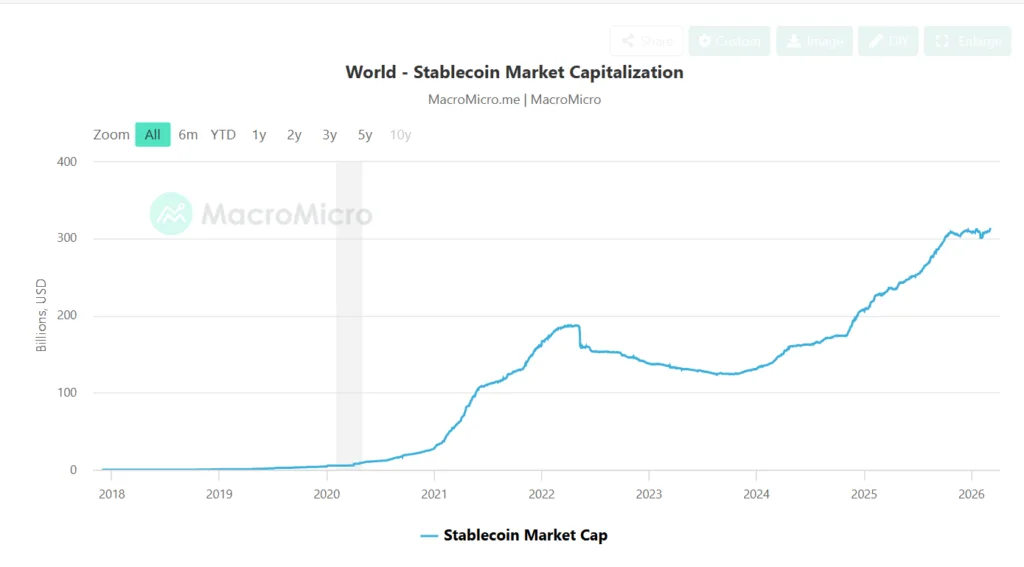
Stablecoins are one of the pivotal niches of the crypto ecosystem, with a market cap surpassing over $300 billion in early 2026.
The reason for this growth mainly attributes to several payment networks, crypto firms, and governments adopting stablecoins, in addition to several new stablecoin launches. Amid this growth, Solana blockchain has outperformed Ethereum in stablecoin transfers with $650 billion recorded last month.
High stablecoin activity on Solana
Solana blockchain’s $650 billion in stablecoin transactions is a strong stride, as it is the highest monthly record for a single blockchain. Grayscale brought the stunning data to light last week, framing this surge as different from Solana’s memecoin-driven activities.
Notably, major stablecoins such as Circle’s USDC and Tether’s USDT are the active bearers of transaction volume on the Solana blockchain.
However, it seems like Ethereum is losing the game as liquidity moves away from the blockchain.
Why stablecoin volume spiked on Solana?
The primary driver of this surge is extremely low fees and fast transactions on Solana. This is relatively less on other blockchain platforms, including Ethereum.
There is also high activity from trading bots, DeFi swaps, and payments. All these factors push stablecoins to move several times, shooting up their total volume.
Ethereum was once known for high stablecoin transfers
Historically, Ethereum, the DeFi backbone, was dominated by stablecoin transfers besides DeFi liquidity. Now, things have changed as stablecoins on Solana moved more frequently in February, with volume exceeding $650 billion.
This tremendous growth also signals one significant thing: stablecoins are widely boosting the main liquidity and settlement layer of the crypto landscape.
However, Ethereum still holds more stablecoins, with total supply emerging from USDT, USDC, DAI, BUSD, TUSD, and more. That means Ethereum leads in overall stablecoin liquidity.
As commonly understood, the core reason why Ethereum is slightly losing some ground in stablecoin transfers is due to its high transaction fees, slower throughput, and the rise of alternative blockchains like Solana, Polygon, and Avalanche that offer cheaper stablecoin transfers.
Stablecoin transactions shoot up globally
Payment stablecoins are the new trend now. Several payment platforms, such as Mastercard, Visa, PayPal, Stripe, and others, have dabbled in the stablecoin industry by either integrating with various payment stablecoins or launching their own stablecoins.
Moreover, Tether and Visa’s stablecoin transactions have peaked to new heights, backed by strong reserves like the US Treasuries and a high user base.
While looking at Solana, the blockchain ecosystem has been buzzing with several stablecoin-related ventures, especially with the latest addition of the USDPT stablecoin.
Payment giant Western Union recently integrated with Crossmint crypto infrastructure provider to launch its USDPT stablecoin on Solana in the first half of 2026.
Trump-linked World Liberty Financial’s USD1 stablecoin runs on Solana. Solstice Finance’s USX is a Solana-native stablecoin with a focus on composability and on‑chain yields.