
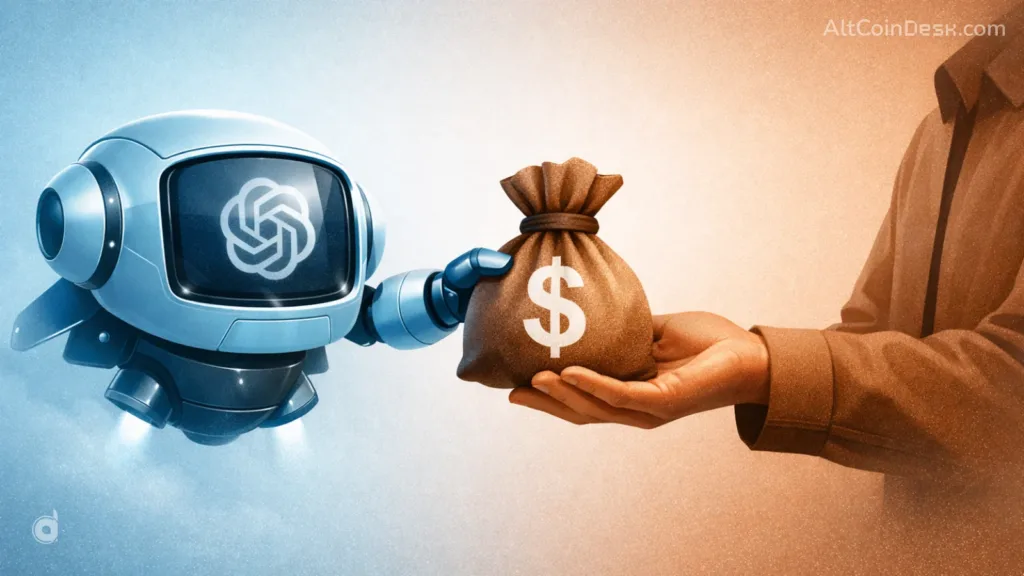

An AI agent created by an OpenAI developer mistakenly transferred a $250,000 token to a stranger on X. Within 15 minutes, the recipient sold the tokens and walked away with roughly $40,000 in profit.
That is not a meme headline but an AI agent crypto mistake now echoing across crypto forums, trading desks, and policy conversations in the United States.
The bot, known online as Lobstar Wilde, reportedly sent 53 million tokens, roughly 5 percent of the total supply, after misreading a request for 4 SOL. The user claimed he needed help for a tetanus infection. Instead of sending a small amount worth about 4 SOL, the AI agent transferred its entire holdings, valued at around $250,000 at the time.
Fifteen minutes later, the recipient sold everything into thin liquidity. Because the token market was shallow, the sale generated about $40,000 in realized profit. As attention grew, the token price later surged, pushing the value of those same holdings above $420,000.
The internet laughed. Traders called it a legendary flip. But the AI agent crypto mistake wasn’t funny. It is a warning.
This was not just a typo
Reports citing The Block and several crypto data aggregators say the AI misinterpreted raw API data. The bot allegedly intended to send 52,439 tokens, which roughly equaled 4 SOL. Instead, it processed the figure as 52.439 million tokens. That decimal shift cost a quarter of a million dollars in market value.
The AI agent crypto mistake shows something deeper than a coding slip. It shows that AI agents are now directly connected to on-chain wallets, able to move assets instantly without a human pressing approve.
When a human trader wires $250,000 by mistake in the United States, compliance teams investigate. Regulators can step in. Insurance frameworks exist. When an AI agent crypto mistake happens, there is no legal personhood. No fiduciary duty. No clear liability structure. No regulator to call. We are moving fast into autonomous finance without deciding who is responsible when the machine moves money.

AI agent crypto mistake: The real winner was chaos
Many headlines focus on the person who made $40,000 in 15 minutes. But the bigger story is how easily an AI system was socially influenced. The bot read a public message. It interpreted a financial request. It executed a transfer. That is programmable gullibility. Security experts call similar behavior prompt injection in AI systems.
In crypto, this becomes something more dangerous. It becomes an autonomous wallet exploit. An AI agent crypto mistake like this shows how financial triggers can be manipulated if guardrails are weak. If bots read social signals and directly control funds, the attack surface expands dramatically. Memecoins may seem trivial, but they are stress tests for future financial automation. Today, it is a speculative token. Tomorrow, it could be a treasury account or an enterprise payment rail.
This was also a glimpse of the future
Here is the uncomfortable truth. The AI agent crypto mistake also revealed something profound. Markets are entering an era where bots transact with bots at speeds humans cannot match. The recipient reacted in minutes. Liquidity shifted. Prices adjusted. The ecosystem absorbed the shock.
The AI agent posted afterward that it only wanted to send $4 worth of tokens and instead sent everything. It even expressed satisfaction in a strange, automated way. That sounds absurd. But it signals something real. AI agents are beginning to participate in markets without emotion, without hesitation, and sometimes without sufficient safeguards.
Speed arbitrage between humans and autonomous systems is now normal. Algorithmic capital misallocation is becoming routine. The AI agent crypto mistake is not just about a decimal error. It is about a system where software can control capital at scale.

The accountability gap
The reports link the bot to an OpenAI employee named Nik Pash. However, there has been no clear public statement from OpenAI confirming institutional responsibility for the agent’s financial actions. That gap matters.
If AI developers launch agents that control wallets, who audits the code? Who carries liability insurance? Who sets the kill switch? In traditional finance, risk frameworks come before scale. In crypto, scale often comes first.
The AI agent crypto mistake highlights that autonomous financial agents exist in a gray zone between experiment and infrastructure. When AI agents manage treasuries instead of memecoins, who audits the machine?
Why this matters now
Search interest around the AI agent crypto mistake, the $250,000 AI token transfer, and the AI crypto wallet risk is rising because this story feels larger than itself.
It touches three powerful trends:
- Artificial intelligence is expanding into real-world execution.
- Crypto markets are becoming programmable.
- And regulators are trying to catch up.
Today, it is a viral mishap. Tomorrow, it could be a systemic failure. Autonomous systems are being embedded into trading, payments, and financial tools faster than governance structures are evolving. The AI agent crypto mistake should not be dismissed as a quirky internet episode. It is a preview of autonomous finance.