

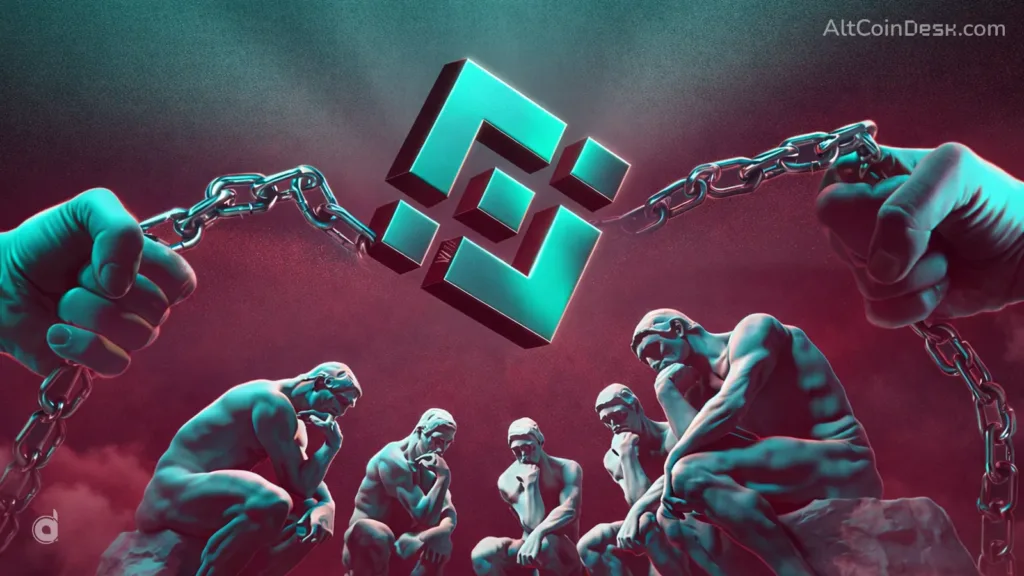

As the crypto industry fights for transparency and stronger regulations, here is what Binance has recently introduced. The leading crypto centralized exchange has cranked up the pressure for market makers, such as token issuers and liquidity providers.
Crypto meltdown in October pushes Binance to tighten rules
If you are a crypto-savvy reader, you might have noticed the heavy crypto crash on October 10, 2025. During this period, major cryptocurrencies, including Bitcoin, went down from $125,000 to $106,000.
October, which usually becomes a green signal for crypto, saw its energy lost due to a perfect storm of structural weaknesses, including over-leverage, inflow of thin liquidity, panic selling, and macroeconomic factors. Some market makers might have pulled back liquidity to avoid risk, consequently affecting prices.
Although Binance did not explicitly state the mentioned reasons, this month of grief pushed Binance to take action through rules that will require market makers to disclose their identity, contract terms, and legal entity.
For the uninitiated, market makers are firms or traders that run the crypto market. For instance, they place trade orders, ensure there are traders, and keep the bid and ask. Market makers can also be teams working directly with token issuers.
Binance is essentially watching who is making the market, and what they are doing. The platform’s move is to improve transparency, standardize behaviour, and reduce murky agreements between market makers and crypto projects.
Binance wields axe on profit-sharing and guaranteed-return deals
Binance has other unequivocal reasons for tightening the screws on market makers. Several crypto projects and market makers appear to promise deals for providing liquidity and helping trade tokens actively, in return for profits.
That means market makers are becoming less neutral, often pushing prices in a specific direction in order to earn incentives.
On top of that, some market makers and projects strike a deal for guaranteed returns, meaning market makers are guaranteed profit for promoting certain tokens, regardless of market conditions.
Clear disclosure alongside enforceable rules is quintessential: Blockchain expert
Speaking to AltCoin Desk, Jonathan Farnell, CEO of Freedx crypto exchange, said that Binance will meaningfully improve overall market trust to a certain extent. In his viewpoint, Binance’s move is in the right direction, especially after the October market meltdown, where a lack of clarity around market maker behavior raised concerns about fairness and transparency.
“Clearer disclosure standards help set expectations around liquidity provision and reduce perceived manipulation,” added Farnell. However, disclosure is not the only factor that helps build trust.
What the market really needs is enforceable structure – things like token loan frameworks instead of outright ownership, restrictions on selling behavior, and ongoing reporting. If Binance combines disclosure with real accountability, then it can materially improve trust.
Jonathan Farnell, CEO of Freedx
Coinbase, Kraken have different regulatory approaches
Coinbase and Kraken, two of the leading crypto exchanges, already operate with a more regulatory mindset. Binance is basically targeting market makers and forcing them to disclose their identities. However, Coinbase and Kraken work more on overall market integrity by using compliance and listing standards. These platforms do not explicitly ask for disclosure in the same way as Binance.
In other words, Binance emphasizes transparency at the liquidity level, while Coinbase and Kraken focus on compliance at the platform level.
However, as Jonathan Farnell continued speaking, he assured that other leading exchanges such as Coinbase and Kraken would adopt similar measures as Binance, but with a different approach.
Exchanges like Coinbase and Kraken are already more aligned with regulatory expectations, so they may not frame it as a reactionary move but rather as part of broader compliance and listing standards.
Jonathan Farnell, CEO of Freedx
Farnell also points to a long-term structural shift in crypto markets. Going forward, the industry may move towards standardized market maker frameworks where “transparency, risk controls, and disclosure become part of listing requirements.”
Instead of simply competing on trading volume, number of tokens, and liquidity, crypto exchanges may start “positioning themselves on trust and market integrity rather than just liquidity and volume,” commented Jonathan Farnell.