



A $176 million case shows how crypto seed phrase theft is no longer about hackers but about cameras, trust, and the law catching up.
A UK court is now dealing with one of the strangest and most revealing cases in crypto history. A man claims his wife used home CCTV footage to carry out a crypto seed phrase theft worth about $176 million in Bitcoin. No hacking tools. No complex code. Just a camera, patience, and access. If true, this case changes how we think about security. It also raises a bigger question for everyday people. If your house is watching you, who is really in control of your money?
Your living room might be your weakest security link
For years, people worried about hackers breaking into crypto wallets. That fear made sense. But this case flips the script completely. The alleged crypto seed phrase theft did not involve any software exploit. It happened inside a home.
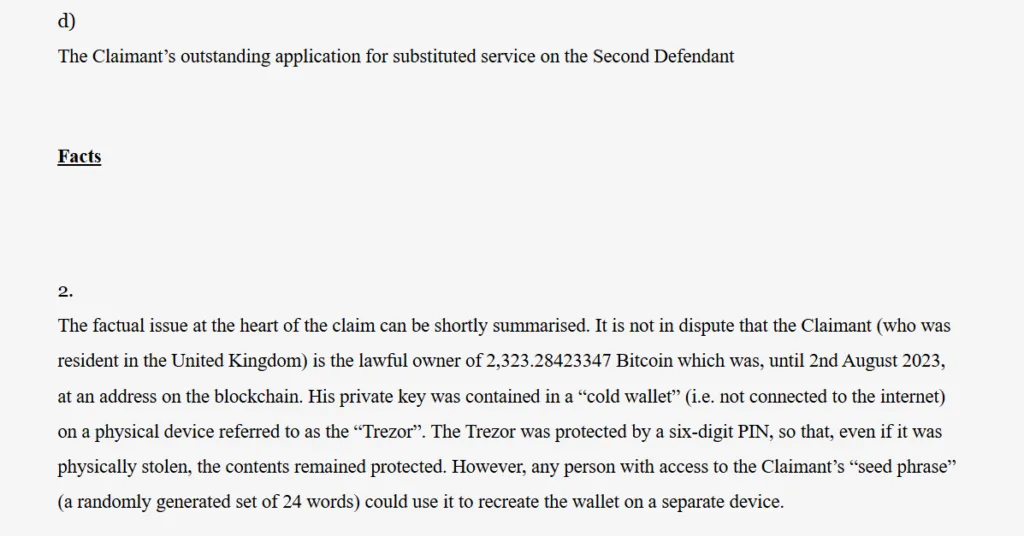
According to court filings, the husband used a hardware wallet and wrote or entered his seed phrase while CCTV cameras were active. His wife allegedly reviewed the footage, paused it, zoomed in, and copied the words. From there, she could restore the wallet and move the funds. The Bitcoin, about 2,323 coins, was sent to 71 different addresses in 2023.
Let that sink in. The most advanced financial system in the world was undone by a camera in the corner of a room.
Smart homes were supposed to make life easier. Now they may be turning into silent observers of your most sensitive moments. Your TV listens. Your doorbell records. Your security camera never blinks. And in this case, that may have been enough for a crypto seed phrase theft of historic size.

Crypto did not fail; people did
Here is the uncomfortable truth. The technology worked exactly as designed. Bitcoin did not break. The wallet did not fail. The system did what it always does. It gave control to whoever had the key.
This is why this crypto seed phrase theft feels different. It is not a story about weak code. It is a story about human trust. The case involves Ping Fai Yuen and his estranged wife, Fun Yung Li. Court documents say he was warned by his daughter about the alleged plan. He later installed audio recording equipment and claims to have captured conversations about moving large sums without attracting attention. Police arrested his wife, seized devices, and then released her on bail. Authorities later said no further action would be taken unless new evidence appeared.
Justice Cotter has now stated that the husband has a very high probability of success in court, noting that the evidence appears strong and no alternative explanation was offered for the Bitcoin transfers.
So no, Bitcoin did not lose $176 million. A relationship did.
Marriage meets private keys, and the law looks confused
This is where things get even more interesting. This is not just a theft case. It is a legal puzzle. In traditional finance, banks can reverse transactions or freeze accounts. In crypto, whoever holds the key controls the funds. But courts still operate on older ideas of ownership.
So what happens in a crypto seed phrase theft inside a marriage?
Was the Bitcoin solely his, or shared marital property? If someone uses information seen inside a home, does that count as unauthorized access? If you can access the wallet, do you own it?
These are not theoretical questions anymore. The UK court is being asked to decide. The husband has applied for an asset preservation order to freeze the crypto and recover it or its value. The judge has even suggested an early trial because Bitcoin prices move fast and security risks remain. This case may quietly shape how divorce law handles digital assets for years.
The bigger risk to note
Most people think crypto gets stolen through hacking. But that is no longer the main threat. The real danger is much simpler. Human mistakes.
People write down passwords. People click suspicious links. People talk too much. And now, people live in homes filled with cameras that never forget.
This case sits alongside phishing and social engineering. It is the same category. The human layer. The difference is scale. This was not a stolen email account. This was $176 million.

So what should you actually do?
If there is one lesson from this crypto seed phrase theft, it is this. Your environment is part of your security. Never expose your seed phrase. Not on camera. Not on your phone. Not even for a second.
Use hardware wallets. Store backup phrases in secure physical formats like metal. Avoid cloud storage. And most importantly, think like someone trying to steal from you.
Ask yourself a simple question. If someone had access to my home, could they reconstruct my wallet? If the answer is yes, you have a problem.
Key takeaway from the Crypto seed phrase theft
This crypto seed phrase theft is not really about a couple in court. It is about a shift in how money works. In the past, banks protected you from others. Now, you are responsible for protecting yourself from everyone, including the people closest to you. The weakest link is no longer your password. It is your living room. And it might already be watching.