
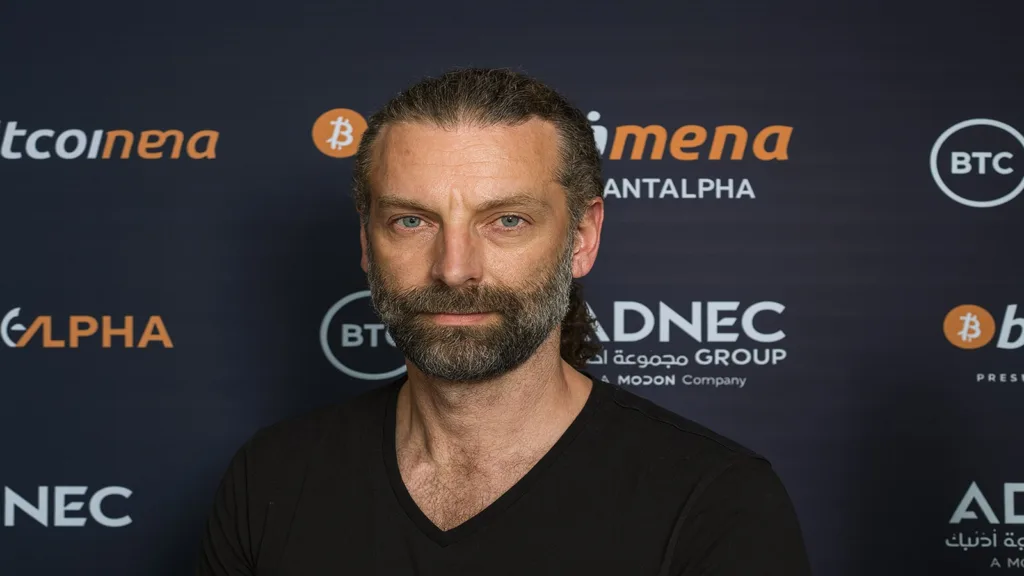

What is this strange digital money, and why does it exist at all? This question pulled Aaron into a world he has never left since 2013 and probably won’t.
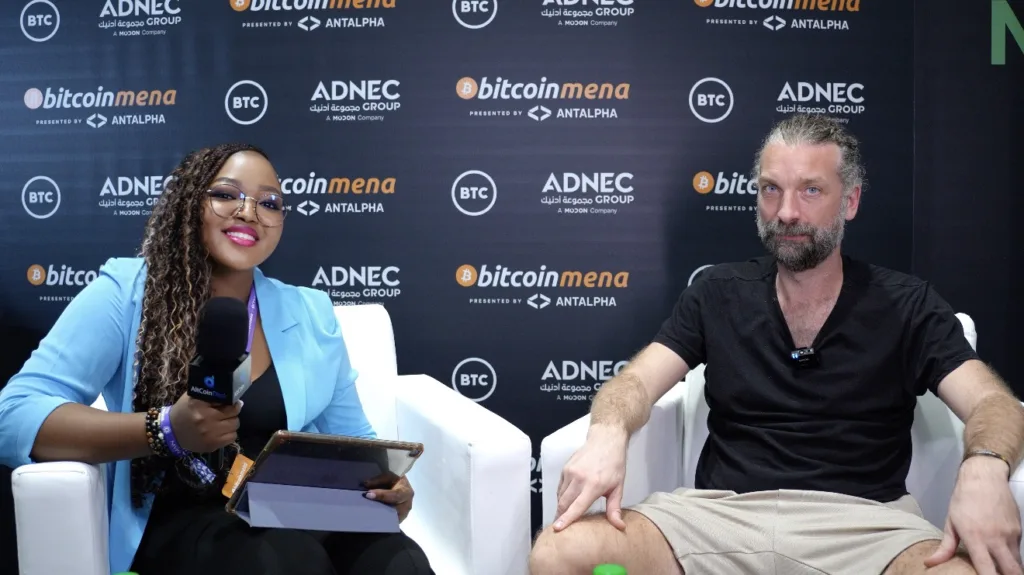
More than a decade later, Aaron van Wirdum stands as one of Bitcoin’s most respected chroniclers, a journalist, historian, former Editor-in-Chief of Bitcoin Magazine, and the author of The Genesis Book, a deep exploration of Bitcoin’s prehistory.
Speaking with him feels less like a market interview and more like a guided tour through the ideas that now define the future of crypto. From cypherpunk roots to global competition, this Bitcoin historian explains how the future of crypto is being shaped by origin stories, economic truth, and the limits of imitation.
Bitcoin did not appear from nowhere: A historian’s perspective
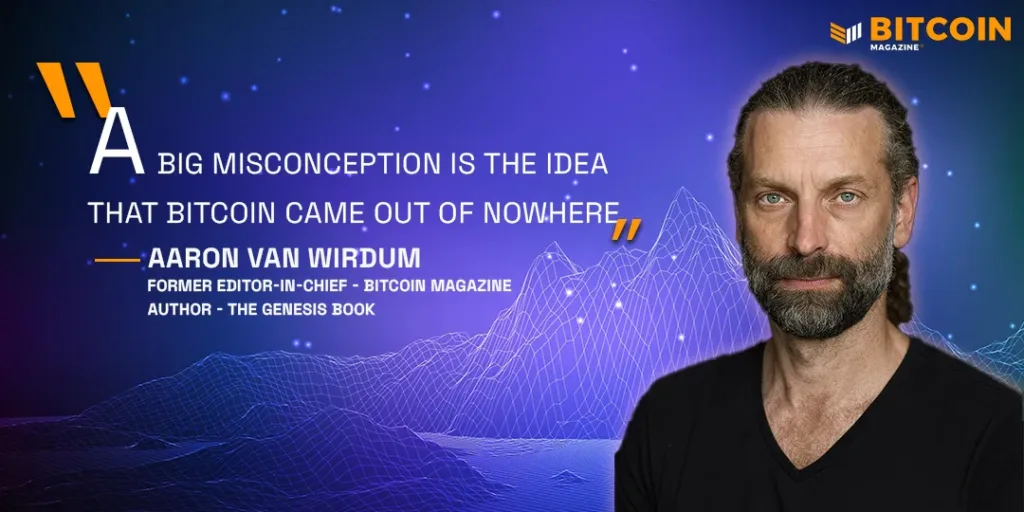
One of the biggest myths surrounding Bitcoin, Aaron says, is the idea that it arrived fully formed, as a sudden technological miracle.
“That story just is not true,” he explains.
Long before Satoshi Nakamoto published the Bitcoin white paper, economists and technologists were already wrestling with the same problems. Fiat money, inflation, centralized control, and the erosion of privacy had been debated for decades.
Aaron Van Wirdum’s research traces two parallel threads. On one side were economic thinkers, many writing as far back as the 1920s and 1930s, who questioned government-controlled money. Friedrich Hayek, in particular, explored ideas like fixed money supply, separation of money and state, and systems that emerge naturally rather than through top-down control. On the other side were hackers, cryptographers, and privacy-focused communities trying to build digital cash that could not be censored or tracked.
Bitcoin, he argues, is where those threads finally converged. Public key cryptography, proof-of-work, and economic theory all existed before. Satoshi combined them in a way that worked.
This origin story matters deeply for the future of crypto because it sets the standard that every altcoin now tries to measure itself against.
Bitcoin as the prototype, altcoins as mutations
For traders and builders focused on altcoins, Aaron’s perspective offers a useful lens. To Aaron, Bitcoin is the original blueprint. Altcoins are what happen when people take that blueprint and start tweaking it, testing it, and sometimes bending it in new directions.
Many of these projects promise faster transactions, cheaper fees, better privacy, or easier scaling. And on the surface, that can sound very attractive, especially to users who feel slowed down by Bitcoin. But Aaron cautions that it is worth looking past the headline features and asking what is being traded away to make those improvements possible.
When altcoins optimize for speed or cost, they often sacrifice decentralization or long-term economic incentives. Some rely on small validator sets. Others depend on foundations or companies that quietly reintroduce trust. These trade-offs shape the future of crypto competition far more than marketing narratives or short-term price action.
Bitcoin’s slower, more conservative development is not a flaw in his view. It is a reflection of its role as base layer money.
Money, trust, and the lessons of time
Covering Bitcoin for more than 10 years has changed how Aaron views money itself. When he entered the space, he was already interested in open-source software and privacy. What Bitcoin taught him was monetary economics.
The fiat system, he argues, benefits specific players through money creation, distorts markets, and misallocates resources. Bitcoin offers a different set of incentives. It resists censorship, protects against inflation, and removes the need to trust intermediaries.
This is where Bitcoin’s role in the future of crypto becomes clearest. It is not just another digital asset. It is a monetary system with moral and economic implications.
The UAE and the selective embrace of crypto
Asked about Bitcoin’s future in the UAE, Aaron offers a nuanced view. The country reflects what he calls the sovereign individual thesis, where digital tools make people more mobile and force states to compete for talent and capital. Low taxes and a high quality of life make the UAE attractive.
At the same time, he points out a clear contradiction. Many governments are happy to welcome crypto as an asset but far less comfortable with the ideas that sit at its core, like self-sovereignty, privacy, and resistance to censorship. Limits on self-custody tools, for example, sit uneasily with what Bitcoin was built to protect.
This selective acceptance reveals a deeper tension that continues to shape how the future of crypto is adopted around the world. States want innovation without losing control.
Long view of Bitcoin’s potential: The future of crypto
Aaron Van Wirdum does not predict instant global transformation. Hyperbitcoinization, he says, remains far away. Yet Bitcoin is already changing lives for people who need censorship-resistant money today.
The fiat system is unfair,” he states plainly. “It benefits certain players, distorts markets, and misallocates resources.” Bitcoin proposes a corrective: a system with predictable rules, censorship resistance, and protection from inflation.
While altcoins experiment with speed and features, they often compromise on the decentralization or robust economic incentives that give Bitcoin its resilience. The potential for a fairer global economy is enormous.
A simple starting point for newcomers
His advice for newcomers is refreshingly straightforward, mirroring Bitcoin’s own design. First, learn deeply. Understand what you are holding. Second, take self-custody seriously. “Not your keys, not your coins,” he reiterates, a timeless mantra in the space. Finally, he advises people to get off zero and start holding their own coins.
Then, almost as an aside, he adds a reminder rarely heard in crypto interviews. Eat healthy. Exercise. Take care of yourself.
As the future of crypto continues to unfold, with Bitcoin setting the standard and altcoins testing its boundaries, Aaron’s message stands out. Progress is not just about new tokens or faster chains. It is about understanding where these ideas came from and choosing which trade-offs are worth making in the world they are shaping. And of course, he asked us all to read “The Genesis Book.”