

Heightened expectations for security and a necessary focus on responsible growth have been defining the crypto space recently, with regulatory discussions shaping every conversation in the crypto community.
The beginning of the journey
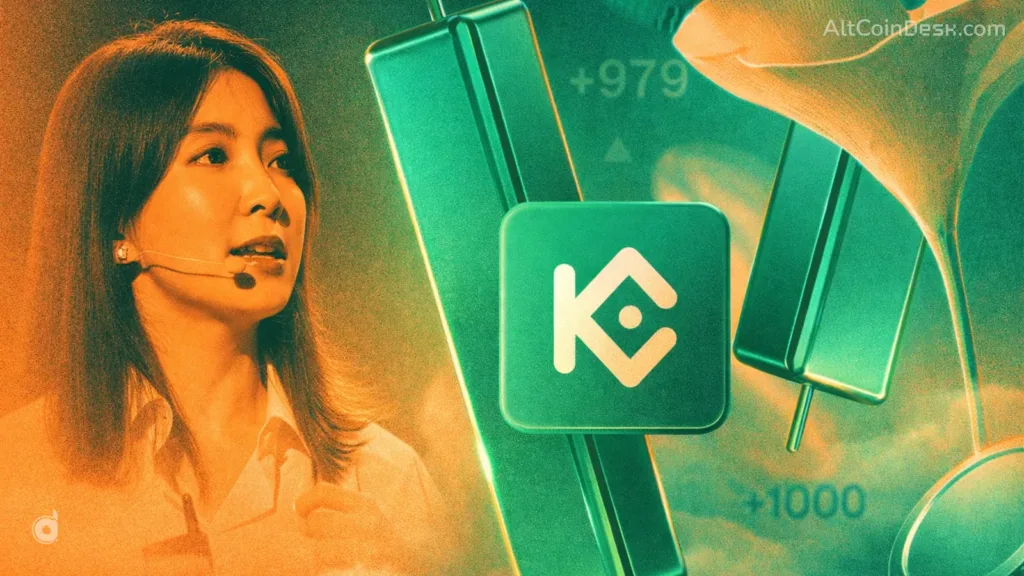
Alicia Kao, the Managing Director at crypto exchange Kucoin, joined a conversation with AltCoinDesk to discuss the balance between regulations and innovations, the role of NFTs, integrating AI, market maturation, while also reflecting on her personal journey through crypto and also how Kucoin withstands the unpredictable crypto market pressure.
Kao entered the crypto world in 2019, a time when blockchain was experiencing a transition from an experiment to an ecosystem of sophisticated products insured with security and accountability.
“KuCoin has been called ‘The People’s Exchange,’ which resonated with me because it emphasized accessible innovation anchored in trust,” Alicia told AltCoinDesk as she shared her journey with the company.
Evolving alongside the brand, her role expanded into the depth of market, partnership, and even market development, contributing significantly to accelerating responsible adoption of core infrastructure that has real-world implications.
Navigating regulation and trust
Expanding further on market sentiments that resonate with how exchanges should balance regulations with innovation, Alicia said:
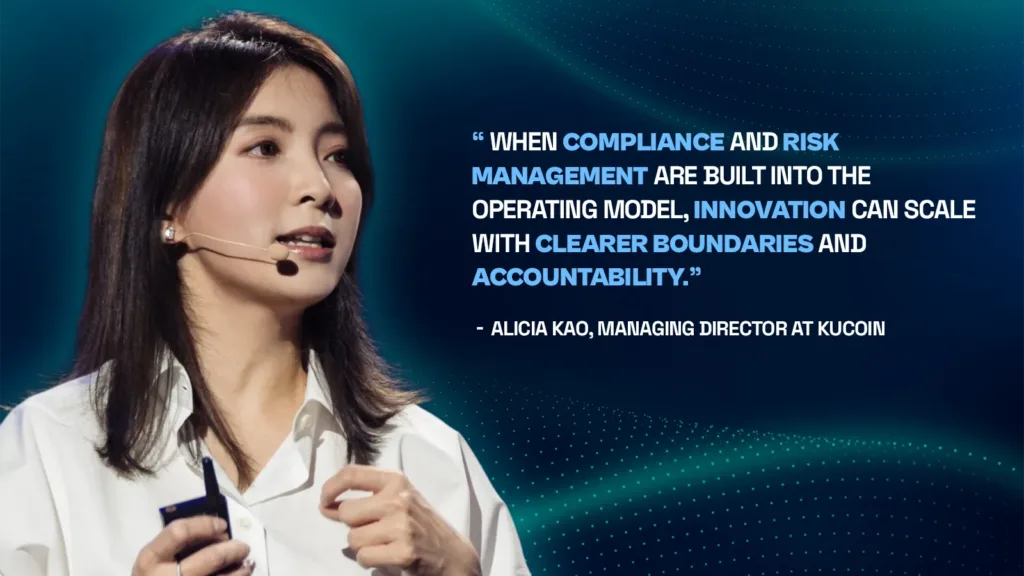
According to her, retail users prioritize transparency, safer onboarding, and educating users with product designs to reduce complexity.
For global partnerships, however, the primary focus is on ensuring consistency in governance and adopting a risk-based strategy for cross-border collaboration abiding by federal regulations and local oversights.
Market Outlook: cyclical correction vs structural reset
Alicia describes exchanges as both “trusted gatekeepers” and “open gateways,” as they maintain the standards in governance while welcoming innovation with lesser friction.
We asked her if regulatory pressure makes it harder to maintain the balance between the two. She said, “Regulatory scrutiny increases the operational bar, but it also accelerates market maturation toward consistent standards and stronger accountability.”
According to her, the two work hand in hand instead of choosing one identity over the other. Operating both roles with discipline is what defines long-term operability, as long-term adoption requires both access and trust.
However, the optimistic growth of an industry is not defined by market speculation alone, for Alicia. The extremely volatile market, even characterized by an “extreme fear” index at 8, according to her, is an index only capturing the short-term positioning and emotional responses rather than the industry downfalls.
“In my view the current downward pressure is largely a reflection of broader macroeconomic tightening, higher capital costs, and a cyclical pullback in risk appetite across global markets. In periods when liquidity becomes more selective, higher-volatility asset classes such as crypto tend to experience amplified sentiment swings,” she added, viewing volatility as a part of growth and maturation.
For that reason, she stood strong on her grounds about crypto’s healthy and long-term industry growth remaining intact. Sustainable expansion should be judged by infrastructure quality, responsible innovation, and the continued integration of digital assets into the broader financial ecosystem.
“I view the current phase as both cyclical and structural,” as the market experiences liquidity driven drawdowns, the market has been evolving with stronger governance and better standards with regulated access to integrate it into the conditions best for mainstream users and global adoption.
NFT integration and cultural bridge
Herself an Non-fungible token (NFT) collector, Alicia sees the integration of NFTs with mainstream intellectual property as an important bridge between the real and virtual worlds, specifically during crypto’s transition into mainstream adoption.
She acknowledged that in the initial stage, blockchain infrastructures or decentralized ownership could feel distant, calling it an “abstract concept.” Thus, connecting NFTs to recognizable brands or communities helps them break down complex technology into relatable cultural experiences.
“That lowers the psychological barrier for new participants and makes crypto more accessible,” she said.
NFT projects with strong IP, branding, and responsible design can create communities where people participate in building a brand together, expanding beyond digital collectibles into merchandise, media, and broader ecosystems.
Despite the closure of many NFT marketplaces, certain brand names, like Pudgy Penguin, just hit 16 million dollars, following the launch of an associated token. Hence, the value of NFTs is not just financial for Alicia but participatory. Shared identity, co-creation, and even long-term brand alignment can all serve as the beginning of a wider adoption with transparency and utility.
AI’s Role: reducing complexity without speculation
Alicia said the most important role of AI in the system is reducing the complexity for all users. With guided education, product discovery, better operational efficiency, and AI-driven improved risk intelligence, user experiences are redefined.
“At KuCoin, the rollout of KIA reflects this direction—designed as a crypto-native assistant to help users interpret markets, navigate tools, and access insights more efficiently through a conversational interface,” she added.
What would need human oversight is the AI itself, which has the risk of unreliable outputs, misinformation amplification, privacy and security concerns, and, most importantly, accountability gaps. Tools including KIA improve clarity without creating false certainty or weakening user protections.
KuCoin’s future pipeline
KuCoin withstands the pressure of the volatile industry knocked over with the wave of shutdowns, restructuring, and bankruptcies. Instead, their focus is on the fundamentals, which go far beyond a short-term speculative vehicle and aim to build a financial infrastructure.
To build that, innovation must be backed by transparency, security, and compliance, where regulation frameworks are standardized in holding real-world utility, “from payments to ecosystem partnerships that advance infrastructure and education,” she said.
KuCoin’s priorities are intact for the years to come. From continuing a compliance-forward expansion and executing the $2B Trust Project to strengthen security, transparency, and governance, but also deepening the role of KuCoin in the scalable infrastructure of the industry for real-world adoption.
Aligning them together could mean using AI to reduce complexity, such as their KIA, while also expanding payment utility for crypto to shift from “held assets” to daily use across commerce and service.