

Ever since OpenAI launched their first large language model for public use back in November 2022, artificial intelligence (AI) is being touted as a major – if not the leading – technological advancement of the decade. AI’s impact is not observed in isolation, as it is impacting pretty much all industries, ranging from healthcare to finance.
Unsurprisingly, the crypto industry has also attempted to ride the AI bandwagon, with several crypto projects portraying themselves as the ones that ‘bridge the gap between AI and blockchain.’ However, these projects’ token prices show that the majority of them use the phrase just as a marketing buzz to generate some hype and benefit the insiders and early buyers.
That said, not all so-called blockchain-AI projects are useless, since some of them actually offer real utility that integrates AI with on-chain economics.
Understanding AI altcoins
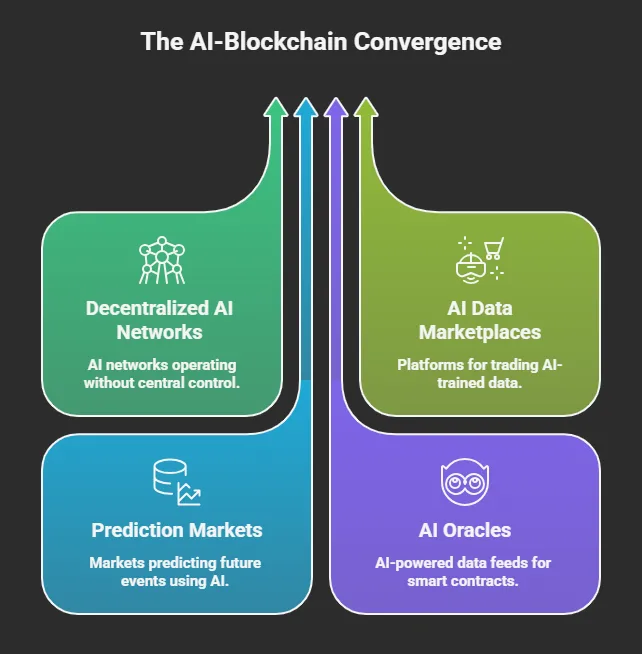
Put simply, AI altcoins are those cryptocurrencies that combine the benefits of AI with blockchain technology. While some AI tokens aim to create decentralized AI networks, others are geared toward becoming marketplaces for AI-trained data, while still others are vying to become prediction markets or AI oracles for smart contracts. No matter the desired use case, there is one common theme – bringing AI and blockchain together.
That said, not all AI-blockchain projects are equally useful. While some projects genuinely intend to provide infrastructure for AI services, others appear far more interested in using ‘AI-blockchain’ as a hype word to justify their ungrounded valuations.
The top AI verticals
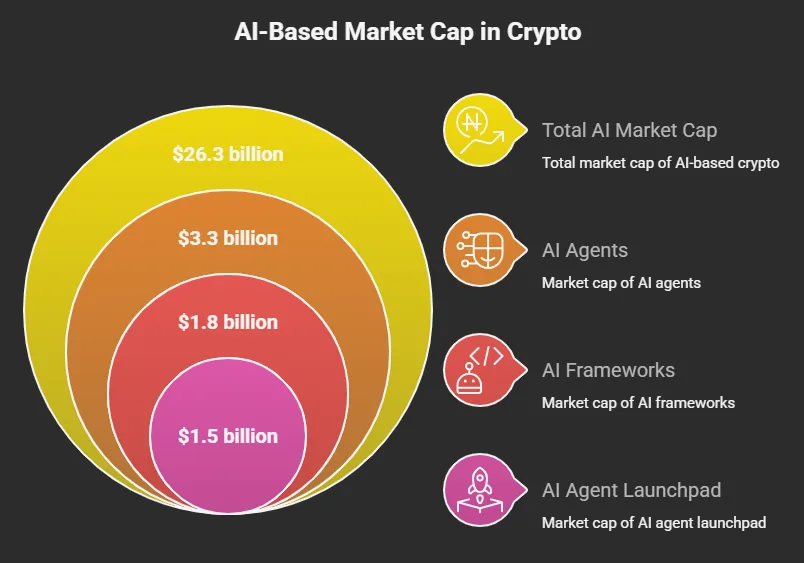
According to data from Coingecko, the total AI-based market cap in the crypto market currently hovers around $26.3 billion, with the AI agents, AI frameworks, and AI agent launchpad verticals contributing $3.3 billion, $1.8 billion, and $1.5 billion, respectively. Let us quickly go through what these verticals mean.
AI agents
AI agents are pretty self-explanatory. These are small software programs that can perform routine tasks and make decisions without constant human input. In the crypto industry’s context, such AI agents can manage decentralized finance (DeFi) portfolios, execute trades in a timely manner, or fetch data to provide the latest price updates.
AI frameworks
AI frameworks are more relevant for developers in that they are protocol tools that are used to build and deploy AI models and agents. In the crypto industry’s context, AI frameworks are geared toward interoperability and on-chain execution while maintaining privacy and coordination between two or more AI agents on the blockchain.
AI agent launchpads
As the term suggests, AI agent launchpads are platforms that provide the required environment for AI agents. Essentially, AI agent launchpads help teams create, launch, and distribute AI agents. This goal is achieved through tokenization or shared ownership models. AI agent launchpads function as marketplaces that allow users to discover AI agents and communities to engage and participate in the ecosystem’s growth.
Some leading AI altcoins
As mentioned earlier, cryptocurrencies classified as AI-focused tokens currently command $26.3 billion in total market cap, with a 24-hour trading volume of close to $2.34 billion. The following are some of the leading, useful tokens in the AI realm.
Chainlink (LINK)
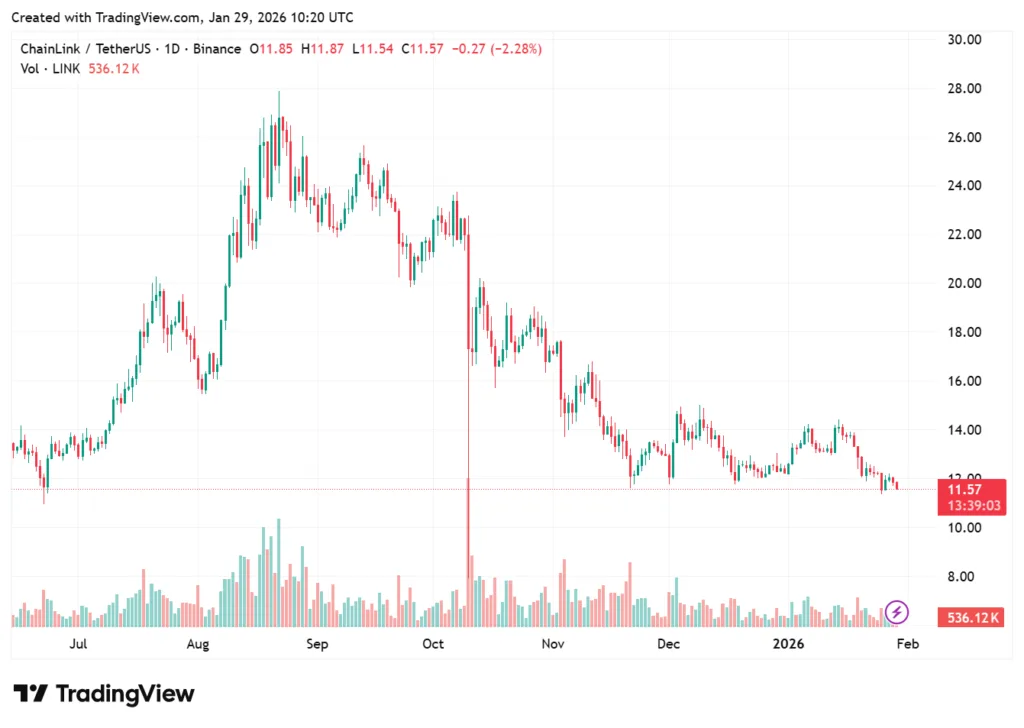
The leading token in this category is the top crypto oracle token, Chainlink (LINK). The token currently holds a market cap of $8.45 billion. The token trades at $11.57 at the time of writing, about 77% below its all-time high (ATH) value of $52.7 recorded back in May 2021.
Near Protocol (NEAR)
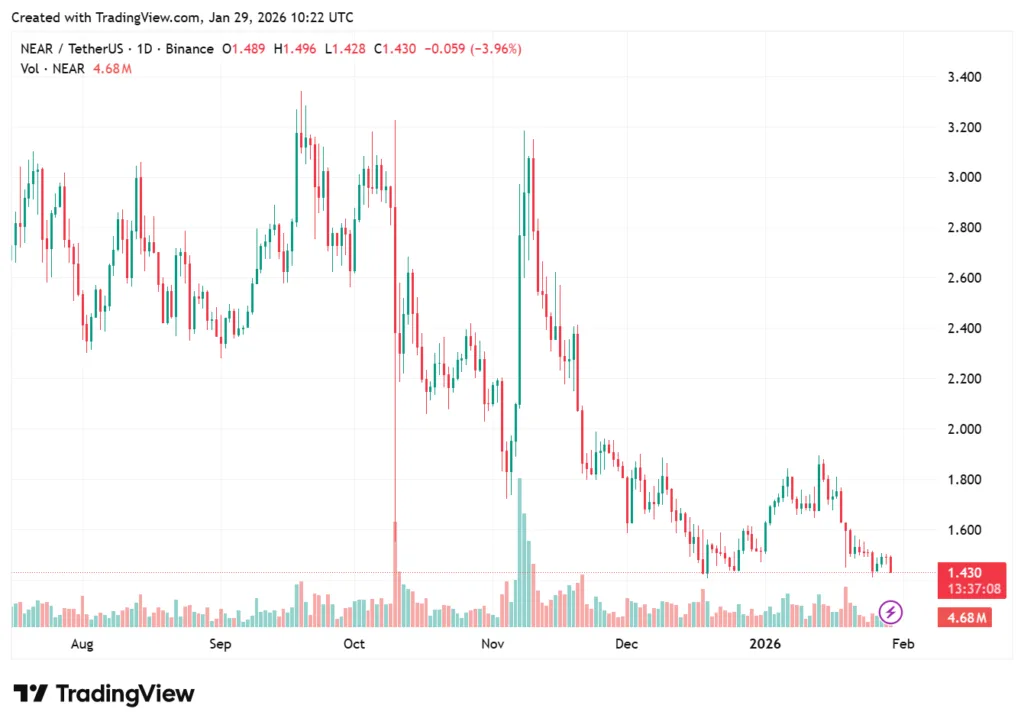
Near Protocol is perhaps one of the earliest AI-based players in the crypto industry. A little-known fact is that NEAR started as an AI project before pivoting to blockchain technology in 2018. Per sources close to the matter, the original goal of the project was to work on machine learning, particularly program synthesis.
The project eventually wanted to teach machines to write code. It was in 2018 that the NEAR team realized that the existing blockchain solutions were too inefficient and slow for their needs and, as a result, decided to develop their own sharded blockchain.
In an exclusive interview with AltCoinDesk, NEAR Protocol CFO and CSO David Norris shared his vision about integrating AI with the NEAR ecosystem. At the time of reporting, NEAR ranks 58 on Coingecko in terms of reported market cap.
Render Network (RNDR)
The Render Network is a leading decentralized GPU compute platform geared toward applications ranging from 3D rendering to machine learning and generative AI. The Render Network leverages a decentralized peer-to-peer network to achieve scale, affordability, and speed.
The network’s native token, RNDR, is one of the most actively traded in the AI vertical of the crypto market. Although the token is down more than 68% over the past year, it has shown some positive momentum over the past month, surging by 42.7% – trading at $1.82 at the time of writing.
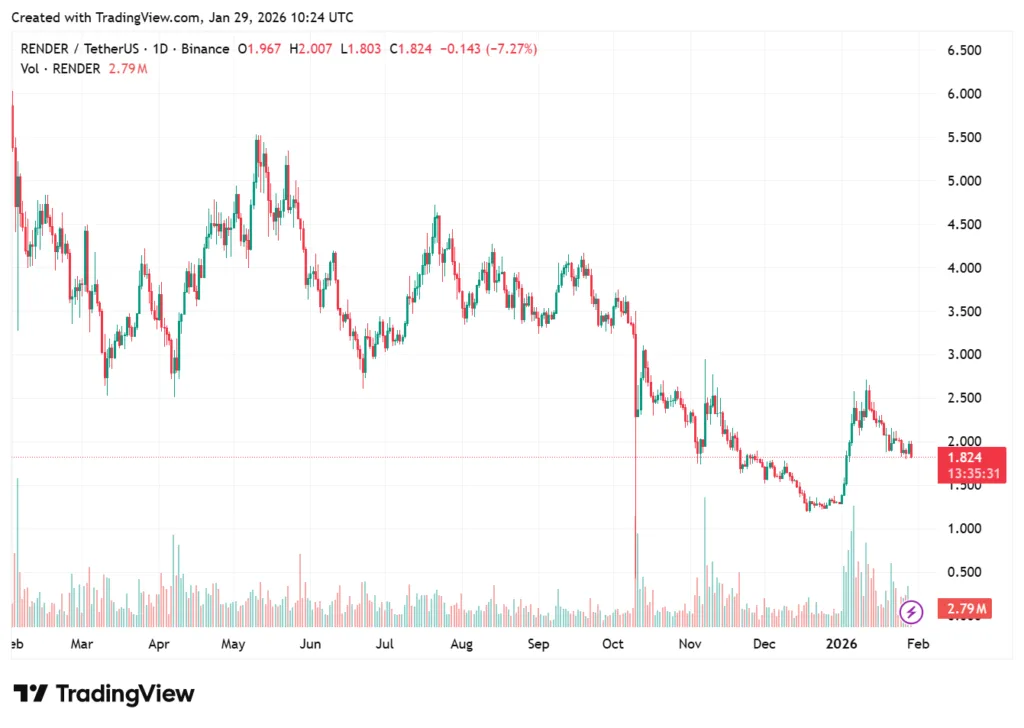
That said, the token remains significantly below its all-time high (ATH) price of $13.53. However, with rising demand for decentralized GPU networks with greater AI adoption, RNDR is certain to emerge as one of the major beneficiaries.
Risks and challenges of AI tokens
No matter how technologically advanced or superior a project might be, there are always some risks and challenges attached to it. Even Bitcoin finds itself frequently threatened by quantum computing, while Ethereum – following its transition to the proof-of-stake consensus algorithm – is accused of enabling big ETH holders to establish an unofficial monopoly on the protocol.
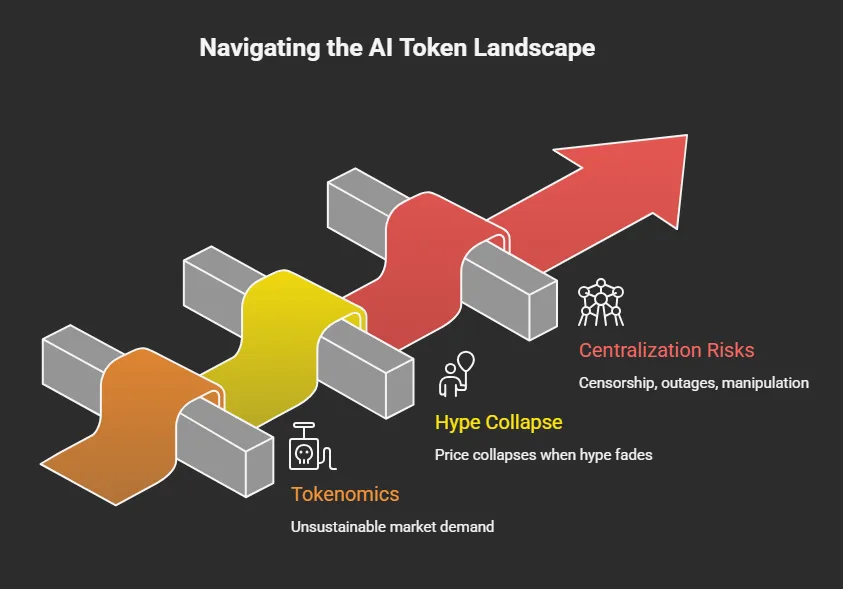
AI tokens are no exception. Before making a significant investment in any AI token, familiarize yourself with its intricacies. Give enough time to studying the project’s underlying tokenomics.
The vast majority of the so-called AI blockchain projects are developed to attract short-term capital, resulting in the creation of tokens that may not have sustainable market demand. As a result, the token’s price can collapse when the hype surrounding a project or AI simmers.
Finally, centralization risks remain high for the so-called decentralized AI blockchain projects. Even though the architecture of blockchain technology inherently supports decentralization ethos, one or two major entities holding the majority of the project’s token supply can increase the risks of censorship, service outage, or price manipulation.
Final thoughts on AI tokens
To sum it all up, AI tokens are at an inflection point. While the rapidly rising industry-agnostic AI adoption is likely to play in favor of AI-based digital assets, there is a real risk of hype overtaking utility. Google CEO Sundar Pichai recently warned that no company, including the search engine giant, will be immune when the AI bubble goes bust.
That said, there are definitely opportunities to make strong monetary gains in the AI niche in the broader cryptocurrency industry – provided investors do due diligence before putting any money into it. A few key points worth considering are strong project ecosystem growth and real token utility that functions beyond merely using AI as a buzzword.