

Blockchain and Web3 sound like twins, but one is the engine and the other is the entire ride. Here is the truth no one explains clearly. Let me introduce you to the most confusing relationship on the internet.
Let’s settle this once and for all because the confusion is getting embarrassing. People keep saying blockchain and Web3 like they are interchangeable. They are not. That is like calling a car engine the same thing as a ride to brunch. Yes, they are related. No, they are not the same thing.
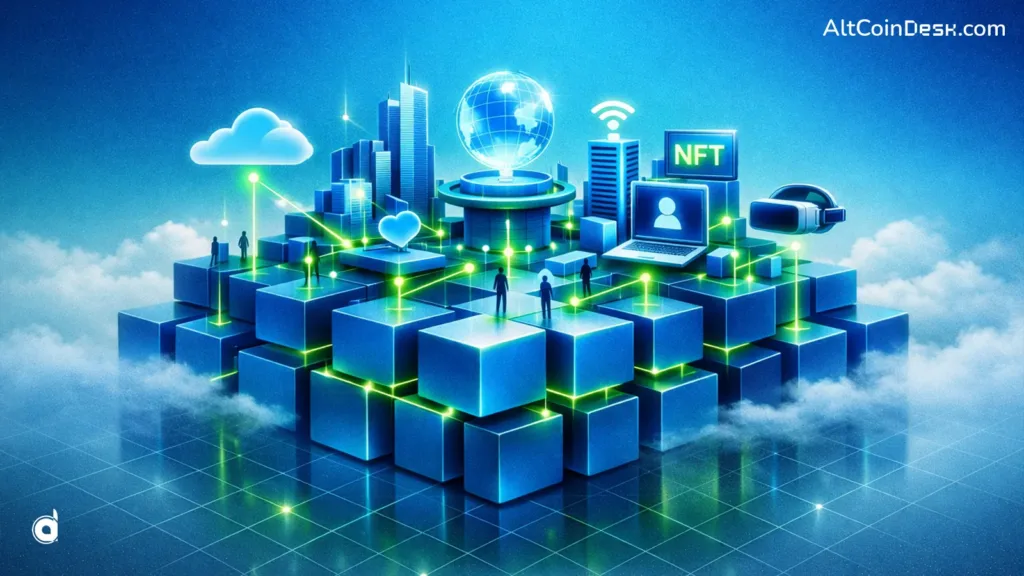
Blockchain and Web3 live in the same house, share the same electricity bill, and sometimes borrow each other’s clothes. But one is the foundation, while the other is the lifestyle built on top of it.
And somehow, despite years of headlines, Twitter threads, and overly confident LinkedIn posts, most people still cannot explain the difference without sounding like they swallowed a tech glossary.
So let’s fix that. No jargon. No confusion. Just clarity, with a bit of humor so we do not all fall asleep halfway through.
First, meet blockchain: The quiet overachiever
Blockchain did not show up to be famous; it showed up to solve a problem. That problem was simple but annoying. How do you keep a shared record between people who do not fully trust each other without giving one person total control?
Before blockchain, the answer was always the same. You trust a middleman. A bank. A company. A platform. Someone keeps the records, and everyone else just hopes they behave.
Blockchain looked at that system and said, “What if we remove the middleman and let everyone hold a copy of the same record instead?” That is the entire idea.
A blockchain is a shared digital record. Transactions are grouped into blocks. Each block connects to the one before it. Once recorded, it becomes very hard to change.
Think of it like a notebook that is copied and shared across thousands of people at the same time. If someone tries to cheat, everyone else sees it instantly. That is why blockchain matters. It replaces trust in a company with trust in a system. No CEO required. No customer care line that says “please hold” for 47 minutes.
Now meet Web3: The loud one with big dreams
If blockchain is the quiet engineer, Web3 is the one pitching ideas at full volume. Web3 takes blockchain and asks a bigger question. What kind of internet can we build if no single company controls everything?
Instead of just sending money, Web3 wants you to own things online. Not “terms and conditions of ownership.” Real ownership. Your money. Your digital assets. Your identity. Your access.
Web3 is the idea that the internet should not be controlled by a handful of giant companies collecting your data like it is a hobby. It imagines an internet where you are not the product. You are the participant. Now, does it always succeed at that? We will get there. Relax.

Blockchain and Web3 in 1 sentence
Let’s make this painfully clear. Blockchain is the technology. Web3 is what people build using that technology, or even simpler.
Blockchain is the engine. Web3 is the car, the driver, the passengers, and the playlist arguing in the background. If you remember nothing else, remember that.
How blockchain and Web3 all started
Blockchain didn’t just materialize unexpectedly on a random Tuesday. Back in the early 1990s, people were already thinking about how to create records that could not be secretly changed. That idea slowly evolved.
Then came 2008. Someone named Satoshi Nakamoto dropped the Bitcoin white paper and basically said, “Here is how you send money without a bank.” People laughed. Then people ignored it. Then people regretted ignoring it.
Bitcoin launched in 2009, and suddenly, blockchain was no longer just a theory. It was working. But here is where things get interesting. Bitcoin was great for sending value. But what if you wanted more than that?
Enter Ethereum in 2015. Ethereum said, “What if we could run programs on the blockchain, not just transactions?” That opened the door to apps, digital assets, and entire systems built on top of blockchain. And that is when Web3 quietly stepped into the room and said, “Hello, I have ideas.”
Blockchain vs. Web3: The real difference people keep missing
Let’s address the elephant in the room. When people say “Web3 vs blockchain,” they are asking the wrong question. It is not a competition. Blockchain solves a specific problem. How do we maintain a shared record without trusting one central authority? Web3 solves a bigger problem. What kind of internet do we build once that shared record exists?
So the difference is not about better or worse. It is about scope. Blockchain is focused. Web3 is ambitious. Blockchain is infrastructure. Web3 is an experience. Blockchain is what makes things possible. Web3 is what makes things interesting.
Why blockchain is the backbone of Web3
Now let’s connect the dots properly. Web3 talks a lot about ownership, freedom, and control. Nice words. Very inspiring. Also, very useless if there is no system backing them. That is where blockchain comes in. Blockchain gives Web3 its credibility.
It allows:
- Shared truth so everyone sees the same data
- Finality so that records cannot be easily changed
- Programmability, so rules are enforced automatically
- Portability so assets can move across platforms
- Composability so that different apps can work together
Without blockchain, Web3 would just be a marketing campaign with good lighting and dramatic music. With blockchain, it becomes something real.
But here is the twist
Web3 is not fully decentralized. Yes, I said it. Take a breath. Most Web3 apps still rely on some centralized parts. Servers, interfaces, storage systems, and even decision-making in some cases.
So while Web3 talks about decentralization, it often lives in a hybrid world. Partially decentralized and partially traditional. Think of it like someone who says they eat healthy but still keeps snacks hidden in a drawer. We see you.
Real-world numbers that actually matter
Let’s step away from theory for a second. Because this is not just a philosophical debate anymore. Millions of people are already using blockchain-based systems daily. There are tens of millions of active crypto wallets interacting with applications. Stablecoins alone process trillions of dollars in transactions every year.
Developers are actively building, contributing millions of lines of code across blockchain ecosystems. Companies are not just watching from a distance anymore. Many are experimenting with blockchain and Web3 in payments, finance, identity, and digital ownership. This is not a trend that disappears after a bad tweet. It is infrastructure being built in real time.
Here’s the real problem
Blockchain and Web3 are not perfect. If they were, your grandmother would already be using them.
Here are the real issues:
Some networks are slow, fees can be high, user experience can feel like solving a puzzle, losing a password can mean losing everything, regulations are still catching up, and not every project is as decentralized as it claims. Also, let us not forget the scams. If something promises guaranteed returns, run. Actually, do not run. Sprint.
So, what does the future look like?
The future of blockchain and Web3 is probably not what most people imagine. It is not about replacing everything overnight. It is about quietly becoming the foundation for certain parts of the digital world. Payments. Ownership. Digital identity. Financial systems.
The most successful systems will not scream “blockchain” at you. They will just work. You will send money instantly. You will own digital assets that actually belong to you. You will move between apps without starting from zero every time. And you will not need to understand consensus mechanisms to use any of it. That is the real goal.
Blockchain and Web3: The relationship that actually makes sense
Let’s bring this home. Blockchain and Web3 are deeply connected, but they are not the same thing. Blockchain is the system that creates trust without middlemen. Web3 is the vision of what the internet can become using that system.
One builds the foundation. The other builds the world on top of it. So the next time someone confidently mixes them up, you have two choices. You can correct them politely. Or you can smile, sip your coffee, and let them finish explaining something they clearly do not understand. Both are valid.