

When it comes to investment, there are countless vehicles to choose from—real estate, gold, bonds, treasury bills, equities, and now, digital assets. Each comes with its own risk and return profile. In recent years, cryptocurrency has emerged as a new frontier in the investment world, opening the door to Web3 and decentralized finance.
If you decide to invest in cryptocurrency, it’s important to go beyond simply choosing a coin—you need to streamline the type of token you want to hold. Some tokens are highly volatile, swinging dramatically with market sentiment, while others move more gradually and may provide stability in a portfolio. Beyond volatility, investors should also consider whether to allocate into utility tokens, governance tokens, stablecoins, or tokenized RWAs, each serving a different purpose within the crypto economy.
Underlying Value
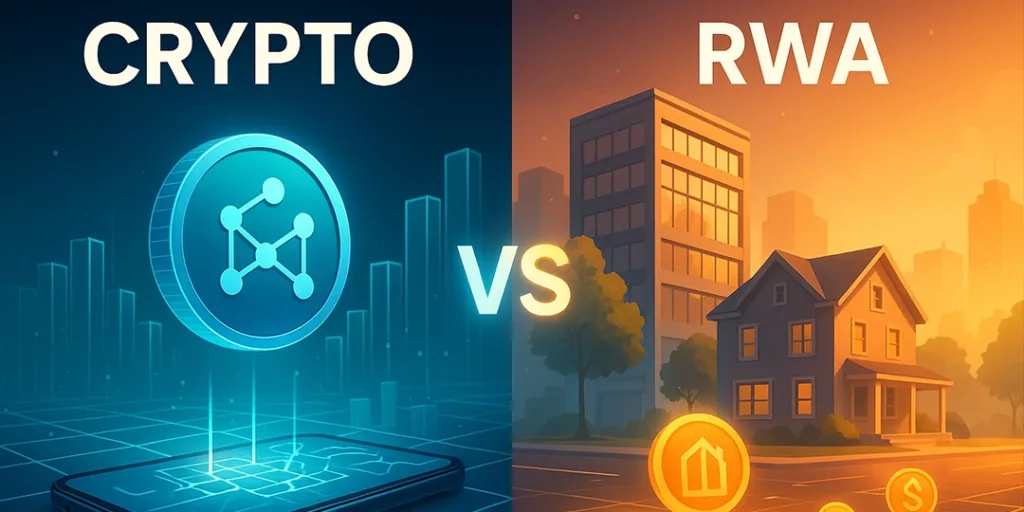
- Crypto: Often driven by market sentiment, adoption, and speculation. Many tokens lack intrinsic value unless tied to a specific utility or ecosystem.
- RWA: Backed by tangible assets like real estate, treasuries, or commodities, giving them intrinsic, verifiable value.
Volatility
- Crypto: Highly volatile, with large price swings in short timeframes. Attractive for traders but risky for conservative investors.
- RWA: Typically less volatile since they’re tied to stable, real-world assets with predictable returns.
Returns & Yield
- Crypto: Can deliver high returns through trading, staking, or DeFi, but risk of loss is also high.
- RWA: Offers steady, often lower returns (like interest, rent, or dividends), but with greater predictability and less downside risk.
Liquidity
- Crypto: Highly liquid on global exchanges, allowing 24/7 trading.
- RWA: May be less liquid depending on the asset (e.g., real estate takes time to sell), but tokenization is improving liquidity by enabling fractional ownership and secondary trading.
Accessibility
- Crypto: Easy entry with just a wallet and internet connection, though volatility can discourage new investors.
- RWA: Historically limited to institutional or high-net-worth investors, but tokenization now opens access to smaller participants.
Risk Factors
- Crypto: Prone to hacks, regulatory crackdowns, and speculative bubbles.
- RWA: Faces risks like defaults on debt, valuation disputes, or regulatory hurdles tied to asset ownership.
Crypto is better if you’re looking for high-growth potential, liquidity, and exposure to innovation. With 24/7 trading, global accessibility, and opportunities in DeFi, NFTs, and staking, crypto offers huge upside. However, it comes with extreme volatility and risk, making it more suitable for investors with higher risk tolerance or those seeking speculative gains.
RWA investments shine if you want stability, predictable yields, and tangible backing. Tokenized real estate, treasuries, and commodities provide intrinsic value and often lower volatility compared to crypto. RWAs are better for risk-averse investors or those seeking steady income streams, but returns are usually more modest, and liquidity can be lower than pure crypto.