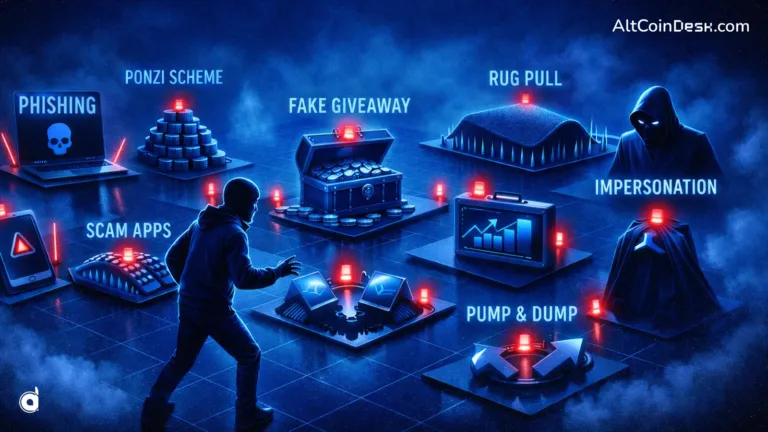



Buying crypto is the easy part. Figuring out where to keep it safe is where most beginners hit a wall. Leaving funds on an exchange feels fine at first, but it’s one of the riskier habits in the space, and anyone who’s been around long enough will say the same thing.
That’s when the wallet conversation becomes unavoidable. The choice between a hardware vs software wallet is one of the first real decisions worth getting right, and it’s a lot simpler to understand than it looks on the surface.
What a crypto wallet actually does
A crypto wallet doesn’t hold coins the way a physical wallet holds cash. The coins stay on the blockchain, which is a public record of every transaction ever made. What the wallet holds is the private key, the proof that a specific person controls specific funds.
Think of a safe deposit box. The contents exist whether someone is standing in front of it or not. The key just proves access. Lose that key with no backup and there’s no getting back in, no manager to call, no workaround. That’s the reality of self-custody.
The phrase the crypto world repeats constantly exists for good reason: “Not your keys, not your crypto.” When funds sit on an exchange, the exchange holds the keys. The user holds an IOU. Wallets fix that.
Hardware vs software wallet: The core difference
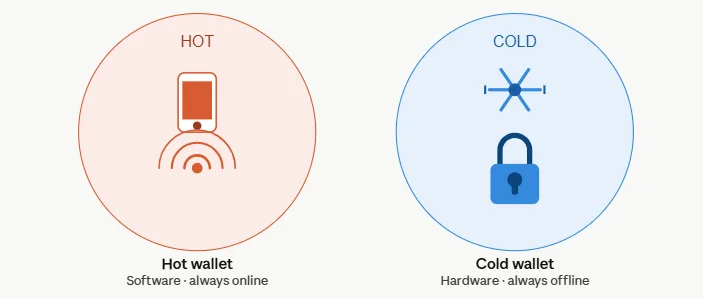
The entire hardware vs software wallet conversation comes down to one question: Is the private key connected to the internet?
Software wallets live on internet-connected devices, always online, always accessible. Hardware wallets store the private key on a physical device that stays offline unless it’s actively being used to approve a transaction.
Online wallets are called hot wallets. Offline ones are called cold wallets. Those two terms map directly onto the two types.
Software wallets: Free, fast, and always on
A software wallet is an app or browser extension. MetaMask, Trust Wallet, Exodus, these are the ones that come up most. Free to download, set up in minutes, works on whatever phone or laptop someone already owns.
Using one feels like a regular banking app. Send, receive, swap, connect to a DeFi platform, all from one screen. For someone actively exploring crypto, moving funds around, or trying different platforms, it fits naturally into daily use without any extra steps.
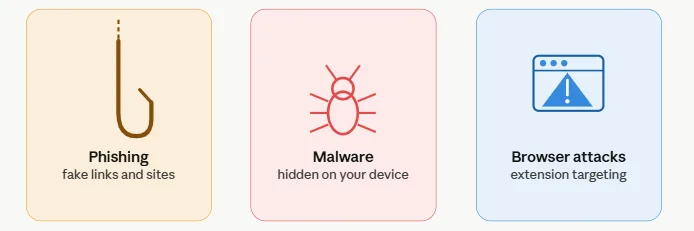
The trade-off is that private keys live on a device that’s online. That creates exposure to a few specific risks:
- Phishing attacks, where someone gets tricked into approving something they shouldn’t
- Malware running silently on a device, watching for wallet activity
- Browser extensions being targeted by attackers
A well-secured device with decent habits behind it reduces that risk considerably. It’s not that software wallets are dangerous, it’s that the user’s own device hygiene becomes part of the security equation.
Hardware wallets: Offline and built for security
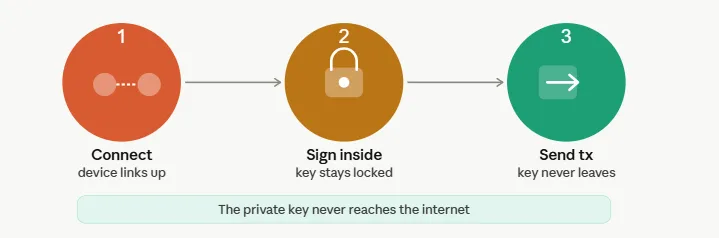
A hardware wallet is a small physical device, somewhere between a USB drive and a pocket calculator in size. Ledger, Trezor, and Tangem are the names that come up most often. The private key lives inside the device and never leaves it.
When a transaction needs approving, the device connects briefly, signs it internally, and sends only the signed transaction to the network. The key itself never touches an internet-connected machine. Even if a laptop is completely infected with malware, the key inside the hardware wallet stays out of reach.
The built-in screen is what makes hardware wallets especially reliable. Every transaction shows up there before it’s approved. Whatever appears on that screen is exactly what gets signed, so any attempt by malware to silently reroute funds on a computer screen doesn’t affect what the device actually processes.
They typically cost somewhere between sixty and a couple of hundred dollars, depending on the model.
So which one does a beginner actually need right now?
If someone is holding a small amount and still learning how everything works, a software wallet is the right starting point. Spending money on hardware before understanding what a seed phrase is or how to move funds between wallets is genuinely skipping steps that matter.
The best crypto wallet for beginners is one that’s non-custodial, meaning the user controls their own keys, and supports whatever coins they’re actually using. For most people starting out, that’s a software wallet on a clean, updated device.
As holdings grow, the calculation shifts. A hardware wallet starts making real sense once someone is holding an amount they’d genuinely feel sick about losing. At that point, the cost of the device is just the price of not having to think about it constantly.
A practical way to split it: use a software wallet for amounts being actively used or traded. Keep anything held long-term on a hardware wallet. It’s the same logic as keeping spending money in a regular wallet while savings sit somewhere more secure. Both serve a purpose.
The hardware vs software wallet question, answered honestly, isn’t really either/or. It’s a matter of timing and what stage someone is at.
The best crypto wallet for beginners: A few things worth checking
When looking at software wallets, a few things are worth going through before downloading anything:
- Whether it’s non-custodial, so private keys stay with the user
- Whether it supports the specific coins being used, since not every wallet supports every network
- Whether it has a solid reputation and no major security incidents in its history
For hardware wallets, compatibility counts too. Ledger supports a very wide range of assets. Trezor’s full codebase is open-source, which carries weight for people who care about transparency. Tangem takes a different approach with a card-style design and no seed phrase required, which suits people who worry about managing one securely.
The seed phrase: Treat it like the key to everything
Every self-custody wallet generates a seed phrase during setup. It’s a list of twelve or twenty-four random words, created once. That phrase unlocks everything in the wallet.
Anyone who has it has full access to the funds, no password needed, no identity check. If it’s lost, the funds are gone permanently.
A few basics worth taking seriously from day one:
- Write it down on paper and store it somewhere physically safe
- Don’t photograph it, save it in notes, or store it anywhere digitally
- Never enter it into a website, and never share it, regardless of who’s asking
A hardware wallet adds real security, but it can’t protect against a seed phrase that’s been leaked or carelessly handled. The wallet is only as secure as the phrase behind it.
Wrapping it up
Hardware vs software wallet isn’t a competition, it’s just a progression. Start with a software wallet, get comfortable, learn how things work. Once the holdings grow to a point where losing them would genuinely sting, that’s when a hardware wallet stops feeling optional.
Either way, the seed phrase is the one thing that can’t be treated as an afterthought. Store it properly from day one, and the rest tends to take care of itself.