
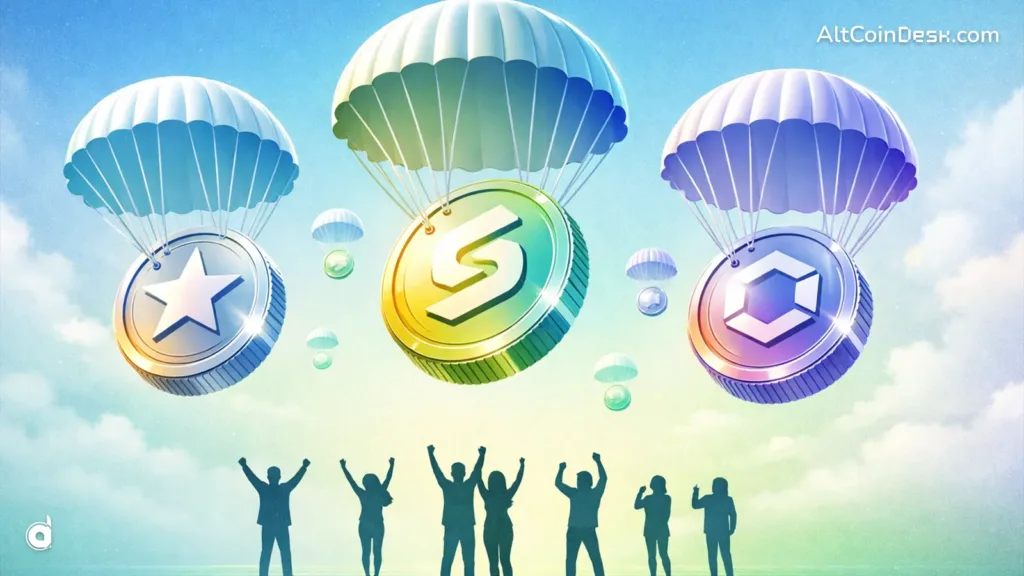

Ever opened your crypto wallet and found some mysterious tokens sitting there? That’s not a glitch; it’s likely an airdrop. If you’ve ever earned a free coffee after a bunch of visits, you’re already an expert in the basic idea.
In crypto, an airdrop is when a project gives people free tokens. No purchase required. Sometimes all you need to do is sign up early, use the app, or stay active. It sounds strange at first, but the idea is very old. Airdrops are the crypto version of customer loyalty points. Just like brands thank repeat customers to give them a reason to return, crypto projects thank early users to build trust, daily habits, and lasting involvement.
To understand this better, it helps to look at it through everyday experiences most people already recognize.
From free coffee to free crypto: It’s all about loyalty
Think about Starbucks Rewards. You buy coffee. You earn stars. After enough visits, Starbucks gives you a free drink. The coffee is not free because Starbucks is generous. It is free because Starbucks wants you to keep choosing them.
Now think about airline miles like Delta SkyMiles. You fly often. You earn miles. Third, they want loyalty. Owning a token gives users a sense of belonging. It stops feeling like someone else’s project and starts feeling partly theirs. When people have even a small stake, they naturally pay attention, stick around longer, and care about whether the project succeeds or fails.
So, why give away the digital farm?
Crypto projects do not hand out tokens for fun. They do it for three clear reasons.
- First, they want attention. Free tokens create buzz. People talk. News spreads fast.
- Second, they want users, not just visitors. Airdrops reward people who actually use the product, not those who only watch from the outside.
- Third, they want loyalty. When users own a token, they feel connected. They care about the project’s success because they now have a stake in it. This is the same psychology behind loyalty cards, points systems, and membership perks.
How does one actually get an airdrop?
Think of it like an airline tracking your miles. The process isn’t usually about luck; it’s about participation.
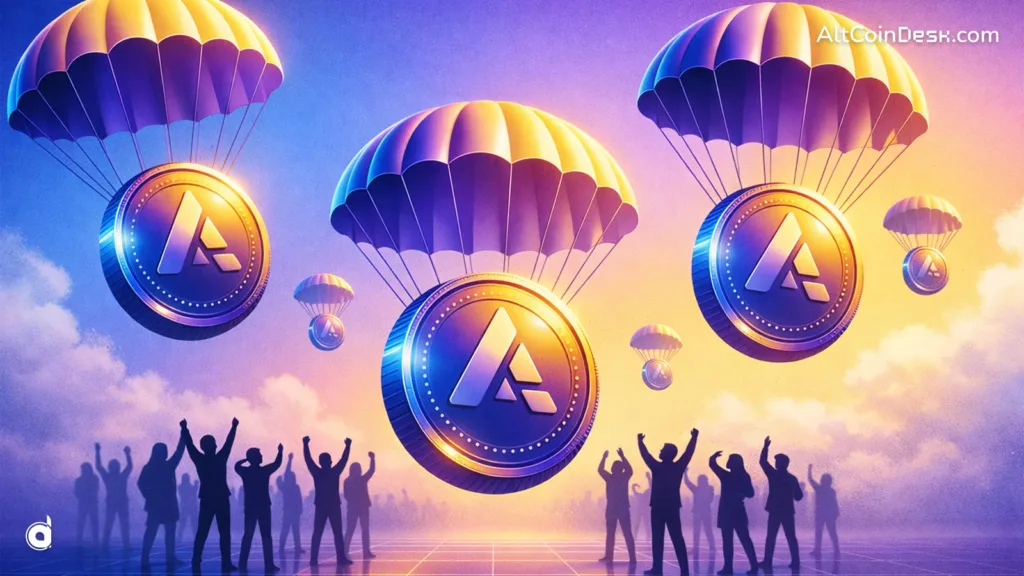
A new project launches on the blockchain. You, as an early explorer, interact with it: maybe you swap tokens on their platform, provide liquidity, or just use their testnet. The project takes a “snapshot” of all qualifying wallet addresses at a specific time. Poof! Tokens appear directly in the wallets on that list. No strings attached (if it’s legitimate; more on that later).
It feels magical, but it’s really just automated blockchain rewards for your attention and activity.
Why do people care so much about airdrops?
Some airdrops have been worth very little. Others have been life-changing. Early users of major crypto platforms received tokens that later became valuable as the projects grew. This created a powerful idea in the crypto world.
Use early. Stay active. Get rewarded later. That belief keeps people engaged long before a project becomes popular. It is the same reason people sign up for new rewards programs early. Early members often get the best perks.
The twist? These blockchain rewards aren’t locked in a company’s database. They’re live assets you can often hold, trade, or use to govern the project’s future. That potential adds a whole new layer to the traditional points system.
A crucial reality check: Safety and smarts
Hold on, though. Let’s be clear: while crypto airdrops are a legit strategy, the space is also riddled with scams. A golden rule of crypto education is if an airdrop asks for your private keys or an “activation fee,” run. It’s a trap. Genuine distributions are free and require no sensitive information. Always do your research on the project first. Consider using a separate wallet for experimental interactions to keep your main assets safe.
Users feel appreciated. Appreciation builds trust. Trust creates habit. Habit creates long-term users. This loop is the foundation of every successful loyalty system, whether it is coffee, flights, or crypto. The only difference is the reward format.
In crypto, loyalty points are not locked inside one brand or app. They can be traded, they can rise in value over time, or they can open the door to future rewards and access. That freedom is what makes them feel more meaningful and more powerful than the loyalty points people are used to.
Wrapping It Up: Familiar, Just Digitized
At the end of the day, crypto airdrops shouldn’t feel alien. They’re the digital-age version of loyalty points, frequent flyer miles, and that “buy ten, get one” punch card. They use old-school human psychology to bootstrap new-school technology. Once you see them that way, the whole concept becomes less about cryptic code and more about community building, a much more human endeavor.
My last piece of advice for your Web3 basics toolkit is to be careful but curious. The best crypto airdrops usually don’t reward people who rush to get them. Instead, they reward people who show real interest and keep participating.