


Your crypto wakes you up one morning, stretching and saying, “I am tired of just sitting there. I want coffee. I want groceries. I want to pay for a ride home.”
That is where crypto debit cards enter the story.
For years, crypto lived in apps and wallets, admired but rarely invited into real life. Crypto debit cards changed that. They quietly turned digital coins into something you can actually use at a checkout counter without explaining blockchain to a cashier who just wants to scan your croissant. Let us break this down calmly, clearly, and without jargon.
What are crypto debit cards?
Crypto debit cards are payment cards that let you spend cryptocurrency as easily as money in your bank account. They look like regular cards. They swipe like regular cards. They tap like regular cards. The difference is what sits behind them.
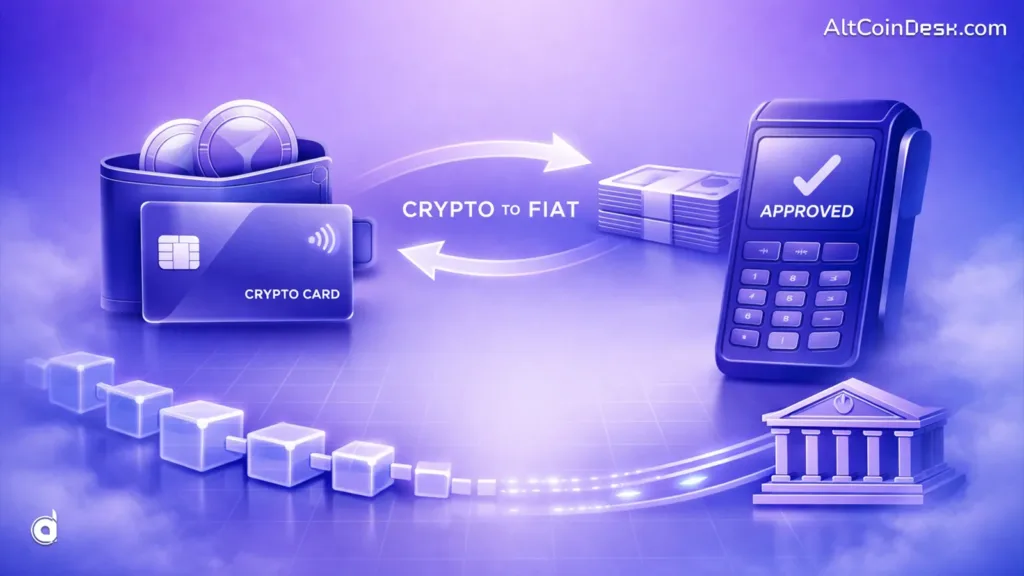
Instead of pulling money from a traditional bank balance, crypto debit cards pull value from your crypto holdings. When you pay, your crypto is converted into local currency behind the scenes, and the merchant gets paid normally. The shop never knows you used crypto. The blockchain never causes a scene. Everyone is happy.
How crypto debit cards actually work
You load crypto into an app linked to your card. When you make a purchase, the card provider instantly converts your crypto into cash at the current rate. That cash pays the merchant. You see crypto leave your balance. The merchant sees regular money arrive. No awkward pauses. No explanations.
Behind the scenes, most crypto debit cards run on payment networks like Visa or Mastercard. That is why they work in millions of places worldwide. To you, it feels like spending money. To the system, it is a quick swap followed by a normal card payment.
Crypto debit cards vs. crypto credit cards
This is where people get confused, so let us clear it up. Crypto debit cards spend what you already have. If your crypto balance is empty, the card politely refuses. Crypto credit cards work more like traditional credit cards. You borrow money to spend, then repay later, sometimes earning crypto rewards instead of airline miles.
Think of it this way. Debit cards are honest. Credit cards are ambitious. Most beginners start with crypto debit cards because they are simpler and do not involve borrowing.
Why people use crypto debit cards
People do not use crypto debit cards because they are trendy. They use them because they solve real problems.
- First, they make crypto usable. Holding crypto feels powerful. Spending it feels practical.
- Second, they reduce friction. You do not need to move money from crypto to a bank every time you want to buy something.
- Third, many offer rewards. Some cards give cashback in crypto, which feels like your money earning little digital tips while you shop.
- Finally, they help bridge worlds. Crypto debit cards connect digital assets with everyday life, which is the whole point of money.
The quiet trade-offs you should know
No honest guide skips this part. Using crypto debit cards usually triggers a conversion. That conversion may involve fees. Rates can change fast, especially in volatile markets.
In many countries, spending crypto can be a taxable event. This means buying lunch could technically count as selling crypto. That is not scary, but it is something to understand. The cards are powerful tools, not magic wands.
Examples of popular crypto debit cards
Several major platforms offer crypto debit cards, depending on where you live.
- The Binance card is popular in places where Binance operates, letting users spend their crypto easily and earn small rewards along the way.
- The Coinbase card feels more like an extension of your account, pulling directly from your balance and supporting several cryptocurrencies.
- The Crypto.com card leans into perks, with different tiers that unlock higher rewards.
What matters most is location, though. Regulations vary by country, so a card that works smoothly in one place may be unavailable or limited in another.
How to get a crypto debit card
Getting crypto debit cards is usually straightforward. You sign up on a supported platform. You verify your identity. You apply for the card inside the app. You load crypto.
Some cards are virtual and work instantly with mobile payments. Physical cards arrive later, like a polite letter from the future. There is no secret handshake required.
Where can you use crypto debit cards?
Anywhere regular cards are accepted, in most cases. Coffee shops. Supermarkets. Online stores. Ride apps. Hotels. Restaurants. If a place accepts Visa or Mastercard, there is a good chance your crypto debit cards will work there too.
The merchant does not need to support crypto. The conversion already happened before the payment reached them. That invisibility is the genius.
Are crypto debit cards the future of payments?
They are not the final destination. They are the bridge. Crypto debit cards exist because the world still runs on traditional payment rails. They translate between two systems that are not fully ready to meet each other yet. For now, they make crypto less abstract and more useful. That alone makes them important.