
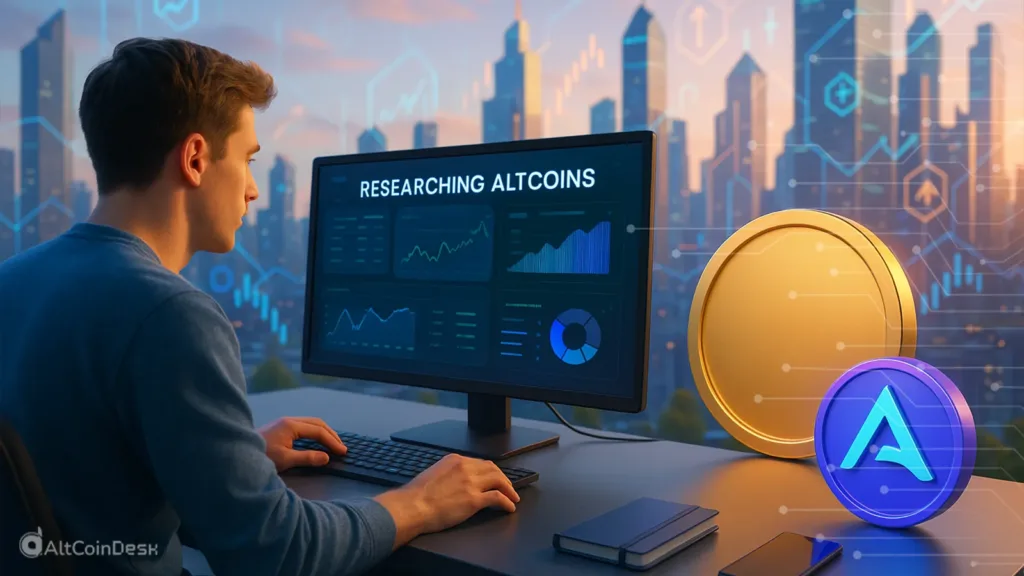

One of the earliest questions every new investor looking to dabble in the crypto waters asks is, “What altcoins should I buy?” Searching for a quality altcoin in the sea of thousands of cryptocurrencies is no easier than finding a needle in a haystack. Naturally, it’s vital to know how to spot quality altcoins to ensure you don’t inadvertently part ways with your money.
While Bitcoin (BTC) remains the top and most influential cryptocurrency to date, it may no longer offer the same extraordinary gains it used to when it had a much smaller market cap.
Today, one BTC frequently trades around the $100,000 price level, a quote that might be out of reach for the vast majority of new investors in the industry. The digital asset holds a total market cap in excess of a trillion dollars and is continually eating into gold’s $30 trillion market cap. However, an increasing market cap means a decrease in volatility, a characteristic that has defined the cryptocurrency market for almost all of its existence.
Why do investors turn to altcoins?
Most new traders in the digital assets space turn to altcoins for quick monetary gains. A few of the leading altcoins in terms of market cap include Ethereum, Solana, XRP, and Cardano. Meanwhile, the total number of coins listed on Coingecko is fast approaching 20,000, giving potential investors a hard time as to where to put their money.
While most traders seeking quick gains have an affinity for altcoins’ volatility, it can often prove to be a double-edged sword, as volatility works both ways. It is not uncommon for altcoins to dump 40% during a cryptocurrency market crash, decimating the holders’ portfolio within hours. Hence, there are some factors that altcoin enthusiasts must consider before putting any of their hard-earned money into such volatile digital currencies.
Pay attention to tokenomics
A key factor to consider while researching an altcoin is to go through the project’s whitepaper. A whitepaper is essentially a cryptocurrency’s soul, as it includes every minute and significant detail about the project, including its tokenomics.
Put simply, tokenomics refers to the economic design of a cryptocurrency project. Still a little unclear? Let’s further simplify it. Tokenomics specifies the maximum possible supply of a cryptocurrency, how it will be distributed, vested, or enter the market. For example, Bitcoin’s tokenomics says that it can only ever have a maximum supply of 21 million BTC, and that all new coins coming into the market will be through mining.
When it comes to altcoins, look at whether the coin’s total supply makes sense. If it’s in billions, the price per coin will usually be in cents. On the other hand, if the supply is in hundreds of thousands, expect the price per coin to be high.
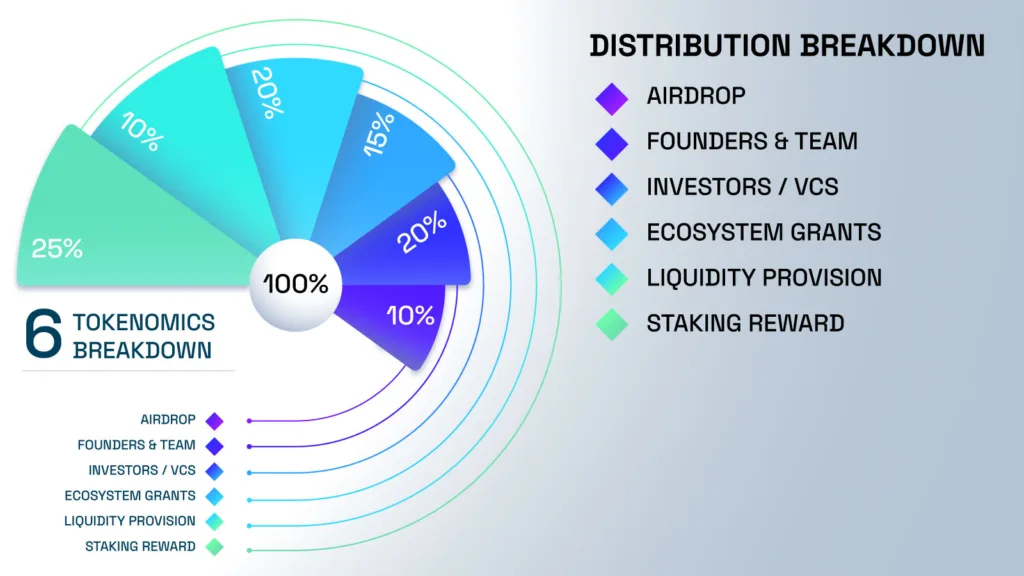
Similarly, check the vesting schedule of the altcoin. See what proportion of altcoins are being distributed through an airdrop, reserved for team members, investors, and for grant programs aimed toward increasing its adoption. A very high percentage allocated to team members or venture capital firms is usually a red flag. Take a look at the time of the supply schedule as well.
Exchange listings, liquidity, and trading volume
To ensure that the altcoin benefits from strong liquidity, make sure it is listed – or has upcoming plans – to get listed on top exchanges. Getting listed on exchanges such as Binance and Coinbase is usually a good sign about the altcoin’s liquidity, and indicates it’s experiencing strong trading volume.
Healthy liquidity and trading volume implies that the altcoin is significantly less likely to see any sharp price volatility. It also indicates that the coin is being actively traded by investors, suggesting strong interest and virality among new investors.
Chatter on social media and virality
A good litmus test to gauge the glass ceiling of an altcoin project is to check its virality on social media, especially on X (formerly Twitter). While crypto project founders promote their projects on all social media platforms, X holds a special place as it has an active crypto community.
Before investing in an altcoin project, go through the project’s Discord, Medium, and other channels where they communicate regularly with their community. See if everything looks legit on Discord, founders are doxxed, and there’s a warm community that welcomes new holders.
For the uninitiated, doxxing in crypto jargon means that an individual’s public information is known. Available information on the internet invokes trust in the founder, imparting greater transparency and legitimacy to the altcoin project.
In addition, check whether the altcoin is trending on X. One quick way to check this is by searching the token following a ‘$’ sign on X’s search bar. For example, if you want to see whether Dogecoin (DOGE) is trending on X, search for $DOGE.
Recent X posts by verified and trusted accounts, having a higher number of ‘likes’ usually indicate that the project is actively engaging with its community and there’s enough interest in its coin or token.
Team history and credentials
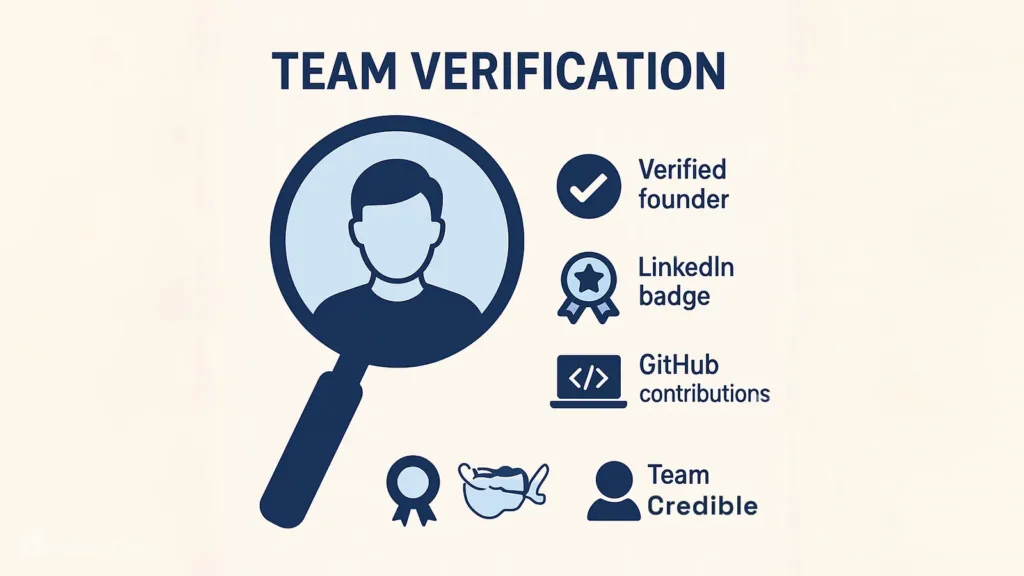
This one goes without saying. Don’t just invest in a project whose founder is anonymous on the internet, using an NFT profile picture. It’s always good to do your homework about the team members’ history, their credentials. Explore the projects they have been a part of previously. Were any of them rug-pulls? If yes, steer clear. If not, continue to research further.
Here, rug-pulls don’t necessarily just refer to projects which commit fraud against their investors by abruptly selling their holdings and closing all communication channels, including the Discord server and X handle. They can also include projects that are promoted by celebrities but lack fundamentals and technical expertise.
A legitimate altcoin project will always try to highlight its team members’ accomplishments. On the contrary, a run of the mill project will try to use the token’s hype to engineer momentum. It is of utmost importance to separate the chaff from the wheat.
Leverage blockchain analytics tools
If you want to take the level of research into a specific altcoin project a notch up, feel free to tap some of the blockchain analytics tools such as Nansen, ApeScreen, and others. In addition, you can also consider subscribing to premium, institutional reports by leading players in the industry, such as Delphi Digital, Messari, and others.
Real-world utility
In an age when influencers write long paragraphs on memecoins’ utilities, it is easy for a coin’s real utilities to sometimes take a backseat. However, a coin’s utility remains as crucial as ever, especially when it comes to benefitting from an ongoing narrative.
As much as possible, try to stick with coins or tokens that are closely associated with the prevailing industry meta or narrative. For example, when the GPU hype was at its peak, crypto token Render (RNDR) proved to be a worthwhile investment.
Similarly, during the AI narrative, AI-agent tokens such as Phala Network (PHA) and fetch.ai gave incredible returns to their holders. During the latter half of 2024, the crypto industry saw an explosion in memecoin valuations due to pump.fun’s immense popularity.
Bottom line: Always do your due diligence
All said and done, one can never perform ‘too much research’ on an altcoin. Even when you are fully certain about the legitimacy of a project, proceed with caution, as the crypto industry is still relatively young. If things go south, there are not a lot of safety mechanisms to rescue you.
Make sure to go through the above-mentioned checklist. Study the tokenomics of the altcoin project in detail, confirm whether the coin is listed on major exchanges, shows strong trading volume, and has deep orderbooks on exchanges.
Further, good social media buzz about the project is usually good, but beware of engineered virality. Confirm the team members’ credentials, and real-world utility usually goes a long way in terms of narratives, unlike short-term memecoins, which can crash just as violently as they ascend. Finally, stick to the golden rule when it comes to putting money into cryptocurrencies – only invest what you can afford to lose. Every time.