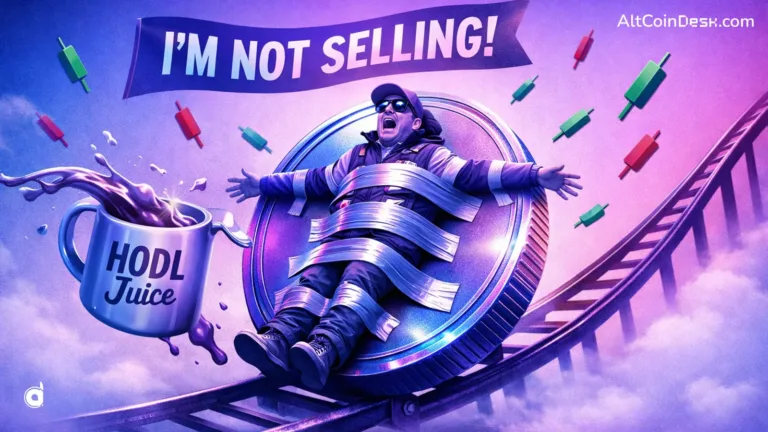


What is P2P cryptocurrency trading? How does P2P crypto trading work? Why are strangers on the internet quietly swapping digital money like it is a neighborhood garage sale?
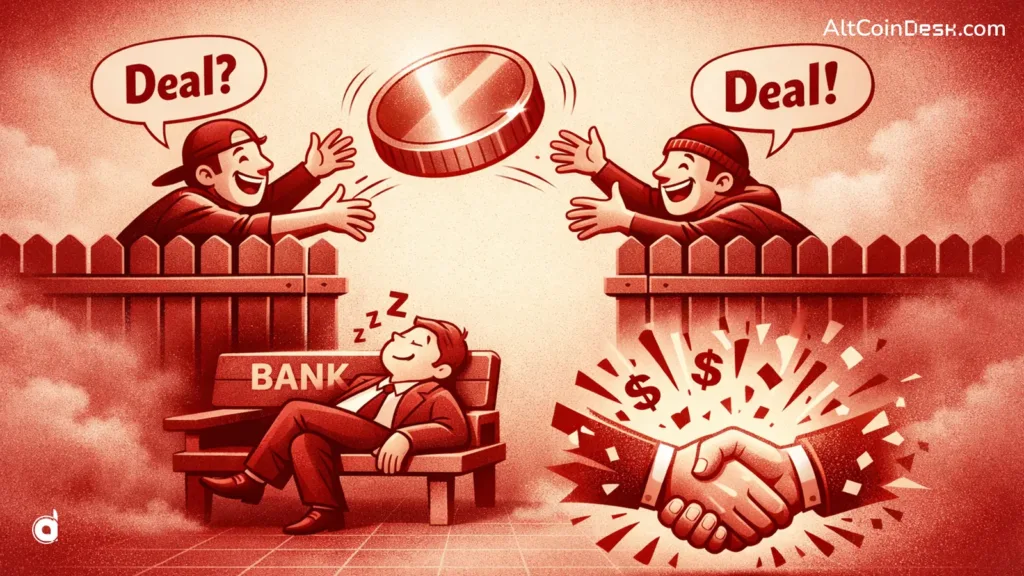
Imagine a marketplace where two strangers meet online, agree on a price, exchange money, and leave with exactly what they came for. No bank clerk. No complicated trading screen blinking like a spaceship dashboard. Just two people making a deal… Welcome to peer-to-peer (P2P) cryptocurrency trading!
If the regular crypto exchange feels like a high-speed stock market, P2P crypto trading feels more like a digital flea market where people post offers, negotiate prices, and trade directly with each other. The platform is there mostly to keep everyone honest. Think of it as the referee in a football match who makes sure nobody runs away with the ball.
At its core, P2P cryptocurrency trading simply means buying or selling crypto directly with another person instead of trading against an automated exchange order book. It is simple, human, and sometimes a little chaotic. Which, to be fair, is also a decent description of the internet.
The moment two strangers agree on a price
Let us picture a scene. Ada wants to buy some USDT. Her bank does not allow crypto purchases with cards. Tunde, on the other side of the internet, wants to sell some USDT because he needs cash. They meet on a P2P crypto exchange.
Tunde posts an offer that says he will sell 500 USDT for local currency through bank transfer. Ada clicks the offer. The platform locks Tunde’s crypto in something called escrow. Ada sends the money through her bank. Tunde confirms the payment. The crypto is released. Deal done.
No Wall Street office. No trading floor. Just two people and a platform making sure nobody pulls a disappearing act. This is P2P crypto trading, and millions of people use it every day to move money, buy stablecoins, or access crypto in places where banks behave like overly suspicious parents.
How does P2P cryptocurrency trading work in the real world?
If you are wondering how P2P cryptocurrency trading works, the process is surprisingly straightforward:
- First, someone posts an offer to buy or sell crypto.
- Second, another person accepts that offer.
- Third, the platform locks the crypto in escrow while payment is made.
- Fourth, once the seller confirms they received the money, the crypto is released.
That escrow system is the secret ingredient. It prevents the classic internet scam where someone takes your money and vanishes faster than a magician’s rabbit.
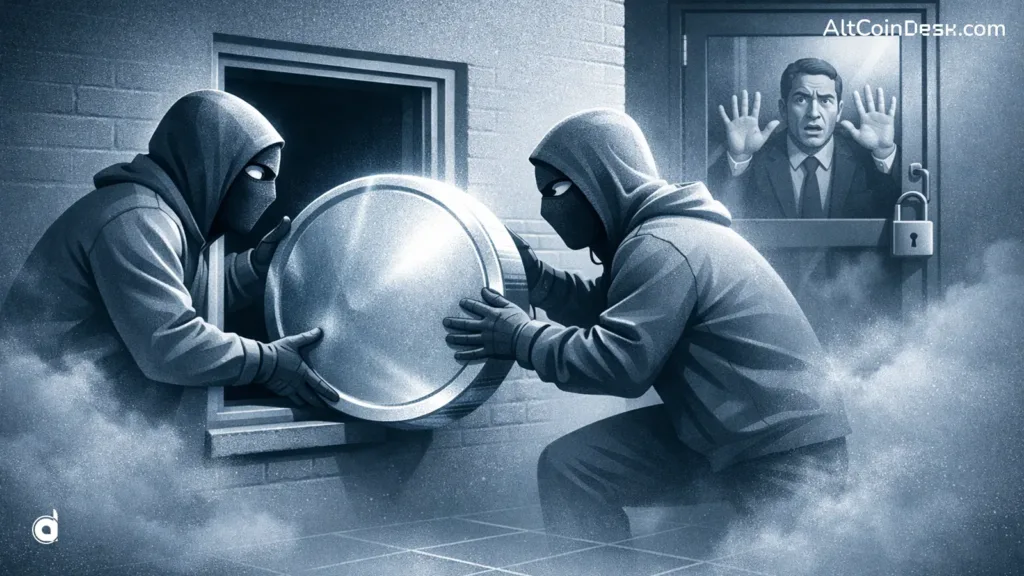
Of course, people still try funny business. Fake payment screenshots exist. Suspicious third-party transfers exist. One should always wait for the actual money to arrive before releasing crypto. If someone says, “Trust me, the bank is slow,” it is usually time to politely decline and go make tea instead.
The wild origin story of P2P Bitcoin trading
The idea behind P2P Bitcoin trading actually started with Bitcoin itself. Back in 2008, when the mysterious creator Satoshi Nakamoto introduced Bitcoin, the concept was described as a system that allows payments to go directly from one person to another without a financial institution in the middle. That philosophy spilled into trading.
By 2012, a website called LocalBitcoins turned this idea into a real marketplace where people could post ads and trade Bitcoin locally. It grew rapidly and eventually reached more than one million traders and hundreds of millions of dollars in quarterly trading volume.
Later, other platforms joined the party. Paxful became popular in many emerging markets. Bisq appeared as a decentralized alternative for people who preferred a noncustodial approach. Eventually, major exchanges built their own P2P crypto exchanges inside their platforms.
In short, the industry realized something obvious. People like trading with other people. Sometimes humans trust humans more than they trust machines.
Why do people still love P2P cryptocurrency trading?
There are several reasons P2P cryptocurrency trading refuses to disappear:
- The first is flexibility; P2P crypto trading supports many payment methods. Bank transfers, mobile payments, cash deposits, and sometimes even gift cards.
- The second is accessibility; In many countries, buying crypto directly with a debit card is difficult or expensive. P2P crypto trading solves that problem.
- The third is price discovery; Local supply and demand can create slightly different rates than global exchanges.
- And the fourth reason is something economists like to call necessity; When local currencies lose value quickly, many people turn to stablecoins through P2P crypto trading as a way to store value.
In simple terms, it becomes a digital version of buying dollars.
The good, the bad, and the slightly suspicious
Like any marketplace, P2P cryptocurrency trading has its perks and its risks. The good part is that escrow systems and reputation scores help keep most fraud in check. Many experienced merchants have completed thousands of trades with strong success rates. The not-so-good part is simple. Scams still happen.
Some common tricks include fake payment receipts, reversed transactions, or attempts to move the conversation off the platform where disputes cannot be tracked. A simple rule protects most traders. Never release crypto until the money is clearly sitting in your bank account. If patience were a cryptocurrency, it would be worth at least a trillion dollars.
The best places where P2P crypto trading happens today
Today, several platforms host P2P crypto exchanges. Some of the most widely used include Binance P2P, OKX P2P, Bybit P2P, and KuCoin P2P. These platforms operate large marketplaces with escrow protection and verified merchant systems.
For those who like a more decentralized path, Bisq lets people trade directly with each other without handing control to a central platform.
Meanwhile, some of the early marketplaces have faded away. LocalBitcoins closed its doors in 2023 after running for more than ten years. Paxful also said it would wind down in 2025 after facing regulatory pressure. The takeaway is simple. Platforms come and go, but the idea of P2P crypto trading keeps moving forward.

The future of P2P cryptocurrency trading
So, where is P2P cryptocurrency trading heading next? Regulation is tightening. Governments increasingly treat these platforms as financial infrastructure rather than informal marketplaces.
At the same time, stablecoins are becoming the backbone of many P2P markets. For millions of users, the trade is not about speculation. It is about accessing digital dollars. Wallet apps may also integrate P2P features directly, allowing users to trade without leaving their messaging or payment apps.
In other words, the technology may change, but the behavior remains the same. Humans like making deals with other humans.
To sum up on P2P cryptocurrency trading
At the end of the day, P2P cryptocurrency trading is simply the oldest form of commerce wearing new digital clothes. Two people meet. They agree on a price. One sends money. The other sends value.
It is part marketplace, part negotiation table, and occasionally part comedy show when someone tries to convince you that their “bank transfer is coming any minute now.”
Whether the future of crypto becomes more institutional or more decentralized, one thing is clear. As long as humans enjoy trading with each other, P2P cryptocurrency trading will remain one of the most fascinating corners of the digital economy.