

As the cryptocurrency industry continues to mature, a certain niche of digital assets is gaining increasing prominence – privacy-focused altcoins. Privacy coins differ from leading digital assets like Bitcoin and Ethereum in that, unlike those two, they do not write transactions on a publicly visible and readable ledger. The sole focus of privacy coins is to make transactions completely private and untraceable.

While privacy coins might resonate with cypherpunks who place utmost importance on individual privacy and value libertarian principles, they might prove to be a regulatory nightmare for regulators around the world.
What differentiates privacy altcoins from others?
As mentioned earlier, privacy-focused altcoins focus primarily on the privacy of the coin’s sender or receiver. The primary aim of privacy coins like Monero, Zcash, and others is to hide the transaction details to an extent that they cannot be traced back to the sender or the receiver.
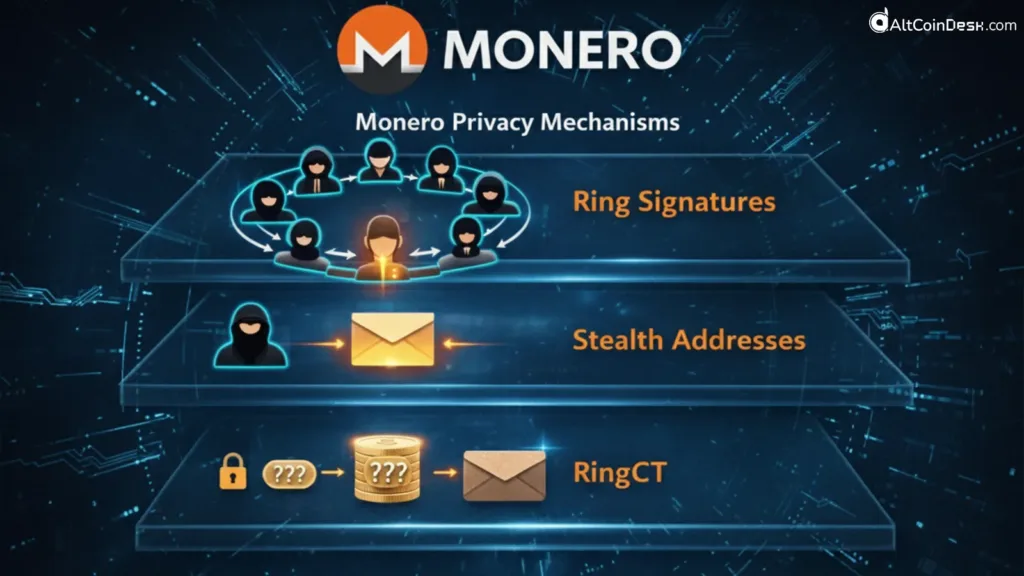
Both Monero and Zcash implement privacy-focused features in their unique ways. For example, Monero uses a combination of ring signatures, stealth addresses, and Ring Confidential Transactions (RingCT) to hide the sender, receiver, and all other details pertaining to the transaction, including the amount. By default, all transactions are private, unless the user chooses otherwise.
To explain, ring signatures are Monero’s cryptographic method, which mixes a sender’s transaction with a group of other transactions, making it nearly impossible to trace which participant actually sent the transaction. Similarly, stealth addresses are one-time-use wallet addresses generated for each transaction that hide the recipient’s public blockchain address.
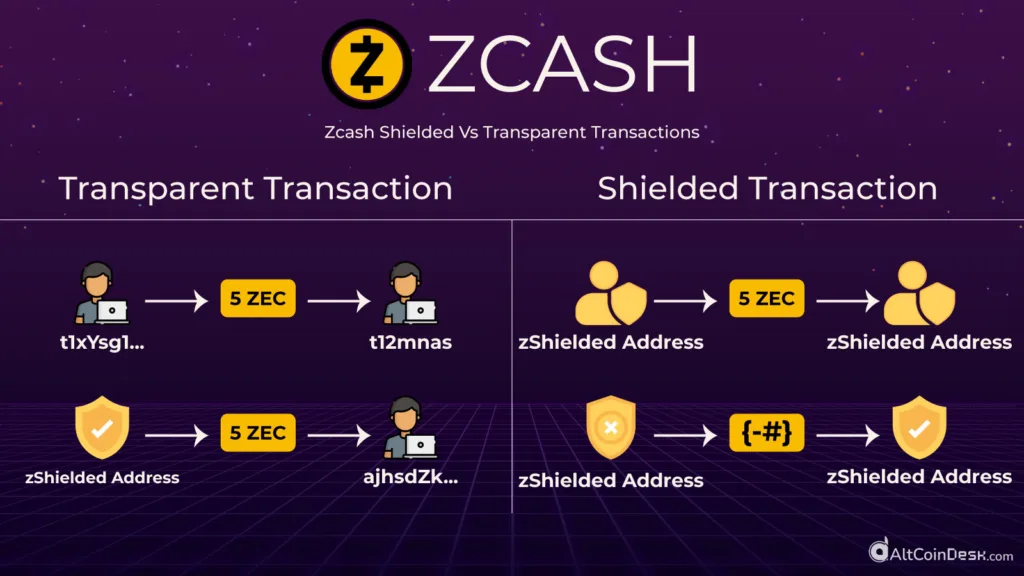
In a similar fashion, Zcash offers an optional privacy model that uses revolutionary zero-knowledge proofs. ZEC users have the option to choose between transparent and shielded transactions. The shielded transactions can conceal who sent what to whom, without sacrificing the transaction’s proof of validity.
Advantages of privacy coins
Beyond their greater privacy features, privacy coins offer a plethora of benefits that normal users might not be very well aware of. In this section, we will explore the benefits of privacy coins that make them so valuable to the whole crypto industry at large.
Greater financial privacy
A major benefit of privacy coins is the level of financial privacy they offer, especially in an extremely digitized world as we see it today. Unless it’s a purely cash transaction, almost every exchange of money is digital and leaves behind a trail of history that can reveal the buyer’s and seller’s spending habits, affiliations, and personal data.
Privacy coins like Monero and Zcash offer a way to conduct value transfer without leaving any identifiable digital footprint on the internet. Privacy coins become extremely valuable in jurisdictions with oppressive regimes, where individuals might struggle to conduct transactions freely without any fear of being monitored.
Enhanced fungibility
Since all privacy coin-related transactions on the blockchain are concealed, they enjoy greater fungibility than other cryptocurrencies. For example, no individual XMR or ZEC coin can be tainted by its transaction history.
In comparison, coins like Bitcoin and Ethereum can be flagged and reported due to their publicly visible blockchain. Any BTC or ETH associated with an illicit wallet address can be frozen by exchanges at their discretion, essentially making them useless.
With privacy coins, all units of coin retain equal value regardless of whether they ever interacted with any nefarious wallet address or smart contract. In this manner, privacy coins’ greater fungibility truly ensures that all money is completely interchangeable.
Security against targeted attacks
Privacy coins are relatively safer against targeted attacks, as they hide transaction details and participant identity. As a result, users of coins like Monero or Zcash are at a lower risk of being at the receiving end of a theft or hack.
In contrast, coins like Bitcoin and ETH can easily be tracked, and as a function of their clear visibility, hackers can target individual wallet owners based on the amount of holdings they have. The crypto industry is replete with instances where hackers continually monitor each and every transaction from the so-called ‘whale wallets’ and wait for the right time to strike.
Disadvantages of privacy coins
Ironically, the same features that differentiate privacy coins from other cryptocurrencies, such as Bitcoin and ETH, may also serve as disadvantages for these coins. Some of the cons of privacy coins are greater regulatory scrutiny, limited merchant adoption, perceived use in illicit activities, and others.
Greater regulatory scrutiny
Financial regulators around the world always viewed privacy coins through a lens of suspicion. The vast majority of financial watchdogs worry that privacy coins like XMR, ZEC, and others can be used for illicit activities such as money laundering, tax evasion, and others.
As a result, many crypto trading platforms around the world have delisted privacy coins in recent years. Huobi delisted both XMR and ZEC in September 2022.
In October 2024, Japan’s National Police Agency concluded an investigation, which led to the arrest of 18 individuals who were involved in a scam worth more than $667,000. Notably, the agencies analyzed more than 900 fraudulent Monero transactions to pin down the criminals.
Limited merchant and exchange adoption
Unlike leading cryptocurrencies like BTC, ETH, Solana, and XRP, which are witnessing increasing merchant adoption year over year, privacy coins are lagging significantly. It could be argued that regulators’ concerns are shared by merchants around the world, as they likely do not want to deal with cryptocurrencies that suffer from greater regulatory scrutiny.
Similarly, exchanges are hesitant about listing privacy coins like XMR and ZEC. As a result, privacy coins on exchanges generally suffer from extremely thin liquidity, making it difficult for big traders to execute trades with tight spreads regularly.
Technical complexity of privacy coins
Cryptocurrencies like XMR and ZEC use advanced cryptography to offer the users enhanced privacy features. However, the high security provided by Monero and ZEC’s advanced cryptography can lead to many challenges in wallet and other developmental integrations.
In addition, it also requires users to be well-versed in the intricacies of using privacy coins. Without enough knowledge, users can accidentally expose their transaction details, defeating the purpose of using privacy coins.
Market sentiment in 2025
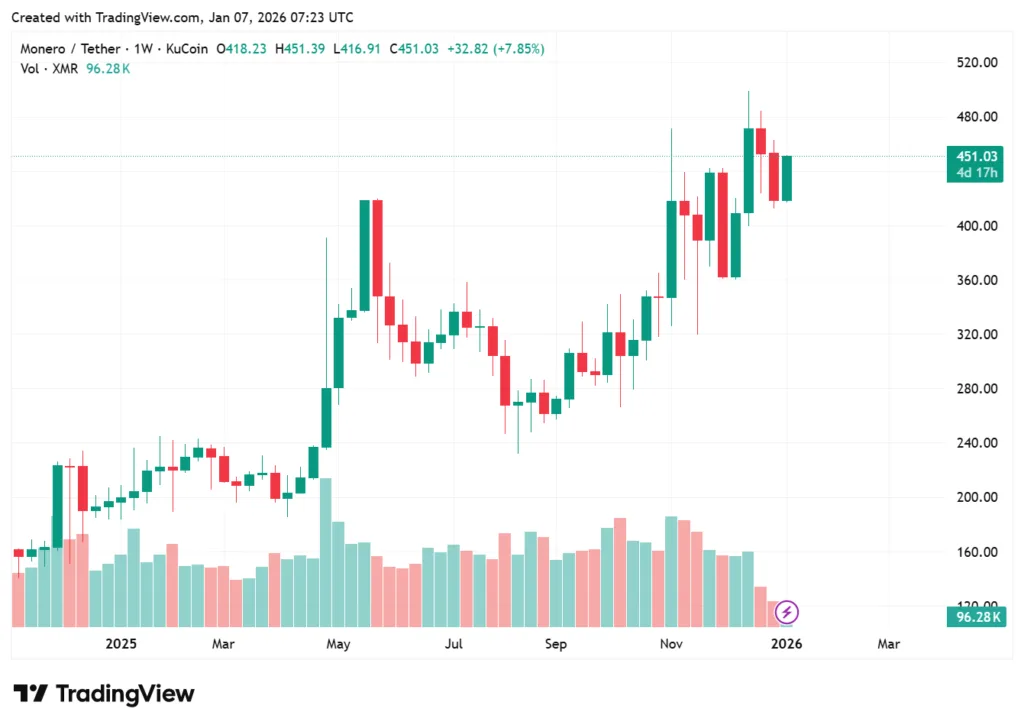
Despite facing resistance from financial regulators and ongoing scrutiny, privacy coins such as XMR and ZEC performed better than average in 2025. For example, XMR jumped from around $158 in December 2024 to almost $500 in December 2025, indicating a price appreciation of approximately 216%.
ZEC had a tremendous 2025 as well. The privacy-focused cryptocurrency spent most of the year trading in a tight range, giving holders little idea about the trajectory it would follow. However, the coin experienced strong demand from September 2025 onwards, jumping from around $58 to $748 in November 2025.
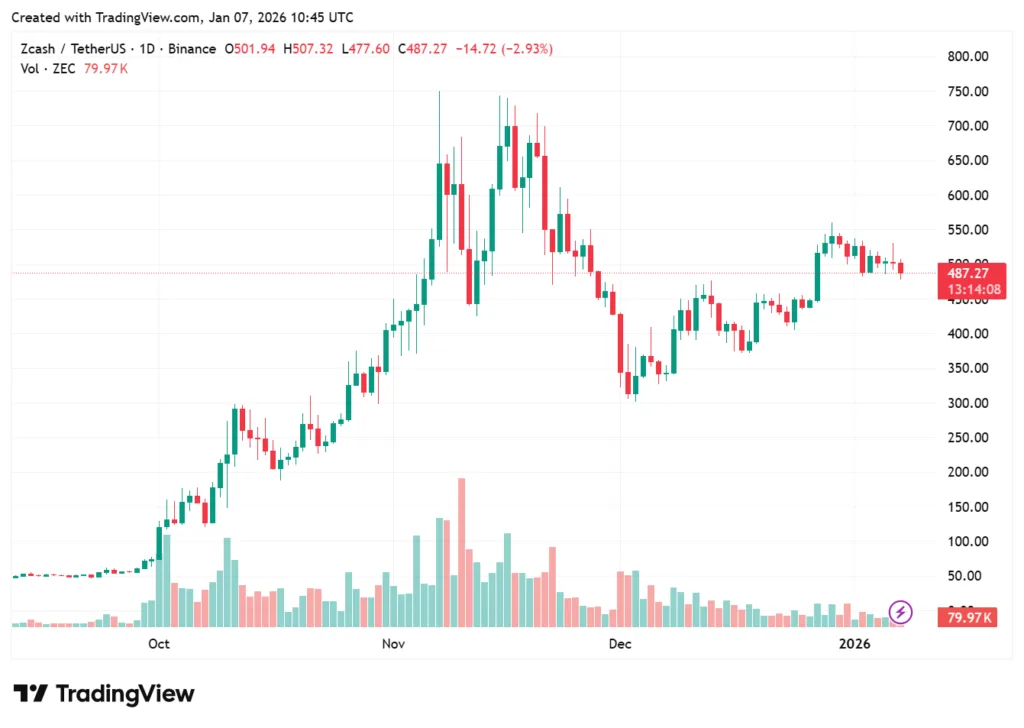
If 2024 was all about memecoins, 2025 was undoubtedly the year of privacy coins. An uncertain macroeconomic backdrop, along with rising concerns of government-backed surveillance all across the world, likely helped the privacy coin narrative last year.
Besides the macro factors, there were some technical factors at play as well. For example, Zcash underwent a halving event in late 2025, cutting its block reward by half, spurring a classic pre-halving rally as the market has seen so many times with BTC.