


People love to make crypto sound way more complicated than it really is. Half the time, it feels like they are doing it on purpose. If you have ever heard someone say “blockchain” and felt like you missed a prerequisite class, you are not alone. The truth is, most of these ideas are pretty simple once you strip away the drama.
Let’s talk like humans.
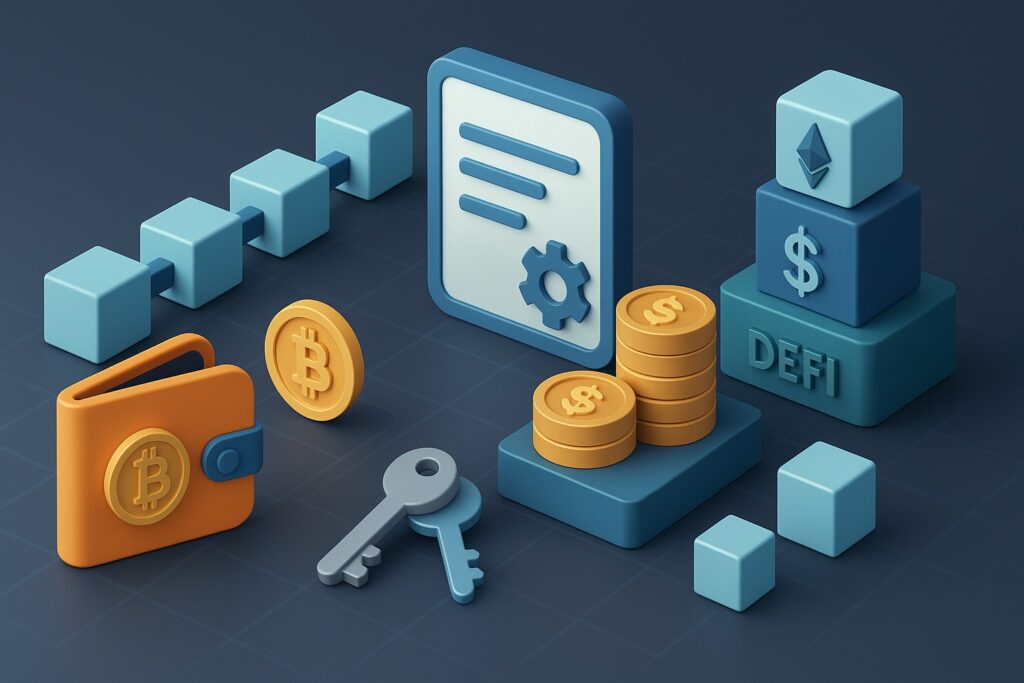
A blockchain is basically a shared notebook that lives on the internet. Everyone can see what is written in it, and once something is written down, it cannot be erased. New pages get added one after another, which is why people call it a “chain.”
So if you send Alex a bit of Bitcoin for concert tickets, that payment gets written into the notebook. Computers all over the world double-check it, agree that it happened, and then move on. No bank needed. No going back later to edit the entry.
A wallet is just how you access your crypto. Think of it like a banking app, but you are the bank. It shows your balance and lets you send or receive money. That is it.
Emma, for example, uses a wallet on her browser. When she buys a piece of digital art, she pastes her wallet address, clicks confirm, and the art shows up there.
Now, the part people really mess up is the private key. This is the secret code that proves the crypto belongs to you. Lose it and no one can help you. Share it and someone can empty your wallet in seconds.
Chris writes his private key on paper and locks it away. His laptop dies one day. No panic. He installs the wallet again, types in the key, and everything is right where he left it.
Your public address is the opposite. This is the part you can share. It is like giving someone your email so they can send you money instead of messages.
That is why charities can post a crypto address online and accept donations from anywhere in the world.
An exchange is where people usually start. It is a website that lets you buy or sell crypto using regular money.
Maya signs up, buys some Ethereum with $200, and then moves it off the exchange into her own wallet. Many people do this because they prefer holding their money themselves.
A smart contract sounds fancy, but it is just a program that follows rules automatically. No arguing, no delays.
Two gamers make a bet. They both send crypto into the contract. When the result is confirmed, the winner gets paid instantly. No referee required.
Every action on a blockchain costs a little something, called a gas fee. It is the small payment that keeps the system running. When things are busy, fees go up. When it is quiet, they drop.
Nina creates an NFT and pays a small extra fee so her transaction does not get stuck waiting.
Speaking of that, an NFT is simply proof that something digital is unique. Not rare to look at, just rare to own.
A photographer sells a photo as an NFT. Plenty of people can see the image, but only one person owns the original version recorded on the blockchain.
DeFi is where crypto starts to feel different from banks. These are apps that let you lend, borrow, or earn interest without asking permission.
Liam deposits some money into a DeFi app and starts earning interest almost immediately. No paperwork. No office hours.
A stablecoin is crypto that tries not to move in price. Most are tied to the dollar. People use them when they want stability instead of drama.
When the market starts swinging wildly, Zoe moves her funds into a stablecoin and takes a breather.
You might also hear about vesting, which just means tokens are released slowly. Teams do this so no one dumps everything at once and disappears.
Staking means locking up your crypto to help a network run, and getting rewarded for it.
APY is just the yearly return you might earn if things stay the same.
And yield farming is what happens when people start moving money around to chase better returns. Some love it. Some find it exhausting.
That is crypto, minus the noise. Mostly common-sense ideas wrapped in unfamiliar words. Once you hear them explained without the buzzwords, they stop sounding like science fiction and start sounding like tools.
Wrapping up
Crypto chat doesn’t have to feel like decoding alien signals. Once you grasp the basics: ledger (blockchain), keys (wallet), automated agreements (smart contracts), time-locked bonuses (vesting), and even digital “savings accounts” that pay you back (staking and yield farming)—the buzz around digital assets starts to make sense.
Next time someone brags about “staking for a juicy APY while paying gas to mint an NFT on a DeFi app,” you’ll not only follow along, you might just have a killer example of your own to share.