
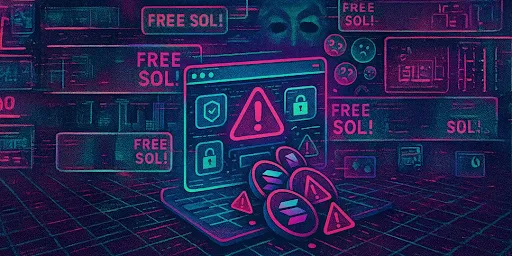

The crypto space is no stranger to innovation, but where there’s money, there are also scams. Mostly, you will see posts across X (formerly Twitter), Telegram, and Facebook offering “guaranteed free SOL” to early wallet addresses.
At first, these offers seem exciting, airdrops and giveaways are common in Web3, after all. But if you’ve seen messages like:
“The first 2,000 Solana wallets will receive guaranteed free $SOL”
Take a step back, because chances are, you’re being baited.
Here’s what’s actually happening:
1. Your wallet is being tracked
The moment you reply with your wallet address or interact with the post, scammers collect that data. You become part of a targeted list.
2. You start receiving random NFTs or tokens
These assets might seem like freebies, but they’re either worthless or worse, malicious. Many are embedded with external links.
3. Embedded links lead to fake dApps
Scammers place links in the image or description of the NFT itself. These may look like wallet connections or claim portals, but in reality, they lead to phishing websites with slightly altered domains (e.g., phontom-walllet.x0z instead of phantom.app).
Clicking them could compromise your entire wallet.
4. You’re unknowingly fueling the scam
Every comment, like, or repost boosts visibility. Scammers aren’t just looking to drain wallets, they’re farming engagement to expand reach, going viral and targeting thousands more. Never connect your wallet to unverified sites and avoid interacting with unknown or airdropped NFTs.