


What is NFT rarity ranking, and why does it always sound like some insider trick? Like, there is a quiet leaderboard where a few sharp buyers spot the rarest pieces early and walk away ahead. Nice idea. Not quite how it works.
The truth is more practical, a bit messy, and sometimes surprisingly amusing. This guide breaks it down clearly so you can see what is really going on. No mystery, no hidden rules. Just simple math, looking at traits and comparing how often they show up.
What is NFT rarity ranking?
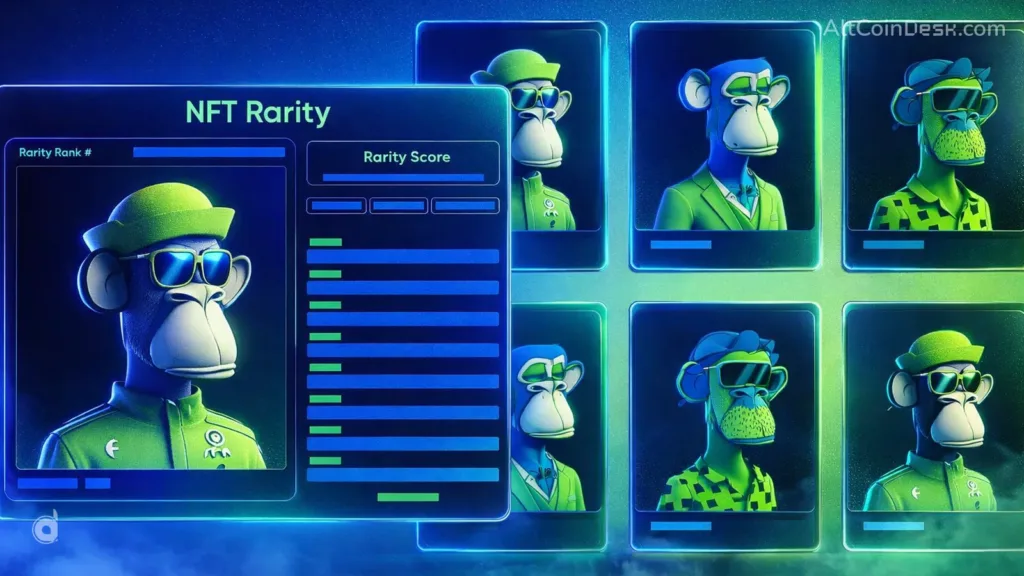
NFT rarity ranking is simply a way to sort NFTs in the same collection from rarest to most common, based mainly on how unusual their traits are.
Marketplaces like OpenSea describe it as the scarcity of one NFT’s traits compared to others in the same collection. So when you see a rank number, you are not looking at a global leaderboard of all NFTs ever created. You are looking at a position inside one specific set. Lower rank means rarer. But only inside that collection.
Here is a quick way to picture it. Imagine a collection of 10,000 NFTs. Only 12 have a gold crown. Only 40 have laser eyes. Now imagine one NFT that has both. That combination is extremely uncommon, so it climbs the NFT rarity ranking very quickly.
Meanwhile, another NFT with traits shared by thousands quietly sits much lower on the list, wondering what it did wrong in life, looking rare on paper and ignored in reality. But here is the part people often miss. NFT rarity ranking is relative, not universal. Rank number 5 in one collection does not automatically beat rank number 200 in another. That is like comparing the fastest runner in your neighborhood to the 200th fastest runner in the Olympics. Context matters.
Things like collection size, liquidity, brand strength, community energy, and actual buyer demand all play a huge role. A rare NFT in a weaker project can sit unnoticed, while a less rare NFT in a stronger project can do better simply because more people are interested in it.
And to make things even more confusing, different platforms calculate NFT rarity ranking in their own ways. So the same NFT might show up slightly higher or lower depending on where you look. Not because anything shady is happening. Just because math has multiple personalities.
Where it gets interesting: How is rarity calculated?
This is where NFT rarity ranking quietly becomes a math problem wearing a hoodie.
There is no single universal formula. Rankings can differ because different platforms employ different techniques. The following are the primary methods, described as a typical person would want:
- Trait frequency method: Count how often each trait appears. The fewer the appearances, the rarer the trait. Add them together, and you get a score. Easy and widely used.
- Probability method: Multiply the probabilities of each trait occurring. The lower the final probability, the rarer the NFT. This is common on marketplaces like Magic Eden.
- Information-based models: More advanced systems like OpenRarity look at both what traits exist and what traits are missing. It is a more complete way to measure uniqueness.
- Distance-based models: Some tools compare how different one NFT is from others using similarity scores. If it stands out more, it ranks higher.
So when you see an NFT rarity ranking, you are not looking at one truth. You are looking at one interpretation of rarity.
What an NFT rarity checker does
An NFT rarity checker is basically your data assistant that never gets tired. It does four things:
- First, it pulls the entire collection’s metadata.
- Second, it counts how often each trait appears.
- Third, it applies a scoring formula.
- Fourth, it gives every NFT a rank.
That is how the whole system works in practice. Platforms like OpenSea, Magic Eden, and NFT analytics tools show this directly. Some even let you break down each trait and see its percentage. Important reminder. The checker measures scarcity, not value. It tells you what is rare. It does not tell you what people will pay.
How to see the rarity of NFTs
Checking NFT rarity today is actually very easy. Open a marketplace like OpenSea or Magic Eden. Click on an NFT. Scroll to the properties section.
You will see:
- Traits
- How many NFTs share each trait
- Sometimes a rarity rank and percentage
If you want to be smarter than average, check more than one platform. Rankings can differ depending on the formula used. For advanced users, APIs exist that return NFT rarity ranking data directly. You can build dashboards, compare collections, and feel like a data scientist for a weekend. Or you can just look at the number and move on. Both are valid.
Does rarity actually matter for price?
Yes. But not in the way people hope. Data and market behavior show that rarer NFTs often sell for higher prices. Humans like scarce things. That part is consistent. But here is the catch. Rarity only matters if demand exists.
A rare NFT in a dead collection is like a rare book in a language nobody reads. Technically valuable. Practically ignored. Meanwhile, a less rare NFT in a strong collection can sell faster and for a higher price because buyers are actually there. So NFT rarity ranking influences price, but demand decides the outcome.
Which type of NFT is best?
There is no universal winner. It depends on what you want.
- PFP NFTs: Best for rarity-based trading. These collections are built for NFT rarity ranking. Lots of traits, easy comparisons, and active markets.
- Membership NFTs: Best for utility. These give access to communities, events, or perks. You are buying access, not just an image.
- RWA NFTs: Best for real-world connection. These tie to real assets and have shown growing traction in recent data.
- 1 of 1 art NFTs: Best for pure scarcity. Only one exists. But pricing them is harder because there is no direct comparison.
- Gaming NFTs: Best for activity. They move often because they are used inside games.
So the answer depends on your goal. Trading, utility, or long-term relevance.
Evidence-based answer on the best NFT type
If your goal is trading based on NFT rarity ranking, PFP collections are still the strongest. They are structured, liquid, and built around traits. If your goal is usefulness, membership NFTs win. They offer ongoing value beyond speculation. If your goal is real-world relevance, RWA NFTs are gaining serious ground based on recent growth data. There is no single “best.” There is only “best for what you want to do.”
What most people get wrong about NFT rarity
The biggest mistake is simple. People think NFT rarity ranking equals value.
It does not. It only measures scarcity inside a collection.
It does not tell you:
- If the project will survive
- If buyers will still care next month
- If the team stays active
- If the market is liquid
It can also change if metadata changes. So, treating NFT rarity ranking like a guarantee is where people get burned.
Best practice checklist before trusting rarity
Before you trust NFT rarity ranking, do this:
- Check the rarity rank.
- Check the trait breakdown.
- Look at the floor price.
- Study recent sales.
- See how many holders exist.
- Check marketplace activity.
- Understand the project’s purpose.
If you skip these, you are trading numbers, not assets.
Final thought on NFT rarity ranking
NFT rarity ranking is useful. It gives structure to chaos. It helps you understand what is uncommon. But the market does not pay for rarity alone. It pays for attention, culture, and demand.
So the next time you see a top-ranked NFT, pause. NFT rarity ranking can tell you what is rare. Only people, not rankings, decide what is worth paying for.