
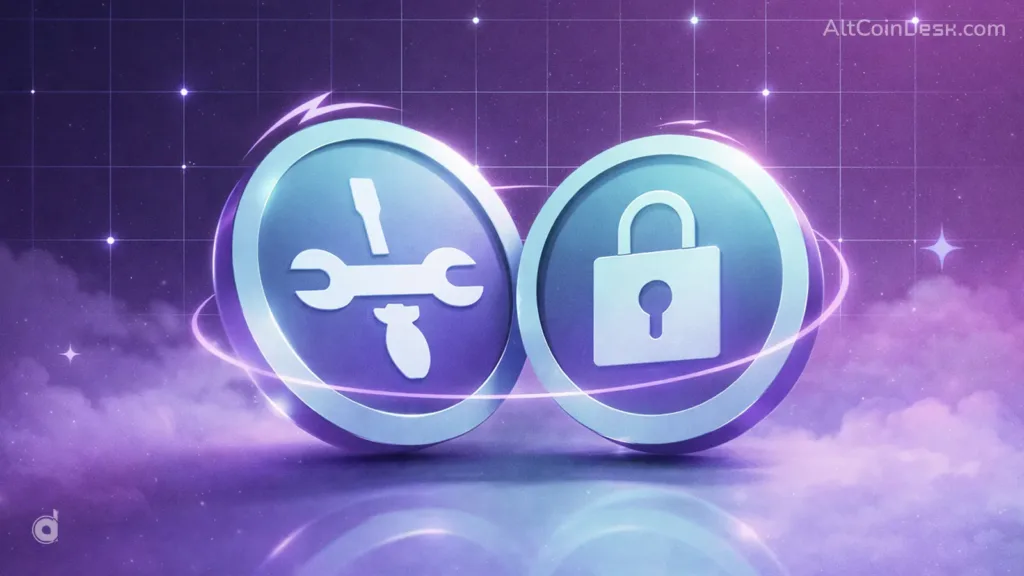

Have you ever bought a token, watched it crash to zero, and then discovered the project had no actual product behind it? You weren’t just unlucky. You probably didn’t know the difference between a utility token and a security token. Most people don’t, and when it comes to the utility tokens vs security tokens debate, that confusion has led to some very expensive mistakes.
Behind the price charts and ticker symbols, tokens can be fundamentally different from each other. Utility tokens give you access to a platform. Security tokens give you a stake in an asset. The category a token falls into determines what legal rules apply, what rights you have, and what happens when a project goes wrong.
What is a utility token?
A utility token is a digital token that unlocks a specific product, service, or feature inside a blockchain ecosystem. It doesn’t represent ownership of anything, and it was never designed to be an investment vehicle. Think of it like an arcade token. You exchange real money for it at the door, and inside the arcade, it’s the only currency that works. When you leave, your leftover tokens aren’t an investment portfolio, they’re just unspent arcade credits.
ETH (Ethereum) is the textbook example. Every time you interact with the Ethereum network, whether that’s swapping tokens, using a DeFi app, or minting an NFT, you pay a fee called gas, and that gas is paid in ETH. No ETH means no access. That is pure utility with nothing fancy attached.
BNB (Binance Coin) started as a discount on trading fees and evolved into the fuel that powers BNB Chain. Every transaction on the network costs a small amount of BNB, the same principle as ETH on a different track.
Neither of these tokens promises dividends. Neither represents ownership of any company. They are functional tools inside their respective ecosystems, and their value depends entirely on how much people actually use those ecosystems.
What is a security token?
Security tokens are tied to something with actual value behind them. Buying one means you own a piece of a company, a property, a fund, or a revenue stream, and that ownership is recorded on a blockchain.
When the asset does well, your token reflects that. Some pay dividends. Most come with real legal rights that protect you as an investor.
tZERO’s TZROP is probably the most cited example. It gives holders equity in the tZERO platform and pays out quarterly dividends from company profits. People buy it for the same reasons they buy stocks.
Unlike utility tokens, which are typically issued through ICOs, security tokens are issued through Security Token Offerings (STOs), and they come with mandatory KYC checks, regulatory compliance, and legal obligations on both sides.
The difference between utility and security tokens in plain terms
If you’re buying a token to use a platform, it’s probably a utility token. If you’re buying a token because you expect someone else’s work to make you money, it’s most likely a security token.
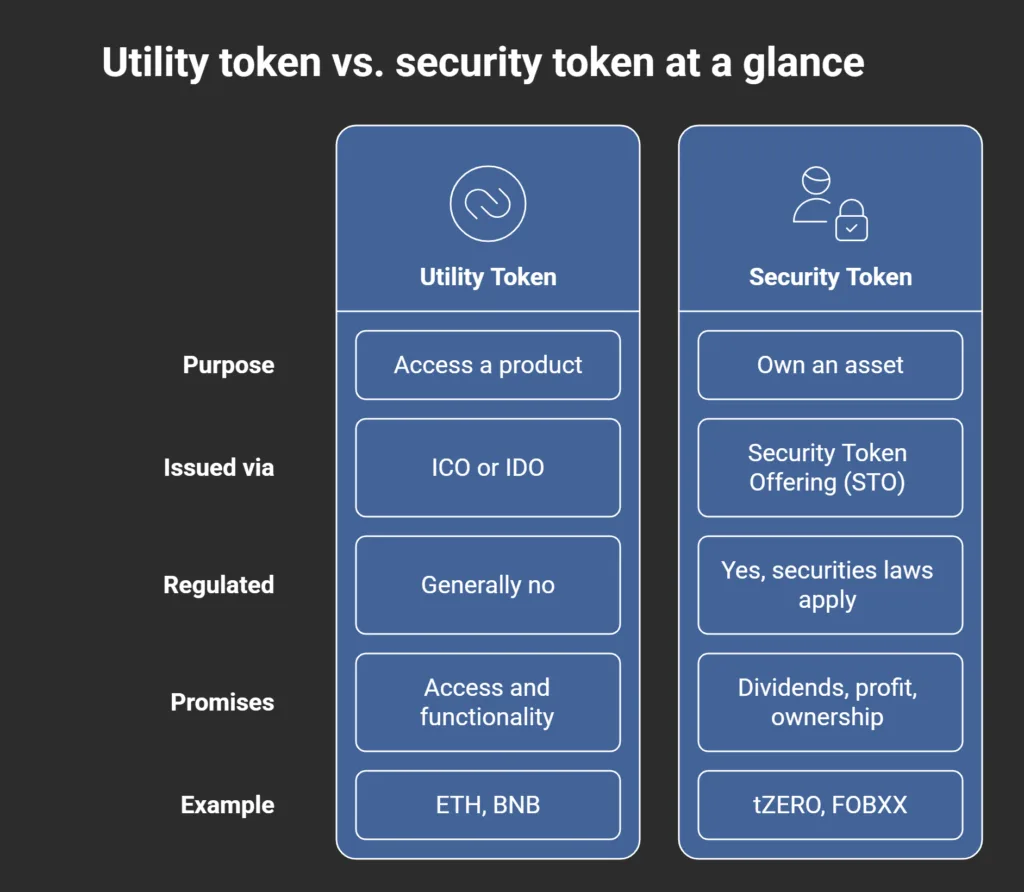
The question to ask yourself before buying anything is an honest one: Am I buying this to use something, or am I buying it because I expect someone else’s work to make it valuable?
Utility tokens vs security tokens: The Howey Test and why it matters
The Howey Test comes from a 1946 US Supreme Court case involving a Florida citrus farm. The Howey Company sold plots of land to investors, managed the farms themselves, and split the profits. The court had to decide whether this arrangement counted as an investment contract and, therefore, a security. The four-part test they created is still the legal standard used today, including for crypto tokens.
A token is a security if all four of these apply:
- Someone puts money in
- Their investment is tied to a common enterprise with others
- They expect to profit
- Those profits depend on what a team or promoter does, not on their own actions
The last point is the one that matters most. If you’re buying a token because you expect a team to build something valuable and send your bags to the moon, you’re essentially buying a security regardless of what the issuer calls it.
Bitcoin and Ethereum both cleared this test as non-securities because neither has a central team whose efforts drive the value. Most ICO tokens from 2017 to 2020 met the criteria, meaning they were securities that had been sold without proper registration.
The gray area that cost investors billions
This is where most beginners learn their most expensive lessons.
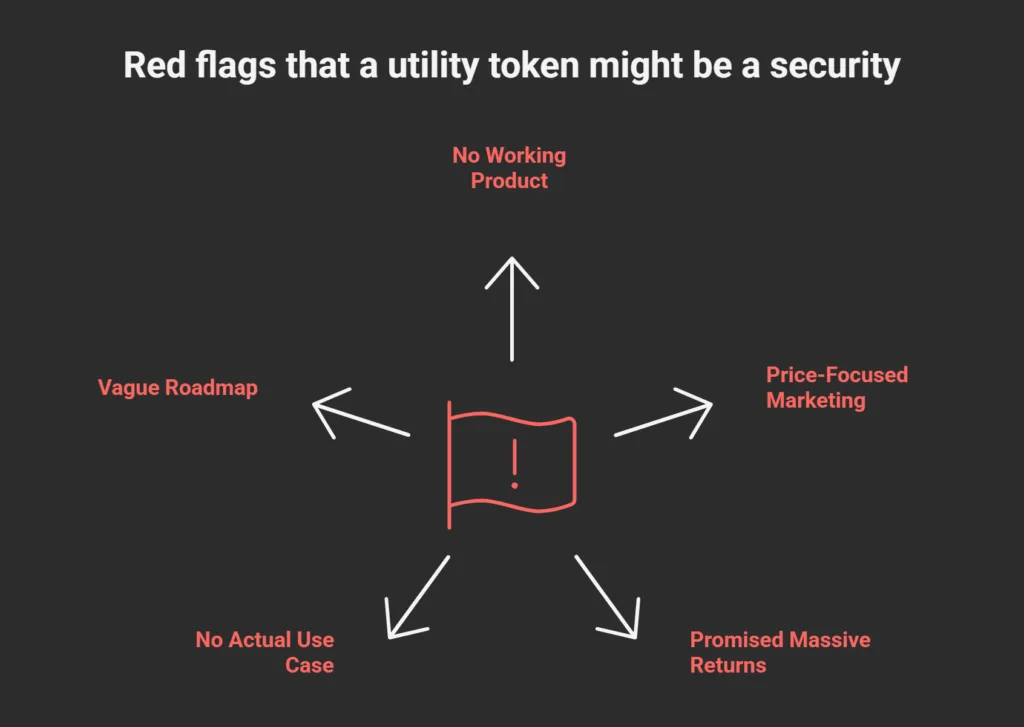
During the ICO boom from 2017 to 2020, thousands of projects raised billions by selling tokens they called utility tokens. Most had no working product, no real utility, and were being marketed almost entirely on the promise of price going up. The SEC was not impressed.
It went after Telegram, which raised $1.7 billion in 2018 selling GRAM tokens and was forced to return $1.22 billion to investors and pay an $18.5 million penalty after the SEC blocked the launch. The same story played out across dozens of other projects.
The setup was always the same: buy our token now, the product is coming soon, early buyers win big. What investors were actually doing was funding a startup with no regulatory protection and no legal recourse when things went sideways. And they usually went sideways.
If a project is selling you a token before the product exists, and the marketing is all about price appreciation, calling it a utility token is just creative labeling.
Where things stand today
The regulatory picture is shifting in crypto’s favor. Under SEC Chairman Paul Atkins, the agency launched Project Crypto in 2025, introducing the idea that a token can start as a security during early fundraising and shed that status as the network becomes decentralized and the team’s role shrinks. That’s significant because it means tokens aren’t necessarily locked into one classification forever.
In Europe, MiCA (Markets in Crypto-Assets regulation) already provides clearer legal categories for token types, giving European projects a more defined compliance path than US ones currently have.
On the security token side, institutional money is moving fast. Franklin Templeton, BlackRock, and VanEck have all launched tokenized funds on blockchain, putting government securities and money market products on-chain.
Multiple projections estimate the tokenized real-world asset market could reach anywhere from $2 trillion to $16 trillion by 2030, depending on how quickly regulation and adoption move.
Takeaway
Knowing the difference between a utility token and a security token will not make you a perfect investor. But it will stop you from being the person who buys a “utility token” with no product, no users, and no purpose other than going up. That investor has funded more failed projects than anyone would like to count.
Access or ownership. Usage or investment. Regulated or not. These are the questions that matter before any token purchase. In crypto, the label on the tin and what is actually inside it are not always the same thing.