

DEXs offer something that’s genuinely hard to argue with, and it’s easy to see why. Full control of funds, no sign-ups, no gatekeepers, and access to tokens that never make it onto the big exchanges. What’s not to love?
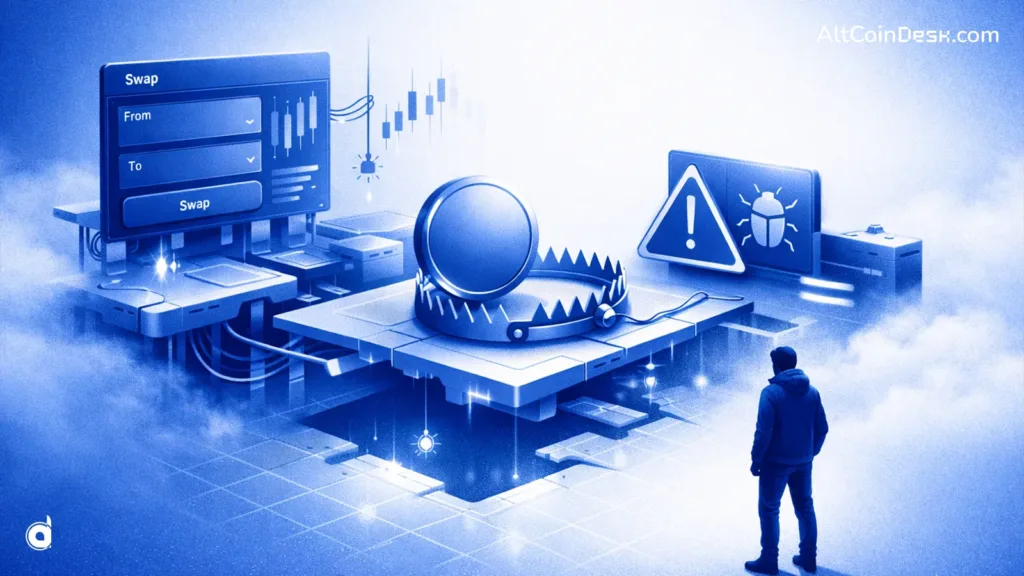
The risks of using DEXs are real though, and they can be genuinely brutal without the right preparation. Here’s what’s actually going on under the hood.
Firstly, what even is a DEX?
A DEX is basically a place to trade crypto where there’s no company running things. The closest comparison is a vending machine versus a cashier. The machine just does the job automatically, no human involved. Smart contracts work the same way on a DEX, handling trades through pre-written code with no approvals needed from anyone.
Uniswap, PancakeSwap, and Curve all work like this. Connect a wallet, place the trade, and the code takes it from there.
The appeal is obvious. The user keeps full control of their funds at all times. No one can freeze an account or disappear with deposits. That same freedom, though, is exactly what makes DEX security risks so important to understand before putting real money in.
DEX security risks everyone should know about
Let’s start with the one that costs people the most money.
Smart contract bugs
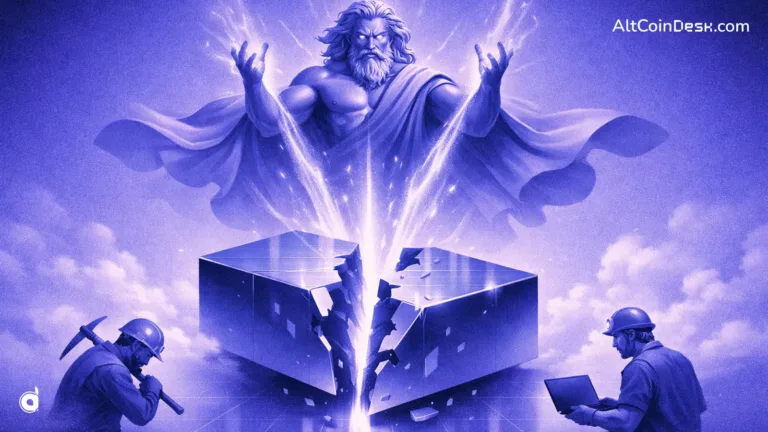
Every DEX runs on code. And code can have bugs. When a centralized exchange gets hacked, there’s usually some kind of insurance fund or compensation process. On a DEX, there’s none of that. A flaw in the smart contract can allow a hacker to drain an entire liquidity pool in minutes, and no one’s coming to help.
Velocore, a decentralized exchange, lost $6.8 million in 2024 because of a flaw in its fee calculation logic. The Poly Network hack led to $600 million in losses. These aren’t rare freak accidents. They’re just the biggest headlines.
Rug pulls and fake tokens
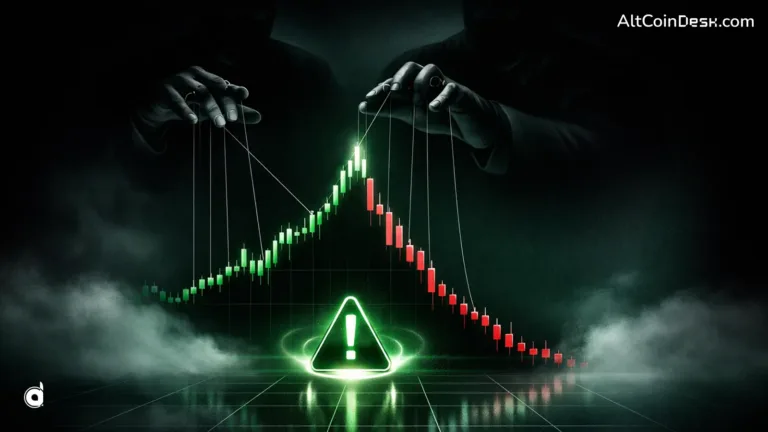
Anyone can list a token on a DEX. There’s no approval process, no vetting, and no gatekeeping involved. That’s great for innovation, but genuinely terrible for a beginner’s wallet. Scammers launch tokens, hype them on social media, and then pull all the liquidity out once enough people have bought in. The price crashes to zero, and they walk away with real money.
Always verify a token’s contract address directly from the project’s official website, not from a Telegram group, not from a tweet, and definitely not from a random DM.
Phishing attacks
DEX phishing is sneakier than it sounds. A fake version of Uniswap’s website that looks completely identical to the real one, a Discord message with a “new DEX launch” link, or a Google ad at the top of search results pointing to a fake URL. These traps exist specifically because DEX users hold their own private keys, meaning there’s no bank to reverse a transaction once the funds are gone.
The safest habit is to bookmark the real DEX URLs and never click links from unknown sources.
Front-running bots
Every trade submitted on a DEX sits in a public waiting queue for a split second before it’s confirmed. That tiny window is all bots need. They spot the incoming trade, jump ahead of it, buy the same asset first, and then sell it back at a slightly higher price once the original trade pushes the price up.
By the time the trade confirms, the trader paid more than they should have, and a bot pocketed the difference. This is called front-running, or MEV (Maximal Extractable Value), and it happens constantly on DEXs without most traders ever realizing it.
The risks of decentralized exchanges that no one talks about
The DEX security risks above are the flashy, headline-grabbing ones. These next ones are quieter, though they hit beginners just as hard.
Slippage on small-cap tokens
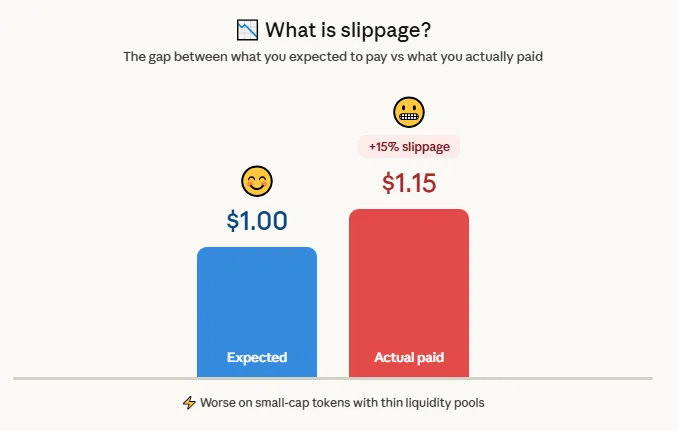
Slippage is the gap between the price shown when placing a trade and the price actually paid when it goes through. On major tokens like ETH, slippage is usually tiny. On a small-cap token with a shallow liquidity pool, though, it can be brutal.
Say someone wants to buy a new token at $1.00. If the pool doesn’t have enough depth to absorb that buy order, the trade might execute at $1.15 or even higher. That’s 15% extra out of pocket before any gains are even possible. Slippage is essentially a hidden tax on trading low-liquidity assets, and it’s one of the sneakiest risks of decentralized exchanges for new traders.
Low liquidity on small-cap tokens
Getting into a small-cap token on a DEX is usually easy. Getting out is where things get painful. If someone tries to sell a meaningful chunk of a low-liquidity token, their own sell order can tank the price as it executes. What looked like a solid 3x gain on paper can evaporate almost entirely by the time the trade clears.
- Low daily trading volume is a red flag
- A big gap between buy and sell prices signals thin liquidity
- Large trades in small pools move the price dramatically
These aren’t exotic edge cases. They’re everyday realities on DEXs.
No safety net
If a wrong wallet address is entered, those tokens are gone. If a seed phrase gets lost, the wallet is locked forever. There’s no “forgot my password” button, no support ticket to file, and no fraud team to call. This isn’t a flaw of any specific DEX, it’s just how the whole system works by design.
Impermanent loss for liquidity providers
If someone deposits tokens into a DEX liquidity pool to earn yield, they’re also exposed to impermanent loss. When the price ratio between the two deposited tokens shifts significantly, the total value can end up lower than if those tokens had just been held in a wallet. It’s a risk that catches a lot of beginners off guard, who assume they’re collecting “free” yield.
So, is using a DEX safe?
Is using a DEX safe? That depends entirely on how it’s approached. For experienced users who understand wallets, slippage settings, and smart contract risk, DEXs are genuinely powerful tools. For someone just getting started, the risks of decentralized exchanges can be difficult to navigate without proper preparation.
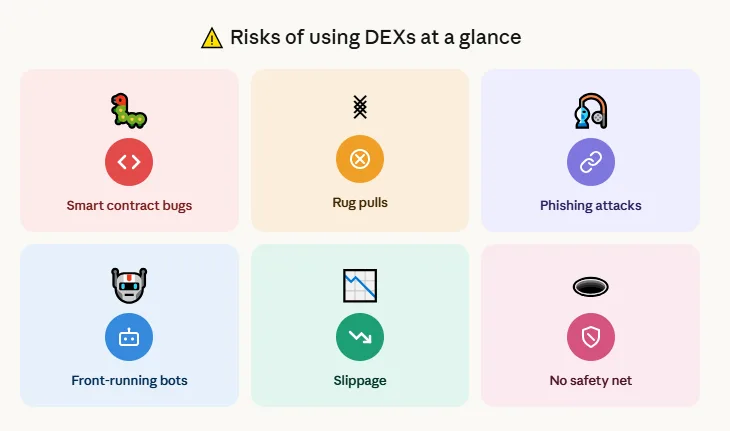
The core DEX security risks come down to smart contract bugs, phishing, rug pulls, front-running bots, slippage on low-liquidity tokens, and the fact that every mistake made is permanent.
How to approach DEXs as a beginner
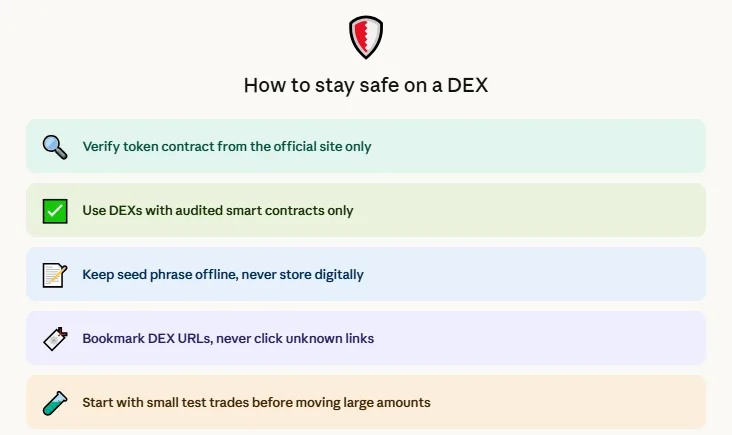
The good news is that most of these risks are avoidable with the right habits. Sticking to well-known platforms with audited smart contracts, verifying every token address from official sources, and keeping seed phrases written down offline rather than stored on any device covers a lot of ground. Starting with smaller amounts until the process feels comfortable is just common sense.
DEXs are powerful and the access they provide is unlike anything traditional finance has built. The risks of decentralized exchanges don’t make them off-limits, they just make preparation non-negotiable.