
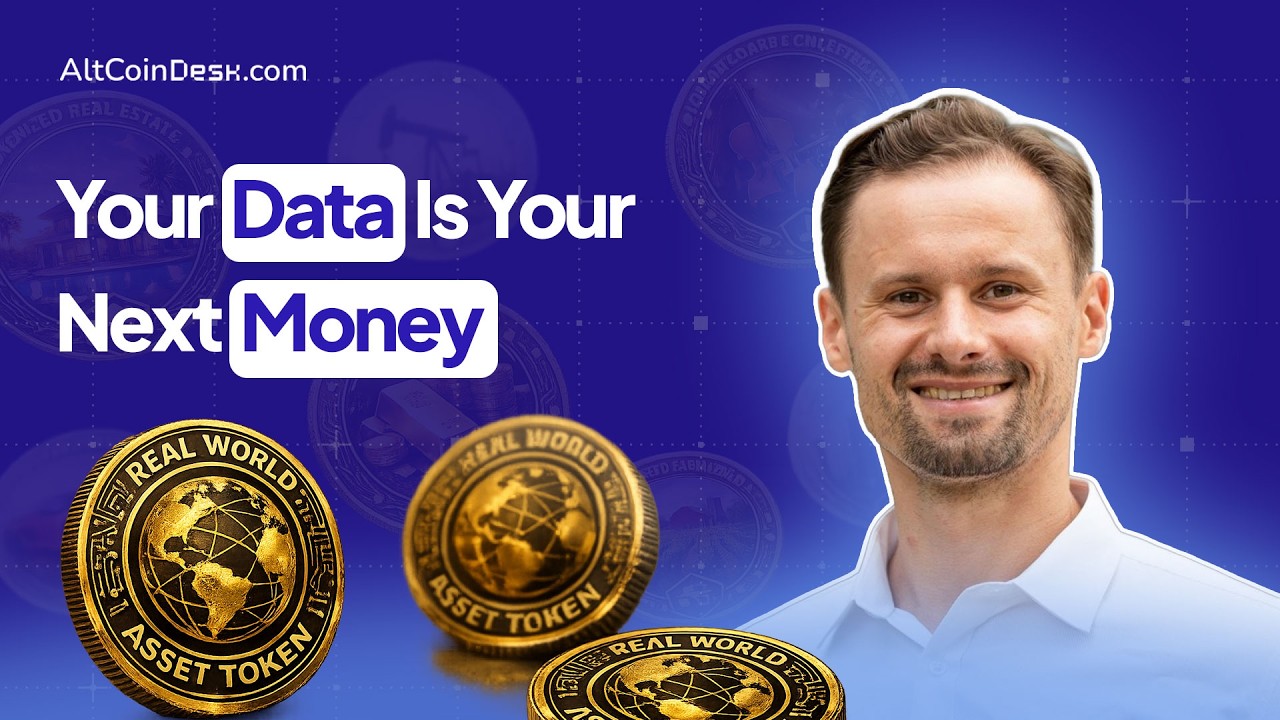

“Collaborative efforts between regulators and local authorities give trust for users who are new to the real-world asset tokenization”, said Anton Golub, the Founding Member of RWA Labs, with full enthusiasm.
RWA tokenization is, in fact, a growing sector of the blockchain industry. And that’s the reason why AltCoin Desk picked Anton Golub of RWA Labs, a Dubai-based tokenization platform, for a quick conversation at the AIBC Eurasia summit in Dubai.
Enhanced regulation keeps RWA tokenization growing
The total value of RWA tokenization has reached between $24 – $30 billion. In this optimistic scenario, regulation plays a key role in driving the growth of the industry, said Anton.
According to the RWA Labs executive, in the next 10 or 15 years, RWA tokenization will witness $15 trillion growth, as several studies revealed.
Some assets have the highest tokenization adoption rate
Among the innumerable tokenized assets, the US government bonds experienced the maximum tokenization adoption rate, according to Anton. This is one of the largest financial instruments on the planet, and people mostly buy the tokenized versions of the bonds to get yields.
However, in the UAE, commodities and real estate properties are getting mostly tokenized. “The UAE is actually a big commodities producer, for instance, oil, natural gas, and so on. Also, it’s a big commodities hub for trading gold, silver, coffee, and other commodities”, said Anton.
He further commented on the UAE’s real estate growth and how tokenization is easily executable in real estate. In this region, key regulators collaborate with local authorities like the Dubai Land Department to tokenize a property. These regulatory collaborations build trust for those who are very new to the tokenization niche.
Liquidity paradox is a reality
In real estate, the liquidity paradox could be an emerging question. A physical property is less liquid (ability to easily move an asset), because investors or users cannot easily buy and own a property due to the huge price and other factors.
Meanwhile, a tokenized property can be easily bought or traded due to the underlying blockchain technology, meaning the asset becomes highly liquid. This is called the liquidity paradox, and when asked to comment on that, Anton underscored that not everyone is capable of investing in millions worth of physical properties. In such cases, they can buy digital fractions or tokens of a property on-chain and pay less. In short, people can trade these tokens and earn money, explained Anton.
Tokenized personal data can give more value
Personal data is something of great importance for all of us. But who really likes to tokenize it? People may rarely think about it. However, here is the catch. Personal data is something that needs to be tokenized, exclaimed Anton when asked about the least tokenized asset in the world.
Although it may sound skeptical, personal data tokenization helps users earn money. Typically, several companies and AI tools use personal data to make money through analytics and ads. When a person tokenizes his data, he can own it, control access to it, license or sell it, and eventually earn payments or tokens.
One very interesting asset that all of us actually have, and we generate it every day, but we don’t have any benefit from it, is our data. All of us are on social networks, creating or taking data. AI is actually gathering our data and processing it. But again, we are not getting paid by AI companies for that.
Anton Golub, Founding Member, RWA Labs
However, personal data sensitive data must be anonymous and does not need to be tokenized, added Anton.
Along with benefits come risk factors
Tokenization looks bright in its current stage of development. However, there are certain risk factors looming in the industry. The primary concern that people usually have is about the custody of assets. The real assets, such as gold and real estate, must be insured and securely managed, as any natural disasters might happen.
The secondary concern, according to Anton, is regarding regulatory risks. To avoid legal complications, tokenized asset providers or tokenization platforms should comply with international and local regulations.
Are blockchains used for tokenization secure enough?
As the conversation reached its peak level, Anton underscored one of the big concerns in the digital asset industry, especially when it comes to blockchain, is “what happens if somebody takes your token one way or the other”.
However, this risk is very low in tokenization as users can “blacklist the tokens”, erase them, and create new ones through certain processes.
We see a lot of crypto hack stories. But this cannot happen in RWA tokenization because, when you actually have tokenized real-world assets, if somebody actually steals your token, you can actually cancel the stolen token and create a new one.
Anton Golub, Founding Member, RWA Labs
When tokenization becomes a priority goal
For the UAE, tokenization is a priority for the leadership of the country. It is a long-term plan for the country, knowing that there will always be challenges on the way. Tokenization connects “technology, real assets, security law, and regulation”. And, consistency is an important factor in building the infrastructure for the industry, said Anton.
In other countries, where you have politics and politicians changing everything all the time, or even the regulatory enforcers changing all the time, consistency does not work in tokenization. Consistency, along with strategic goals of leadership and amazing regulators build a vibrant ecosystem in the UAE.
Anton Golub, Founding Member, RWA Labs
Speaking further about the UAE’s growth in real estate tokenization, Anton noted that the sector will see more property development companies dipping their toes into tokenization either through partnerships or on their own.