
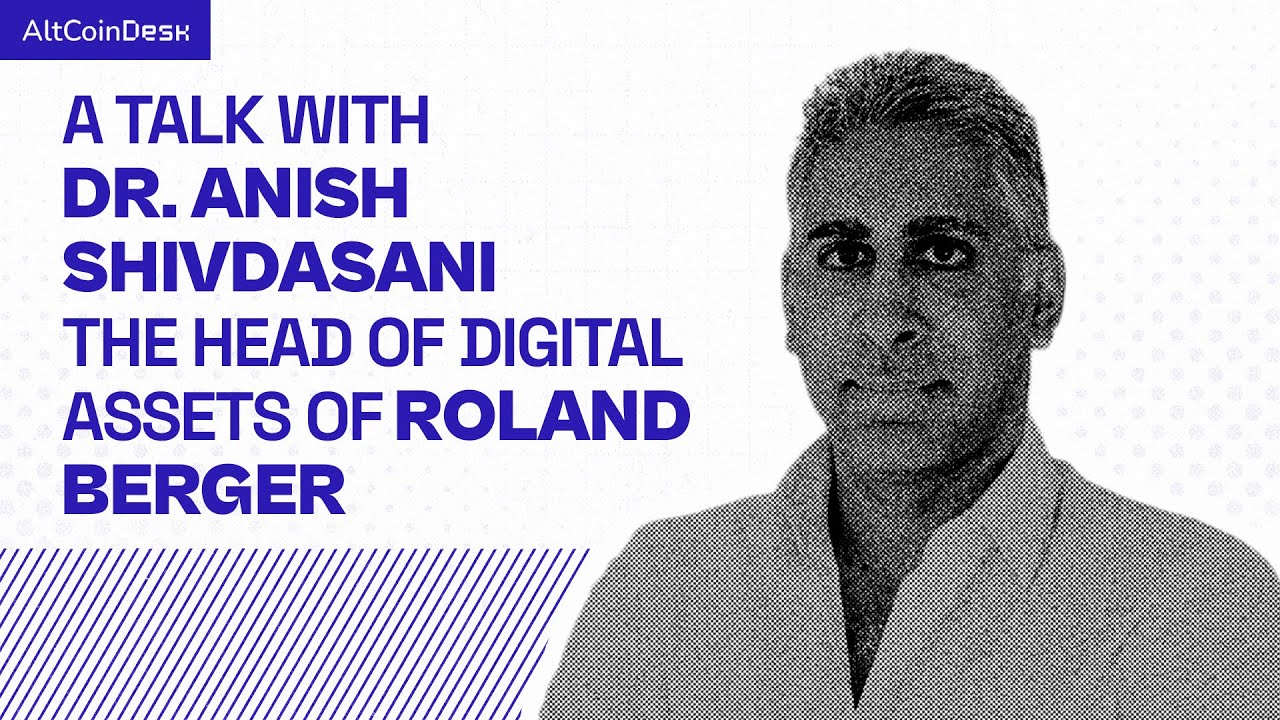

On day 1 of Binance Blockchain Week earlier this month, AltCoinDesk had the opportunity to speak with Dr. Anish Shivdasani, Head of Digital Assets – Digital, AI, and Entrepreneurship Practice at Roland Berger.
In this conversation, we looked at digital assets from a consulting perspective, including how institutions view this emerging asset class, the second-order effects of the US Securities and Exchange Commission (SEC) approving crypto exchange-traded funds (ETFs), stablecoin adoption, tokenomics design, and more.
Dr. Shivdasani remarked that while companies like Strategy and BitMine adding digital assets to their balance sheets is an encouraging development, a large proportion of institutions still view cryptocurrencies with a degree of suspicion.
He added that the approval of crypto ETFs served as a significant catalyst for institutional inflows into digital assets. He attributed Bitcoin’s bullish price action earlier this year, above $100,000, to crypto ETF approval.
Further, Dr. Shivdasani noted that rapidly rising adoption of stablecoins is the “next big catalyst” that suggests crypto’s transition from experimentation to serious enterprise strategy. He dubbed stablecoins a “convenient inflation hedge.”
Dr. Shivdasani also emphasized the high use of dollar-pegged stablecoins in countries that are facing issues pertaining to high inflation, such as Turkey, Argentina, and many African countries. He stated that the passing of the GENIUS Act legitimized stablecoins.
When asked about tokenomics, Dr. Shivdasani didn’t hold back, saying that trying to profit off of token launches is the worst thing a project team can do. He added that while designing a project’s tokenomics, there needs to be organic demand for the token.
Towards the end of the conversation, Dr. Shivdasani clarified that, for the most part, there is no meaningful convergence between blockchain and AI. However, there is meaningful overlap in both operations and hardware between Bitcoin mining firms and AI data centers, particularly around power infrastructure and cooling systems.