

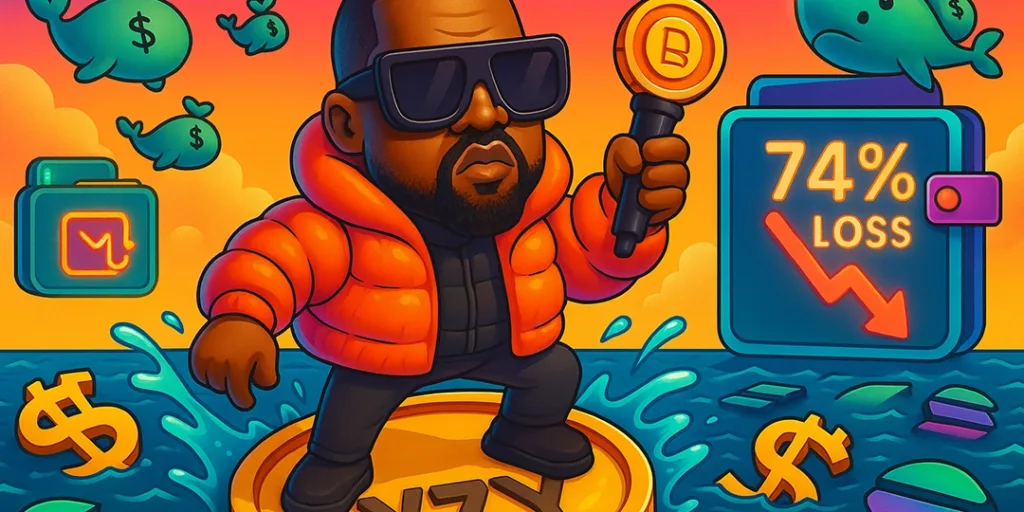

When Kanye West announced his entry into crypto with the flashy launch of YZY coin, it looked like hip-hop swagger had finally met Solana speed. Social media buzzed, his official site shouted freedom-from-central-banks slogans, and fans piled in hoping for Yeezy-sized gains. But within hours, reality hit, and it hit hard.
Instead of minting overnight millionaires, the YZY experiment left most holders clutching empty bags, while a tiny handful of wallets walked away with fortunes. It’s a cautionary tale about hype, greed, and the same old playbook haunting memecoins.
The ugly numbers behind the crash
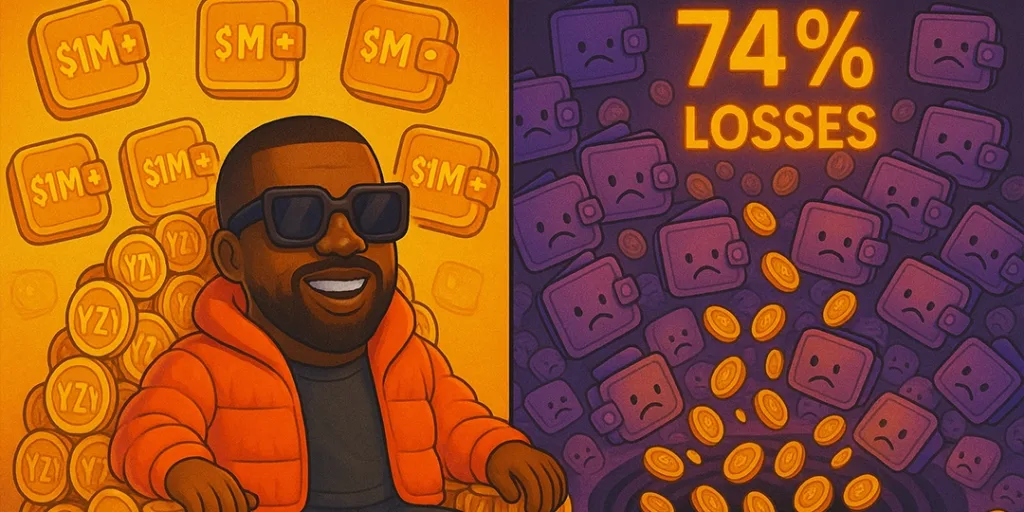
A blockchain analytics firm revealed the brutal math. Out of over 70,000 wallets that bought YZY coin, more than 51,000 lost money. That’s 74% of investors underwater, with total losses climbing to nearly $75 million. Over a thousand wallets saw personal losses north of $10,000.
On the flip side, around 18,000 wallets did make a profit, but most gains were pocket change. The shocking stat? Just 11 wallets captured nearly 30% of all profits, with payouts in the millions. In total, YZY coin’s winners raked in $66 million, but the spoils were concentrated at the very top.
Insiders, snipers, and déjà vu
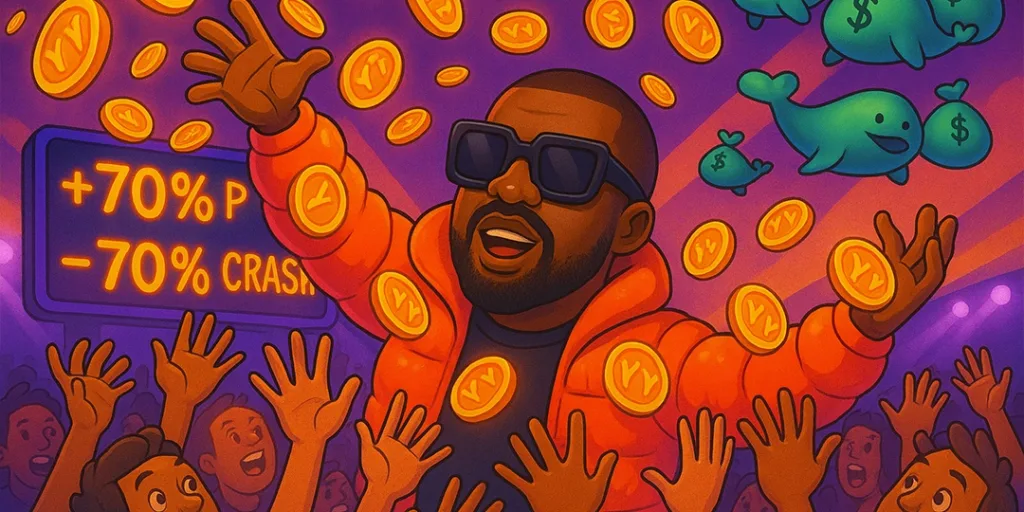
The mechanics of the crash weren’t a mystery to seasoned on-chain sleuths. Within minutes of launch, bots and so-called “snipers” scooped up huge chunks of supply, leaving regular traders chasing crumbs. Allegedly, a pseudonymous trader known as Naseem, the same wallet that allegedly made $100 million sniping Trump’s memecoin, was YZY’s very first investor.
Then there’s Hayden Davis, a familiar name tied to the failed Libra memecoin. Allegedly, Davis bagged an astonishing $12 million from YZY by striking early and exiting before the crowd caught on.
As Bubblemaps summed it up bluntly on X:
“The playbook is simple: infiltrate big launches, get in early, extract millions. It’s happening in plain sight, and no one is stopping it.”
From promise to irony
What makes the YZY coin saga even sharper is Kanye’s own history. Not long ago, West dismissed crypto projects as nothing more than “hype traps” that preyed on fans. Fast forward to August 2025, and his own token launch became exactly that: a hype trap where insiders cashed out and everyday supporters were left holding the rubble.
Launched with promises of decentralization and empowerment, YZY coin instead showcased the same old problems: manipulation, concentrated profits, and a lack of accountability.
The bigger picture
Beyond Kanye’s star power, YZY coin’s collapse is a mirror for the wider memecoin economy. Yes, there’s innovation in crypto. Yes, tokens can change lives. But every cycle, the same names, bots, and whales recycle the same strategies, and small traders pay the price.
Until regulation or community-driven safeguards catch up, high-profile token launches risk becoming little more than rigged casinos. And if even YZY coin couldn’t resist the hype machine, maybe it’s time fans stop believing celebrity coins are a golden ticket.
Final word
The fall of the YZY coin wasn’t just a crash; it was a wake-up call. Behind the Yeezy branding and Kanye’s aura of rebellion, the blockchain played out its all-too-familiar story: insiders win, outsiders lose.
The next time a celebrity token flashes across your feed, remember this: if 11 wallets can walk away with millions while 50,000 lose, the only thing decentralized might be the disappointment.