


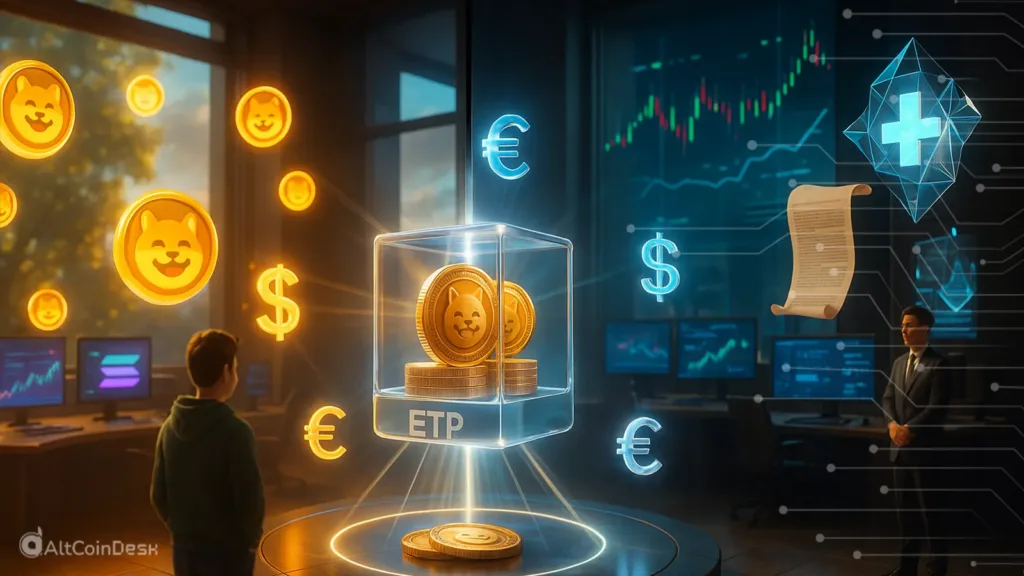
The first regulated Bonk exchange-traded product begins trading today on Switzerland’s SIX Swiss Exchange, marking a watershed moment for community-driven digital assets now entering traditional finance.
The physically backed Bonk ETP opens institutional doors to the Solana-based memecoin through ticker symbol BONK, providing investors with regulated exposure without the technical complexities of direct crypto ownership.
This groundbreaking financial product arrives through Swiss crypto ETP issuer Bitcoin Capital AG, which launched the world’s first actively managed Bitcoin ETP in 2020. The move signals growing institutional confidence in digital assets once considered too speculative for regulated markets.
What exactly is in this new financial package?
The newly launched Bonk ETP operates with full transparency and regulatory oversight, distinguishing it from earlier crypto investment vehicles. Each share represents direct ownership of underlying Bonk tokens held in secure, institutional-grade custody.

From community airdrop to exchange listing
Understanding the significance of this Bonk ETP requires revisiting the token’s unusual origins. Bonk launched on Christmas Day 2022 as Solana’s first dog-themed memecoin, distributing 50% of its total supply to the Solana community through a massive airdrop.
The project declared itself “the first Solana dog coin for the people, by the people,” aiming to bring back liquidity to Solana-based decentralized exchanges.
The token currently ranks among the top meme coins with a market capitalization of around $818 million and approximately 82 trillion tokens in circulation. Unlike mined cryptocurrencies, Bonk was fully minted at launch with controlled releases through vesting schedules and community initiatives.
Why your broker suddenly cares about memecoins
The Bonk ETP listing represents more than just another product launch; it signals a fundamental shift in how traditional finance views digital assets. This institutional endorsement comes amid growing corporate interest in Bonk. Bonk Holdings Inc. purchased $32 million worth of BONK, controlling nearly 3% of the total supply, while other firms have filed for Bonk-related ETF products in the United States.
The regulated Bonk ETP provides a crucial bridge between community-driven tokens and traditional investment channels, potentially stabilizing prices through increased liquidity and institutional participation.
Should you consider adding this to your portfolio?
For investors contemplating this new Bonk ETP, the product offers both unique opportunities and important considerations. The ETP simplifies access through traditional brokerage accounts, eliminates wallet management complexities, and provides institutional-grade security, addressing major hurdles for mainstream investors.
However, the Bonk ETP does not eliminate the inherent risks of meme coin investments. These assets remain notoriously volatile, subject to sharp price swings based on community sentiment and market trends. While the product provides regulated access, investors should carefully consider their risk tolerance and maintain proper diversification.
Final thought
The launch of this Bonk ETP on a prestigious exchange like Switzerland’s SIX represents a remarkable journey for a token that began as a community airdrop just three years ago.
As traditional finance continues embracing digital assets, this development may pave the way for further integration between community-driven cryptocurrencies and regulated investment vehicles.